Has Inheritage Foundation supported you today?
Your contribution helps preserve India's ancient temples, languages, and cultural heritage. Every rupee makes a difference.
Secure payment • Instant 80G certificate
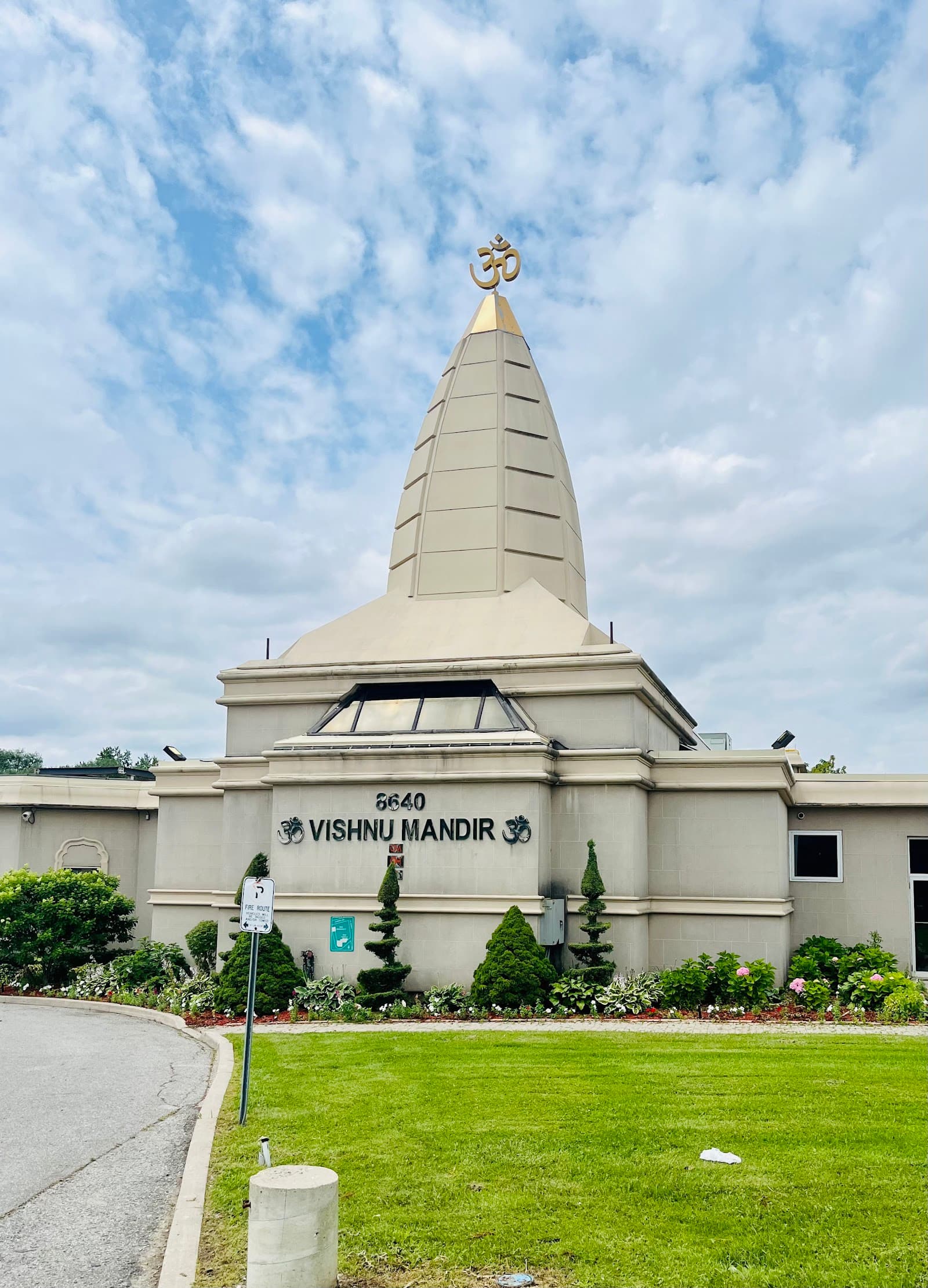
Vishnu Mandir Richmond Hill
Vishnu Mandir Richmond Hill is dedicated to Lord Vishnu and anchors York Region as a year-round devotional and cultural campus with daily worship, Sunday satsang, and an animal sanctuary on its 15-acre grounds ([1][2]). The mandir opens 7:00 AM-12:00 PM and 5:00 PM-9:00 PM, while the adjoining Peace Park, seniors’ lounge, and Govindas cafeteria operate throughout the afternoon, giving volunteers space to manage annadhanam, yoga, and children’s Bal Vihar programming without disrupting darshan queues ([1][3]). Reception staff issue RFID badges, direct vehicles to permeable-paver lots, and brief school groups on heritage interpretation before docents guide them through the marble-clad mandapa, museum displays, and the outdoor Gandhi Peace Garden. Mandir operations run on a rotating seva schedule that maintains clean shoe storage, sanitised restrooms, and audio-visual broadcasts to the global Vishnu Mandir Television network. Accessibility is supported by heated ramps, a 1,600-kilogram elevator, tactile floor strips, and hearing loops in the main hall, while digital signage relays aarti times, meditation sessions, and weather contingencies for the cremation service pavilion. With in-house security, Building Automation System dashboards, and emergency plans developed with York Region partners, the campus stays ready for large festivals, wellness clinics, and intercultural diplomacy alongside the morning aarti ([2][3]).
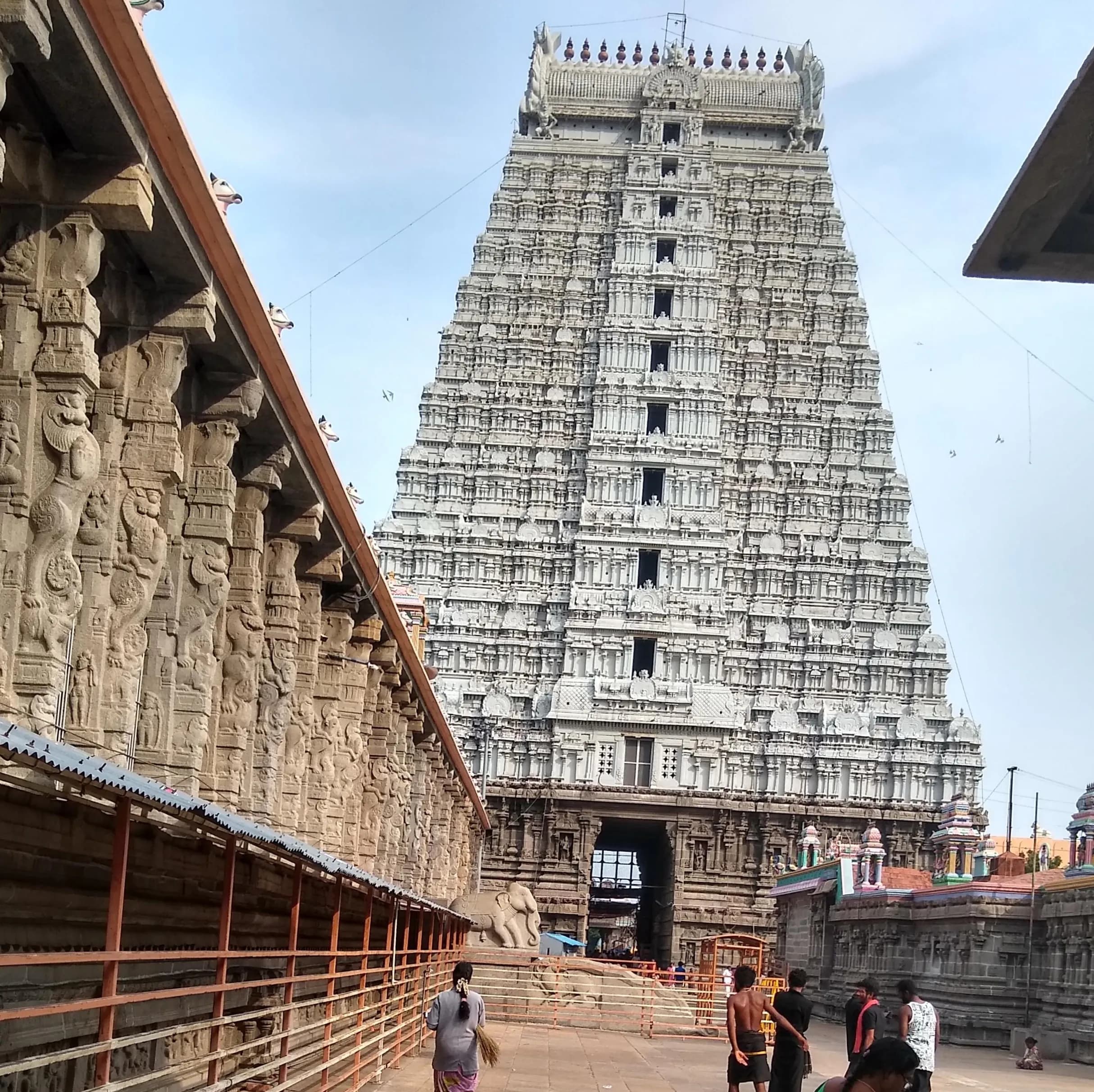
Arunachaleswarar Temple Tiruvannamalai
The colossal gopurams of Arunachaleswarar Temple in Tiruvannamalai dominate the landscape, a testament to Dravidian temple architecture ([1]). Approaching the temple, the sheer scale is striking, with nine towering gopurams intricately sculpted with deities ([2][3]). The Rajagopuram, an 11-tiered eastern gateway, exemplifies the temple's grandeur and serves as the primary entrance ([4]). Intricate carvings adorning the walls depict scenes from Hindu mythology, showcasing the artistic skills of the artisans who worked on the temple ([5]). Within the Garbhagriha (Sanctum), the lingam representing Shiva is the focal point of devotion, drawing devotees from far and wide ([6]). The temple, built around 850 CE during the Chola period, reflects the dynasty's patronage of art and architecture ([7][8]). Granite and sandstone blocks, meticulously carved, form the structural components of this sacred space ([9]). During the Chola period, temple architecture reached new heights, with an emphasis on elaborate ornamentation and towering structures ([10]). Vastu Shastra principles, the ancient Indian science of architecture, likely guided the temple's layout and design, ensuring harmony and balance ([11]). The thousand-pillared hall, or Mandapa (Pillared Hall), displays geometric patterns, a contrast to the figurative sculptures found elsewhere ([12]). The Kambathu Amman Sannadhi, dedicated to Parvati, offers a serene space for contemplation and prayer ([13]). Circling the temple on the Girivalam path reinforces the temple's spiritual significance, a practice deeply rooted in Hindu tradition ([14]). The walls of the temple serve as a canvas of history, with inscriptions in ancient Tamil script and architectural additions from various dynasties ([15]). These inscriptions provide valuable insights into the temple's history and the socio-cultural context of the time ([16]). Arunachaleswarar Temple embodies the artistic genius of Dravidian architecture, a legacy that continues to inspire awe and reverence ([17]).

Jaisalmer Fort Jaisalmer
The wind, a constant companion in the Thar Desert, whipped around me as I ascended the winding ramparts of Jaisalmer Fort, a colossal sandstone behemoth rising from the desert itself. It wasn't just a fort; it was a living, breathing city, a testament to Rajputana resilience etched against the vast canvas of the Indian desert. My five-hundredth monument, and it felt like the first, the sheer scale and grandeur eclipsing everything I'd witnessed before. The "Sonar Quila," as it’s locally known, truly lived up to its golden moniker. The late afternoon sun bathed the fort in a warm, honeyed light, highlighting the intricate carvings that adorned every surface. It wasn't the polished, pristine beauty of some restored monuments; this was a beauty born of age and endurance, the sandstone weathered and textured, whispering tales of centuries past. Passing through the Suraj Pol, the main gate, I was immediately struck by the organized chaos within. Narrow, winding lanes, a vibrant tapestry of shops selling textiles, jewelry, and handicrafts, pulsed with life. It was a far cry from the sterile, museum-like atmosphere of some historical sites. Here, history wasn't confined to glass displays; it was lived, breathed, and bargained over. The architecture within the fort was a captivating blend of Rajput and Islamic styles. Jharokhas, the ornate balconies projecting from the haveli facades, offered glimpses into the opulent lives once lived within. I spent hours photographing these intricate details, the delicate latticework, the miniature arches, each a testament to the skill of the artisans who crafted them centuries ago. The Patwon Ki Haveli, a cluster of five interconnected havelis, was particularly striking, its facade a riot of intricate carvings that seemed to defy gravity. Climbing to the topmost ramparts, the city of Jaisalmer unfolded below me, a sea of golden rooftops merging seamlessly with the desert beyond. The panoramic view was breathtaking, the vastness of the landscape emphasizing the fort's strategic importance. I could almost imagine the Rajput warriors, standing on these very ramparts, scanning the horizon for approaching armies. The Jain temples within the fort were another highlight. Their intricate marble carvings, a stark contrast to the rough-hewn sandstone of the fort walls, spoke of a different kind of devotion. The play of light and shadow within the temples created an ethereal atmosphere, transporting me to a realm of quiet contemplation. But it wasn't just the grand architecture or the stunning views that captivated me. It was the people. The shopkeepers, the residents, the children playing in the narrow lanes – they were all part of the fort's living history. I spent time talking to them, listening to their stories, understanding their connection to this ancient place. A chai-wallah recounted tales passed down through generations, while a textile merchant explained the intricate patterns woven into the local fabrics. These interactions, these glimpses into everyday life, added another layer of depth to my understanding of Jaisalmer Fort. As the sun began to set, casting long shadows across the ramparts, I felt a profound sense of connection to this place. Jaisalmer Fort wasn't just a collection of stones and mortar; it was a living organism, a testament to human resilience and artistry. It was a place where history whispered from every corner, where the past and present intertwined seamlessly, creating an experience that transcended the visual and touched the soul. Leaving the fort, I carried with me not just photographs, but memories and stories, woven into the fabric of my own journey as a heritage photographer.
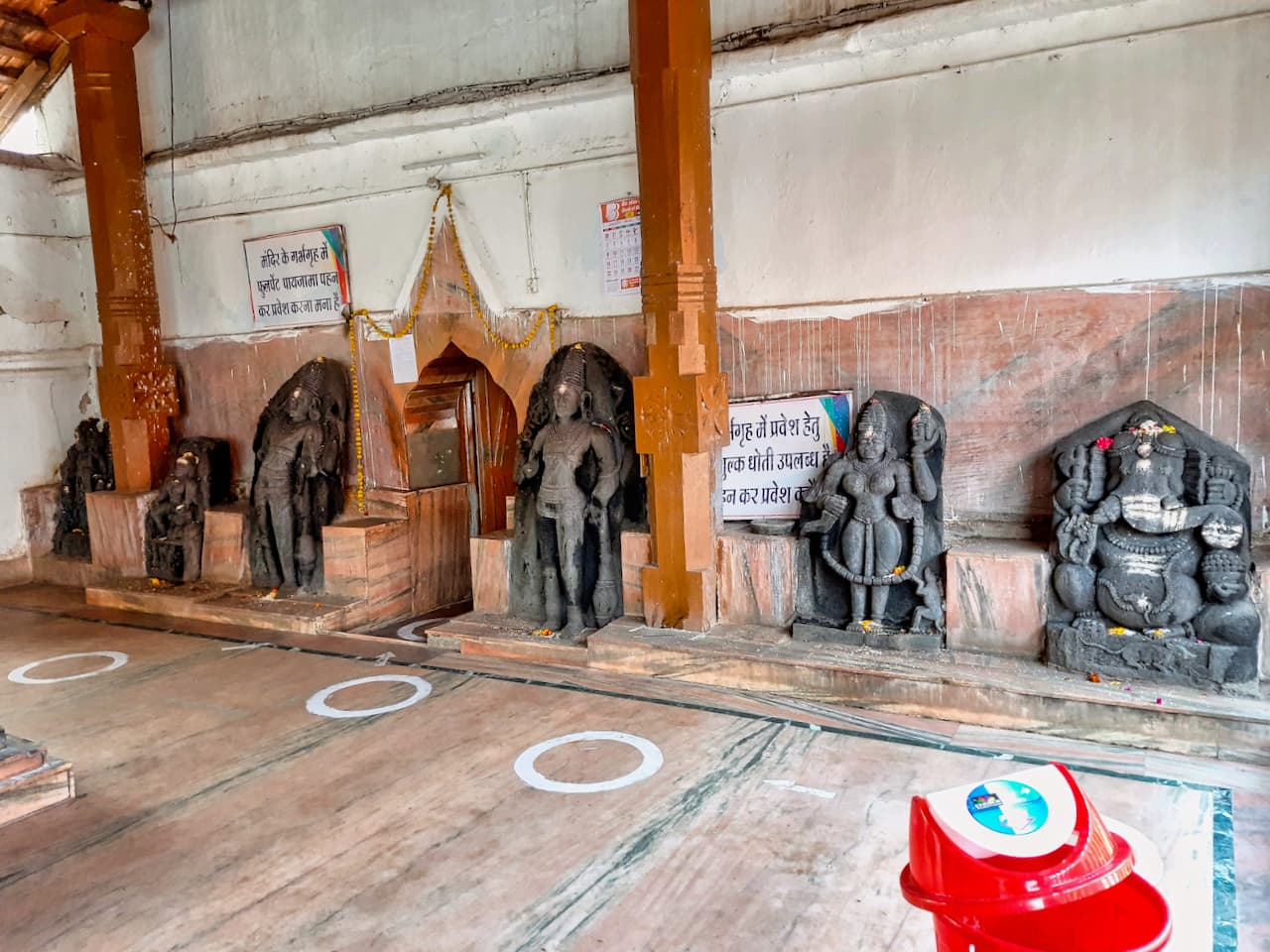
Danteshwari Temple Dantewada
Crimson flags flutter, as the Danteshwari Temple in Dantewada, Chhattisgarh, beckons with the scent of incense and the resonance of ancient chants. Dedicated to Goddess Danteshwari, the presiding deity of the Bastar region, this temple stands as a powerful embodiment of faith and history ([1]). Built around 1050 CE during the Kalachuri period ([2]), the temple showcases a unique blend of Nagara architectural style and local tribal influences ([3]). Chalukya rulers of South Kosala were patrons of the temple ([4]). Stone platforms and foundations demonstrate the temple's enduring strength, constructed using laterite stone, brick, and wood ([5]). Unlike the elaborately carved temples of other regions, Danteshwari Temple exudes a raw, primal beauty, its weathered walls whispering tales of dynasties and devotions ([6]). The main temple features a curvilinear tower and a sanctum, characteristic of Hindu temple architecture ([7]). Intricate carvings adorning the walls of the Mandapa (Pillared Hall) depict scenes from the Mahabharata and local folklore ([8]). These narratives, etched in stone, provide a visual chronicle of the region's rich cultural heritage, seamlessly blending mythology with the traditions of the Bastar tribes ([9]). Devotees, adorned in vibrant attire, fill the inner courtyard, their faces reflecting reverence and anticipation ([10]). The rhythmic clang of bells, the chanting of priests, and the murmur of prayers create an atmosphere charged with spiritual energy. Within the Garbhagriha (Sanctum), the deity resides, radiating palpable energy of devotion ([11]). The temple complex houses several smaller shrines dedicated to various deities, each with its unique character and significance ([12]). Danteshwari Temple isn't merely a static monument; it's a living entity, constantly evolving with the changing tides of time and tradition, symbolizing resilience and the unwavering spirit of the Bastar people ([13]).
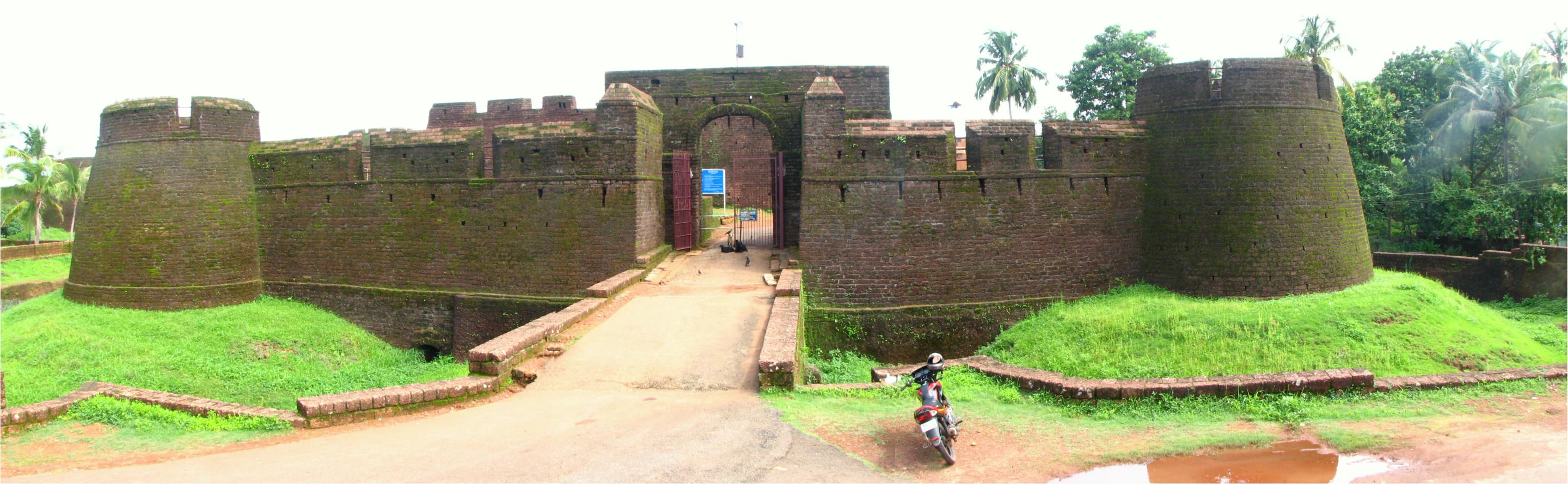
Bekal Fort Kasaragod
Amidst Kerala's coastal tapestry lies Bekal Fort, a 17th-century sentinel erected by Shivappa Nayaka of Keladi around 1650 CE ([3][4]). Unlike the Mughal's northern citadels, Bekal Fort showcases Kerala's military architecture, strategically positioned along the Malabar Coast ([1][4]). Its laterite walls, stretching over a kilometer, embody raw, earthy strength, a testament to the region's defensive needs ([1][2]). Sophisticated strategic planning defines Bekal Fort, evident in its keyhole-shaped bastion offering panoramic maritime views ([3]). The zigzagging pathways, a deliberate design to disorient invaders, highlight the fort's military function ([4]). The fort's design integrates Kerala's architectural traditions, reflecting the region's unique aesthetic sensibilities ([2]). While lacking the ornate carvings of other Indian forts, Bekal's beauty resides in its stark simplicity, emphasizing the natural strength of laterite ([1][2][5]). Within the fort's expanse, a Hanuman temple provides a vibrant counterpoint to the muted tones of the laterite structure ([3]). This sacred space reflects the enduring Hindu traditions of the region, coexisting harmoniously within the fort's military architecture. Vastu Shastra principles, the ancient Indian science of architecture, likely influenced the fort's layout, optimizing its defensive capabilities and aligning it with natural energies, though specific textual references are not available ([2]). Bekal Fort stands as a powerful reminder of Kerala's rich history and architectural prowess, blending military strategy with regional artistry ([4][5]). Laterite, stone, wood, and clay were used in the construction of this fort ([2]).
Lolei Temple Roluos Group Cambodia
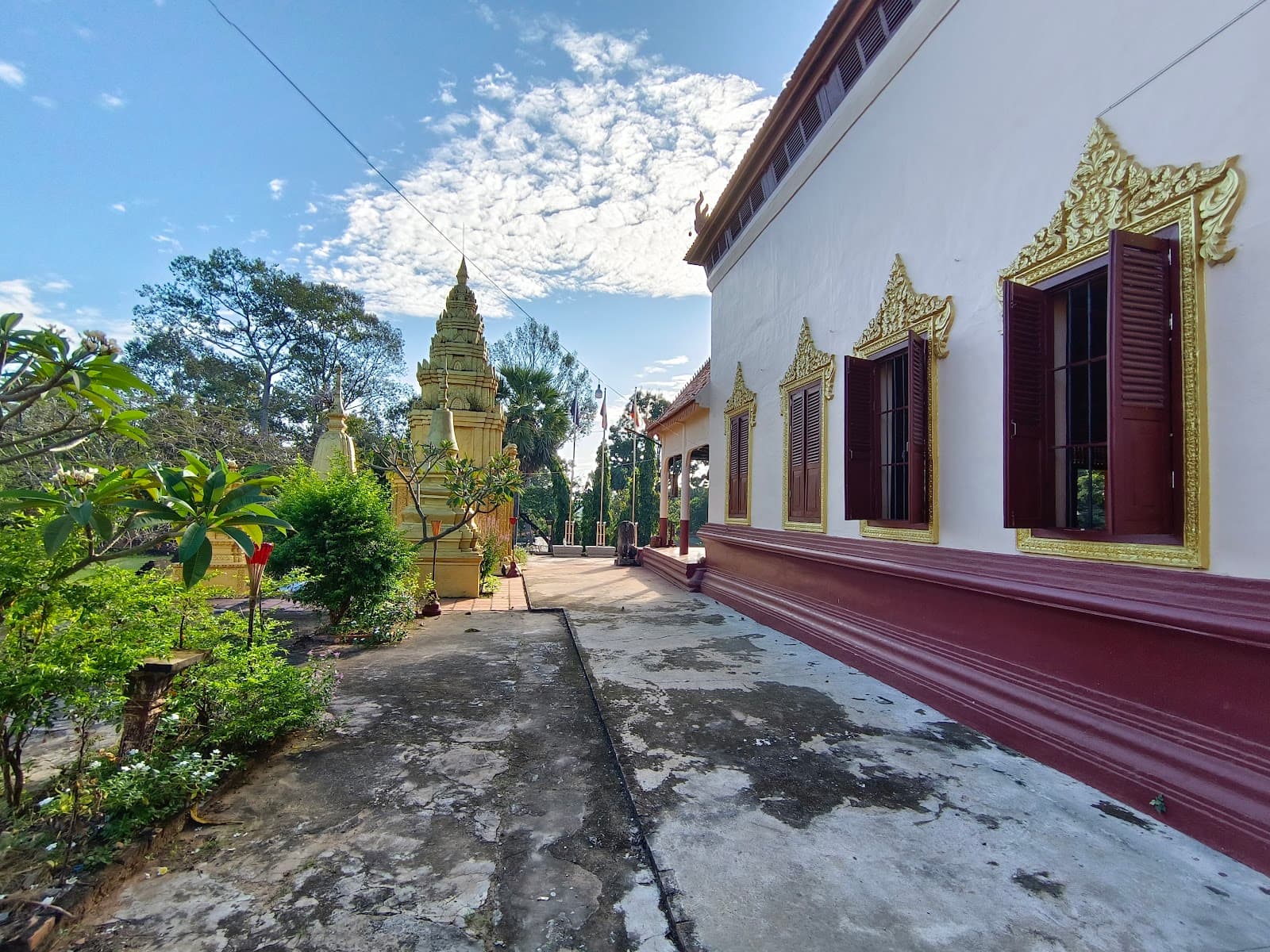
Lolei Temple, elegantly situated on an artificial island within the Indratataka Baray (reservoir) in the Roluos Group archaeological site, represents one of the most architecturally distinctive and iconographically significant early Angkorian Hindu temples, constructed in the late 9th century CE during the reign of King Yasovarman I and dedicated to Shiva and the king's ancestors, creating a powerful testament to the transmission of Indian Hindu religious and architectural traditions to Cambodia during the early Angkorian period. The temple complex, originally comprising four brick towers arranged in two rows, with two towers surviving today, features sophisticated architectural elements that demonstrate the direct transmission of Indian Hindu temple architecture from the great temple complexes of India, while the temple's location on an artificial island within a massive reservoir, chosen according to Indian cosmological principles that emphasized the symbolic importance of water and islands in Hindu cosmology, underscores its spiritual significance as a place where the earthly and divine realms intersected. The temple's most remarkable feature is its extraordinary brick construction and decorative programs, executed with remarkable artistic sophistication, including elaborate lintels and pediments depicting scenes from Hindu mythology that demonstrate the direct transmission of Indian Hindu iconographic programs and narrative traditions from the great artistic centers of India to Cambodia, while the temple's architectural elements including the towers, lintels, and decorative programs follow sophisticated Indian Hindu temple architectural traditions that were systematically transmitted from the great temple complexes of India. Archaeological evidence reveals that the temple served as a major center of Shiva worship and a funerary temple for the king's ancestors, while the discovery of numerous Sanskrit inscriptions provides crucial evidence of the site's role in the transmission of Indian religious texts and practices to Cambodia, demonstrating the sophisticated understanding of Indian Hindu traditions possessed by the early Khmer court and religious establishment. The temple's construction using brick, a material that was gradually being replaced by sandstone in Khmer architecture, demonstrates the transition period in Khmer building techniques, while the temple's location within the Indratataka Baray, one of the largest reservoirs constructed by the Khmer Empire, demonstrates the sophisticated hydraulic engineering that was transmitted from India to Cambodia. Today, Lolei stands as part of the UNESCO World Heritage Site and represents one of the most important early Angkorian temples, serving as a powerful testament to the transmission of Indian Hindu culture and architecture to Southeast Asia, while ongoing archaeological research and conservation efforts continue to protect and study this extraordinary cultural treasure that demonstrates the profound impact of Indian civilization on Southeast Asian religious and architectural traditions. ([1][2])
Shree Swaminarayan Mandir Cardiff
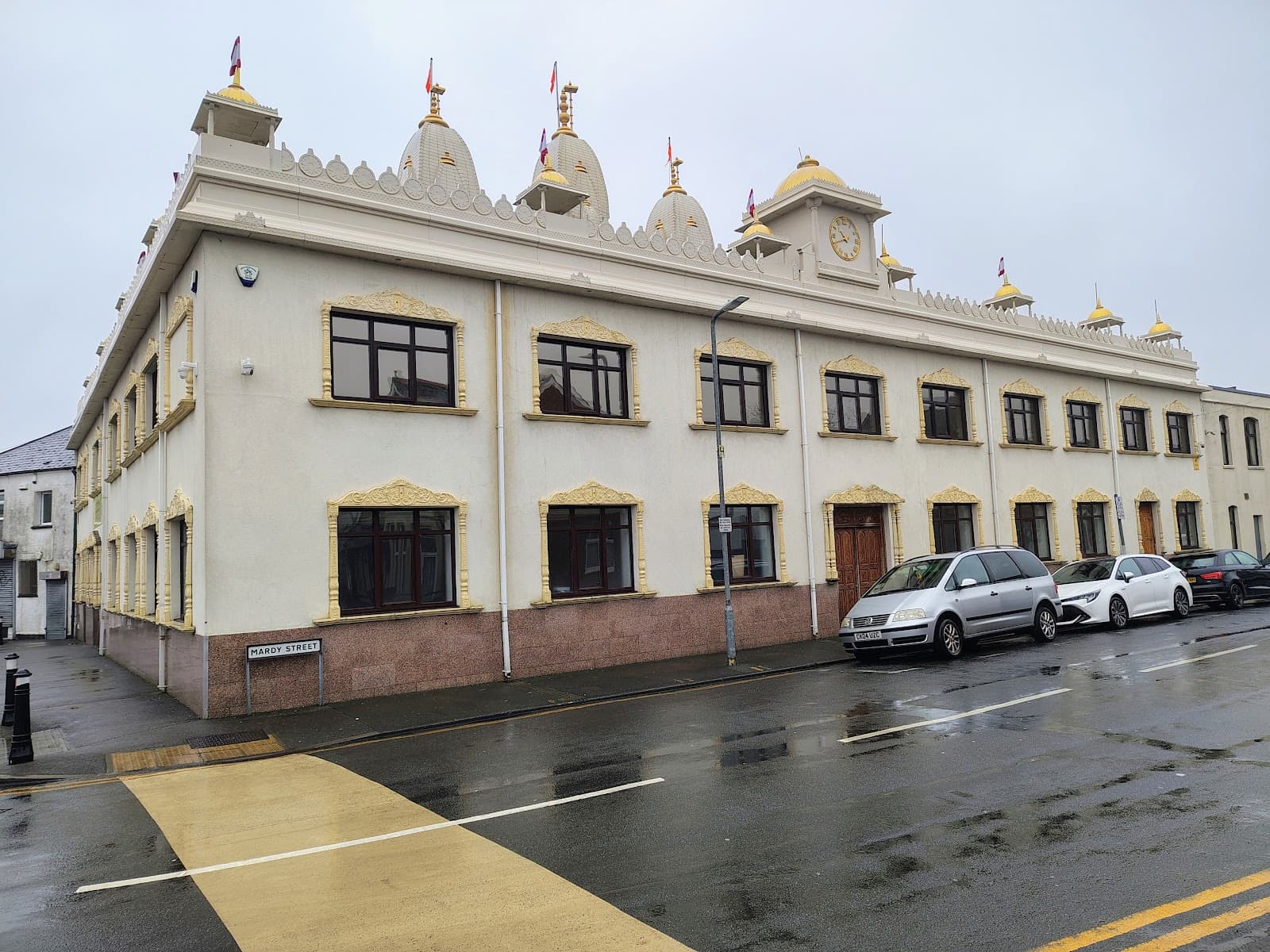
The Shree Swaminarayan Mandir Cardiff, located at 55 Merches Place in Grangetown, Cardiff, Wales, United Kingdom, stands as a vibrant testament to India's millennia-spanning cultural heritage, dedicated to Bhagwan Swaminarayan [1]. This sacred edifice embodies a continuous tradition of Indian civilization, manifesting indigenous architectural styles and cultural practices that reflect India's deep historical roots, even in its modern construction [4]. The mandir integrates elements of Swaminarayan architecture, Maru-Gurjara architecture, Haveli architecture, and Indo-Victorian influences, showcasing a sophisticated synthesis of ancient design principles with contemporary adaptation [3]. Swaminarayan temples, including the Cardiff Mandir, adhere to the Nagara style of temple architecture, a prominent tradition in North and West India, characterized by its curvilinear shikhara (spire) [4] [5]. This style is meticulously guided by Vastu Shastra, an ancient Indian discipline of sacred architecture that integrates principles of time, space, and cosmology to create spiritually conducive environments [4]. The construction eschews ferrous metals for structural reinforcement, relying instead on self-load-bearing masonry to ensure longevity and spiritual purity, a practice rooted in ancient texts that prescribe mandirs to last a thousand years [4]. The gold-topped shikaras, typical of North Indian temple architecture, crown the shrines (sinhashan) within the mandir, symbolizing mountain peaks and connecting the structure to the natural world revered by ancient Hindu seers [2] [4]. The Maru-Gurjara style, originating in Gujarat and Rajasthan between the 11th and 13th centuries CE, contributes to the mandir's intricate detailing, known for its opulent carvings and sculptural richness [5] . This style, a subset of the Nagara tradition, features elaborate ornamentation and a distinctive curvilinear tower design [5] . Haveli architecture, a traditional Indian mansion style dating back to the 1600s, influences the mandir's aesthetic with its characteristic detailed carvings and spatial arrangements, often incorporating courtyards and intricate wooden elements [3] . The fusion of these indigenous styles with Indo-Victorian elements demonstrates the adaptability and enduring legacy of Indian craftsmanship [3]. The mandir's interior features intricate carvings and sculptures that depict deities and mythological narratives, serving as visual representations of Hindu philosophy and iconography [4]. These decorative elements are not merely aesthetic but are imbued with symbolic meaning, guiding the worshipper's spiritual journey [4]. The Shree Swaminarayan Mandir Cardiff is recognized by Cardiff Council as a community anchor within Grangetown regeneration initiatives and holds the status of a Registered Place of Worship [provided in prompt]. It actively hosts a variety of religious and cultural programming, including festivals like Tulsi Vivah and Diwali, and community events, ensuring continuous engagement and accessibility for devotees and visitors [1]. The mandir maintains regular opening hours and conducts daily Aarti ceremonies, facilitating a steady flow of worshippers [1]. The site is operationally ready, upholding high standards of maintenance and compliance, reflecting the community's dedication to preserving and promoting its rich cultural and spiritual heritage [1].
Prasat Phanom Wan Nakhon Ratchasima
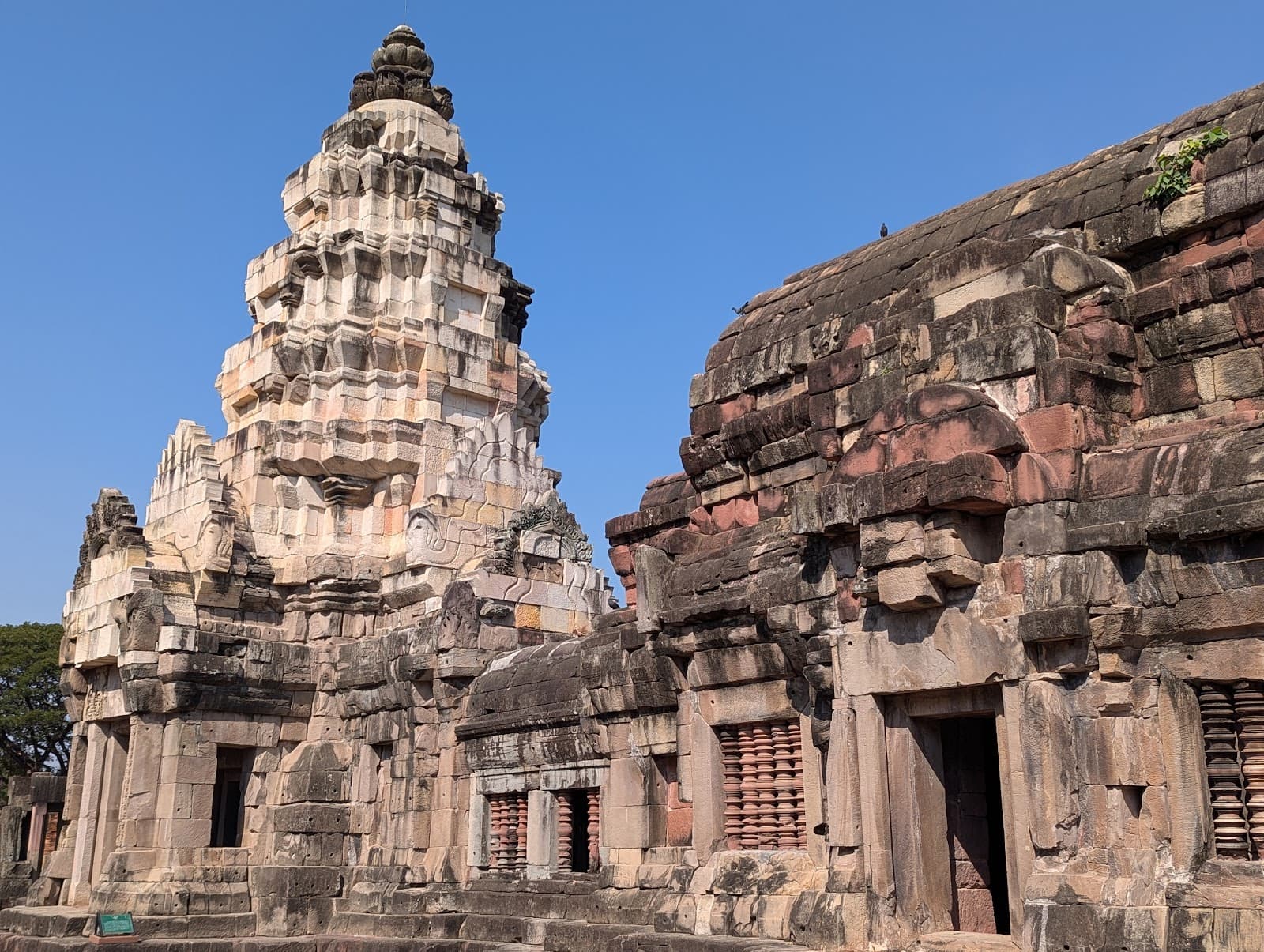
Prasat Phanom Wan, located approximately 15 kilometers northeast of Nakhon Ratchasima city, represents an important 11th-century Khmer Shiva temple that served as a regional religious center along the ancient highway connecting Phimai to Angkor. The temple complex, constructed during the Baphuon period in the 11th century CE, is dedicated to Shiva, with the main prasat housing a massive lingam pedestal and evidence of extensive ritual activity. The complex features a rectangular laterite enclosure wall measuring 102 by 128 meters, accessed through a single eastern gopura that leads to the inner courtyard containing the main prasat and two libraries. The main prasat, constructed from pink sandstone and laterite, rises 20 meters and features a square plan with four porches extending in cardinal directions, though only the eastern porch remains substantially intact. The temple’s lintels and pediments, carved from pink sandstone, depict scenes from Hindu mythology, including Shiva’s cosmic dance, the churning of the ocean of milk, and various deities, though many have been damaged or removed over centuries. The complex includes two libraries positioned east of the main prasat, numerous subsidiary shrines, and evidence of a sophisticated drainage system. Archaeological evidence indicates the temple served as both a religious center and waypoint for travelers on the ancient highway. The site has undergone partial restoration since the 1980s, involving structural stabilization and conservation of remaining decorative elements. Today, Prasat Phanom Wan remains an important site for understanding Khmer temple architecture and the network of religious centers connecting regional sites to Angkor, attracting visitors interested in its historical significance and architectural features. ([1][2])
Navratangarh Fort Gumla
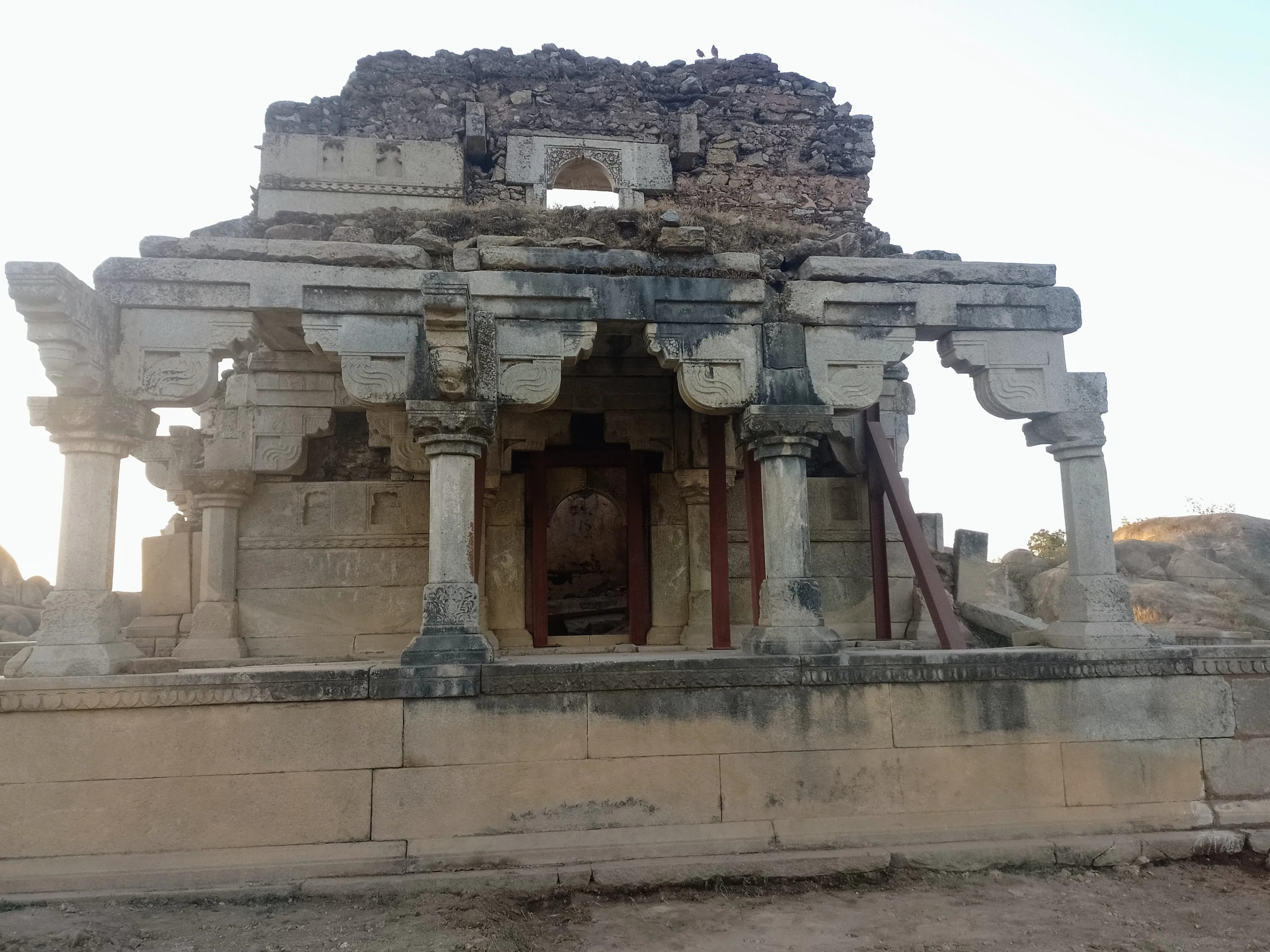
The midday sun beat down on the undulating Jharkhand landscape as I finally crested the hill, Navratangarh Fort rising before me like a forgotten sentinel. Having explored countless Mughal and Rajput forts across North India, I was intrigued to see what this tribal stronghold, nestled deep in Gumla district, had to offer. It certainly wasn't the imposing grandeur of a Mehrangarh or the intricate elegance of a Fatehpur Sikri, but Navratangarh possessed a raw, almost primal energy that immediately captivated me. The fort’s name, meaning “nine courtyards,” hints at a structured layout, but the reality is far more organic. While traces of nine distinct enclosures are discernible, nature has reclaimed much of the space, blurring the lines between architecture and wilderness. Massive, uncut laterite stones form the ramparts, their uneven surfaces softened by moss and clinging vines. Unlike the precisely dressed stones of northern forts, these felt ancient, whispering tales of a time long before mortar and meticulous planning. I stepped through a narrow, crumbling gateway, the rough stone scraping against my backpack. The first courtyard, the largest, was a surprisingly level expanse, now overgrown with scrub and wildflowers. Fragments of pottery littered the ground, a tangible reminder of the lives once lived within these walls. Local legend claims the fort was built by the Nagvanshi kings, who ruled this region for centuries. While historical evidence is scarce, the fort's construction style and strategic location certainly suggest a powerful, well-organized society. As I explored further, I discovered remnants of what might have been living quarters, storage areas, and even a small temple. The architecture was simple, functional, and deeply connected to the landscape. Narrow passages, carved directly into the laterite bedrock, connected the different sections of the fort. I paused at one such passage, the cool, damp air a welcome respite from the midday heat. Looking up, I could see the sky framed by the rough-hewn stone, a perfect example of how the builders incorporated the natural environment into their design. One of the most striking features of Navratangarh is its water management system. Several large, rock-cut cisterns are strategically placed throughout the fort, designed to collect rainwater. Even in the dry season, some of these cisterns still held water, a testament to the ingenuity of the Nagvanshi engineers. I imagined the fort bustling with activity, the cisterns brimming with life-sustaining water, a vital resource in this often-arid region. Climbing to the highest point of the fort, I was rewarded with panoramic views of the surrounding countryside. Rolling hills, dotted with villages and patches of forest, stretched as far as the eye could see. From this vantage point, it was easy to understand the strategic importance of Navratangarh. It commanded the surrounding area, offering a clear view of approaching enemies. My visit to Navratangarh wasn't about ticking off another fort on my list. It was an immersive experience, a journey into the heart of a forgotten kingdom. While the fort may lack the polished beauty of its northern counterparts, it possesses a unique charm, a raw authenticity that resonates deeply. It's a place where history whispers from the stones, where nature has reclaimed its domain, and where the spirit of a bygone era still lingers in the air. It's a reminder that India's heritage is not just confined to grand palaces and majestic tombs, but also exists in these hidden gems, waiting to be discovered by those willing to venture off the beaten path. And as I descended the hill, leaving the silent sentinel behind, I knew that Navratangarh, with its rugged beauty and whispered stories, would stay with me long after I left Jharkhand.
Dabhoi Fort Vadodara
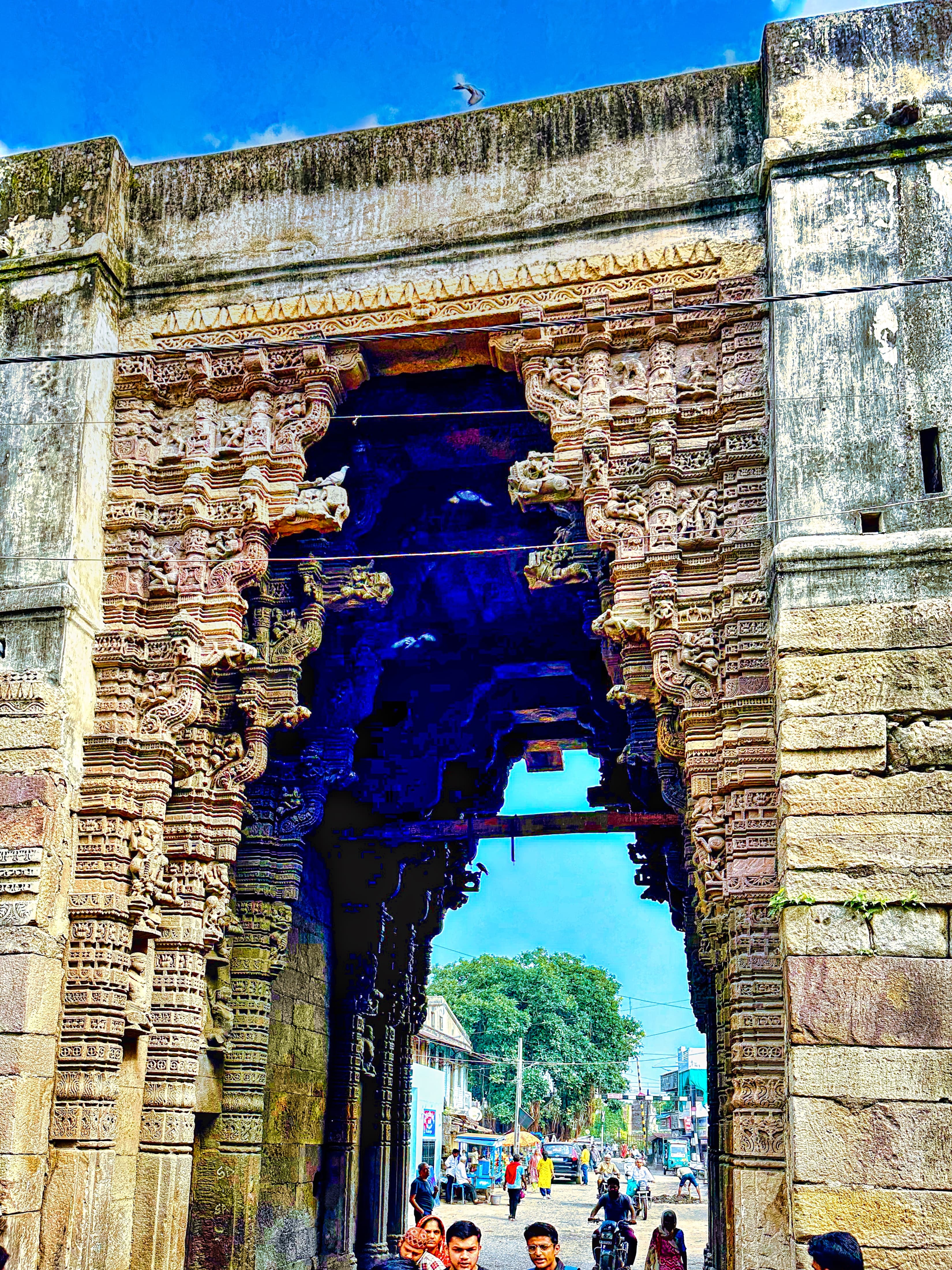
Approaching Dabhoi Fort in Gujarat, one confronts a formidable quadrangular structure erected circa 1150 CE during the Solanki dynasty ([1][2]). This fortified city, conceived by Siddhraj Jaisinh, showcases Chalukya architectural prowess and Hindu military strategy ([3]). Spanning over 60 acres, its sandstone and basalt walls, bonded with lime mortar, present a commanding presence ([4]). Intricate carvings adorning the Hira Bhagol (Diamond Gate) depict deities and scenes from epics, revealing the refined artistry of Solanki artisans ([1][3]). Strategic machicolations and jalis (latticework screens) ensured both defense and ventilation ([2]). The fort's layout reflects Vastu Shastra principles, the ancient Indian science of architecture, integrating residential, commercial, and sacred spaces ([5]). Within the fort, the Kalika Mata Temple stands as a testament to continuous religious practice, its architecture evolving through renovations ([1]). The temple's carvings, portraying various forms of the goddess, contrast with the fort's military austerity ([3]). Sophisticated drainage systems ensured sanitation, while four stepwells, including the Chand Baori, provided water ([4]). These vavs (stepwells) are elaborate subterranean structures, their geometric steps descending to the water level ([2]). Granite and sandstone blocks, meticulously carved, form the fort's bastions and ramparts ([3][4]). These ramparts, wide enough for chariots, offered strategic vantage points ([1]). Dabhoi Fort encapsulates Solanki-era urban planning and architectural ingenuity, reflecting a blend of military, artistic, and hydraulic engineering, embodying the rich heritage of Gujarat ([2][5]).
Kelaniya Raja Maha Vihara Colombo Sri Lanka
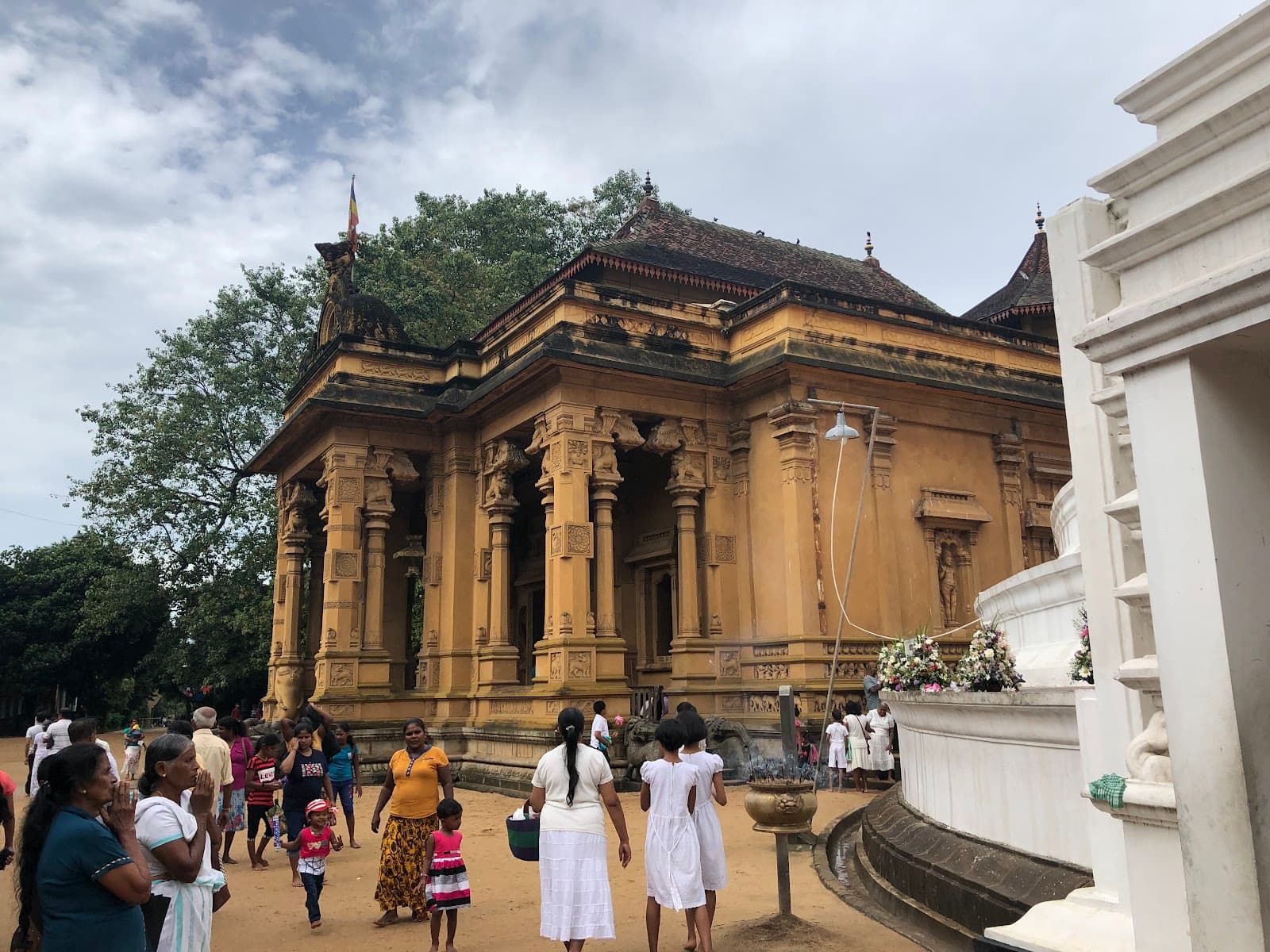
Kelaniya Raja Maha Vihara, dramatically situated on the banks of the Kelani River near Colombo, represents one of the most extraordinary and historically significant Buddhist temples in Sri Lanka, with lore tracing its origins back to the 6th century BCE when the Buddha is believed to have visited the site during his third visit to Sri Lanka, creating a powerful testament to the profound transmission of Indian Buddhist religious traditions to Sri Lanka and serving as a major center of Buddhist worship that integrates a Vishnu shrine, demonstrating the sophisticated religious syncretism that has characterized Sri Lankan religious practices. The temple complex, also known as Kelaniya Temple, features sophisticated architectural elements that demonstrate the direct transmission of Indian Buddhist temple architecture, particularly the traditions of northern India during the time of the Buddha, with local adaptations that reflect the sophisticated synthesis of Indian Buddhist religious and artistic traditions with Sri Lankan building techniques, while the temple's most remarkable feature is its association with the Buddha's visit, which is documented in ancient chronicles including the Mahavamsa and represents one of the most important events in the history of Buddhism in Sri Lanka. The temple's architectural layout, with its central stupa, image house, and assembly halls, follows sophisticated Indian Buddhist monastery planning principles that were systematically transmitted from the great monastic centers of India, while the temple's extensive decorative programs including murals, sculptures, and architectural elements demonstrate the sophisticated synthesis of Indian Buddhist iconography and artistic traditions with local Sri Lankan aesthetic sensibilities. Archaeological evidence reveals that the temple served as a major center of Buddhist worship for over two and a half millennia, attracting pilgrims from across Sri Lanka and South India, while the discovery of numerous inscriptions in Sinhala, Tamil, and Sanskrit provides crucial evidence of the site's role in the transmission of Indian Buddhist texts and practices to Sri Lanka, demonstrating the sophisticated understanding of Indian Buddhist traditions possessed by the temple's patrons and religious establishment. The temple's unique feature of integrating a Vishnu shrine within the Buddhist temple complex demonstrates the sophisticated religious syncretism that has characterized Sri Lankan religious practices, while the temple's association with the Kelani River, which flows into the Indian Ocean, underscores its significance as a center for the transmission of Buddhist teachings, art, and culture from India to Sri Lanka. The temple complex has undergone multiple reconstructions throughout its history, with the current structure representing a modern reconstruction that faithfully preserves the temple's original architectural character and spiritual significance, while ongoing archaeological research continues to reveal evidence of the temple's ancient origins and its role in the transmission of Indian religious traditions to Sri Lanka. Today, Kelaniya Raja Maha Vihara stands as one of the most important Buddhist pilgrimage sites in Sri Lanka, serving as a powerful testament to the transmission of Indian Buddhist culture and architecture to Sri Lanka, while ongoing archaeological research and conservation efforts continue to protect and study this extraordinary cultural treasure that demonstrates the profound impact of Indian civilization on Sri Lankan religious and artistic traditions. ([1][2])
Jhansi Fort Jhansi
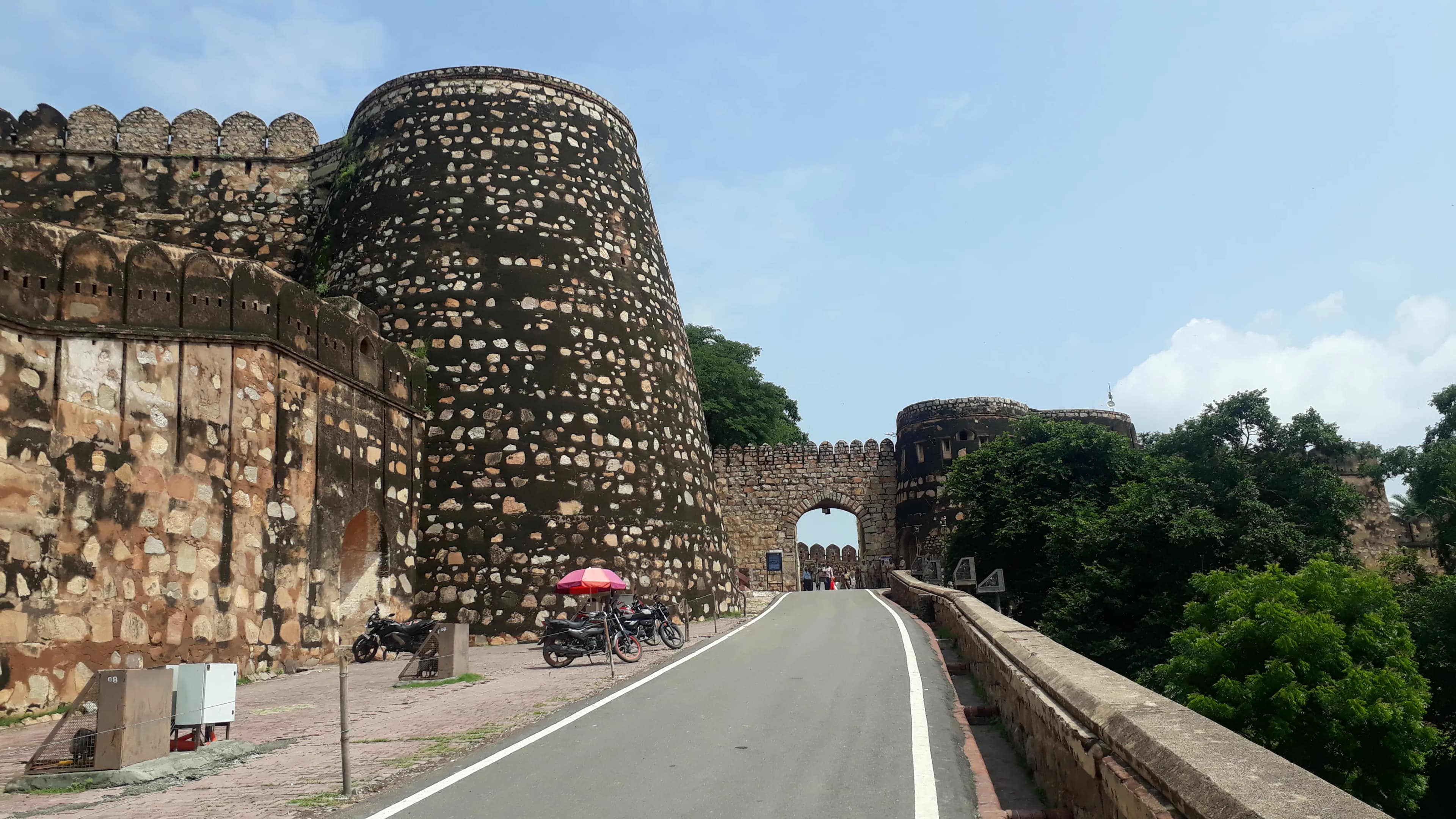
The imposing sandstone ramparts of Jhansi Fort, rising dramatically from the Bundelkhand plains, seemed to hum with untold stories. Having explored countless caves and temples back home in Maharashtra, I’ve developed a keen eye for historical resonance, and this fort, even from a distance, vibrated with a palpable energy. The scorching Uttar Pradesh sun beat down as I approached the main gate, the very same gateway Rani Lakshmibai, the iconic warrior queen, is said to have charged through on horseback, her infant son strapped to her back. Entering through the Karak Bijli Toop (Lightning Cannon) gate, I was immediately struck by the fort's sheer scale. The walls, averaging 20 feet thick and rising to a height of 100 feet in places, enclosed a vast expanse. Unlike the basalt structures I’m accustomed to in Maharashtra, the reddish-brown sandstone gave the fort a distinct, almost earthy feel. The walls, though scarred by cannon fire and the ravages of time, held an undeniable strength, a testament to the fort's enduring resilience. My exploration began with the Ganesh Mandir, nestled within the fort's complex. The small, unassuming temple, dedicated to Lord Ganesha, offered a moment of quiet contemplation amidst the fort's martial history. The intricate carvings on the temple door, though weathered, spoke of a time of artistic flourishing within these walls. From there, I moved towards the Rani Mahal, the queen's palace. This was where the personal became intertwined with the historical. The palace, though now a museum, still echoed with the whispers of Rani Lakshmibai's life. The delicate murals depicting scenes of courtly life and nature, now faded but still visible, offered a glimpse into the queen's world, a world far removed from the battlefield. I paused in the courtyard, imagining the queen strategizing with her advisors, her spirit as fiery as the Bundelkhand sun. The panoramic view from the top of the fort was breathtaking. The sprawling city of Jhansi stretched out below, a tapestry of old and new. I could see the very path the queen took during her daring escape, a path etched not just in history books, but in the very landscape itself. It was here, looking out at the vastness, that the weight of history truly settled upon me. The fort’s architecture revealed a blend of influences. While predominantly exhibiting Hindu architectural styles, certain elements, like the strategically placed bastions and the use of cannons, hinted at the later Maratha influence. The Kadak Bijli cannon itself, a massive piece of artillery, stood as a silent witness to the fierce battles fought here during the 1857 uprising. The museum within the Rani Mahal housed a collection of artifacts from that era – swords, shields, and even some personal belongings of the queen. While these objects were fascinating in their own right, they also served as poignant reminders of the human cost of conflict. As I descended from the ramparts, leaving the fort behind, I couldn't shake the feeling that I had walked through a living testament to courage and resilience. Jhansi Fort is more than just stones and mortar; it’s a repository of stories, a symbol of resistance, and a powerful reminder of a queen who dared to defy an empire. It is a place where history isn't just read, it's felt. And for a history enthusiast like myself, that's the most rewarding experience of all.
Quick Links
Plan Your Heritage Journey
Get personalized recommendations and detailed visitor guides