Has Inheritage Foundation supported you today?
Your contribution helps preserve India's ancient temples, languages, and cultural heritage. Every rupee makes a difference.
Secure payment • Instant 80G certificate
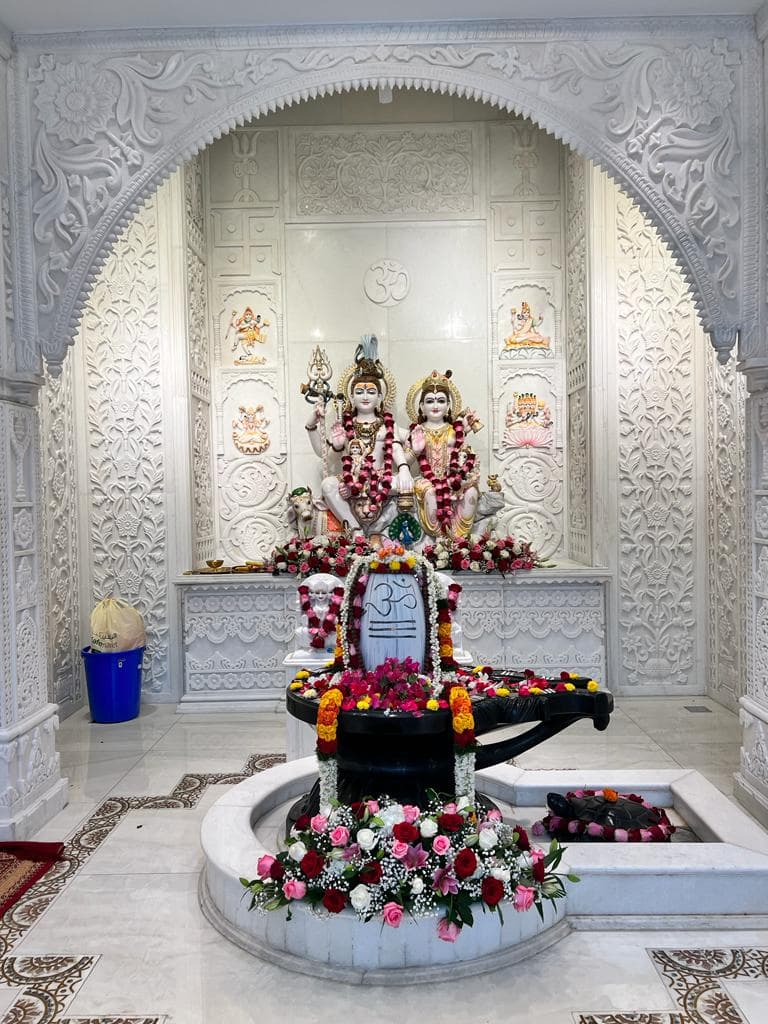
Hindu Temple Jebel Ali Dubai
The Hindu Temple Jebel Ali opened 5 October 2022 as a 70,000-square-foot multi-deity mandir serving Dubai’s growing diaspora, pairing a lotus-motif main hall with a mashrabiya-patterned façade that bridges Arabic geometry and Hindu symbolism ([1][2]). The complex, part of the “Worship Village” beside Guru Nanak Darbar and Christian churches, accommodates 1,500 devotees per hour via a hall lined with glass-clad sancta for 16 deities, a 108 brass bell gallery on the mezzanine, and a banquet hall for samskaras. The pink-lotus ceiling uses backlit petals and acoustic panels to manage sound during mass bhajans; a skylit atrium floods the prayer hall with daylight filtered through patterned aluminium screens. Daily darshan runs 6:00 AM-9:00 PM, with arti at 7:30 AM/12:00 PM/7:30 PM, appointment-only abhishekam, Sanskrit classes, premarital counselling, and blood drives coordinated with Dubai Health Authority. A QR-coded booking app manages festival surges, directing visitors through security screening, shoe lockers, digital queue displays, and free water kiosks. During major events—Navaratri, Janmashtami, Maha Shivaratri, Diwali—the temple deploys 400 volunteers, bilingual signage, crowd-splitting ropes, and live-streamed darshan for those off-site. The adjoining community wing hosts Indian consular outreach, interfaith dialogues, THRIVE youth leadership, and career counselling for blue-collar workers ([1][3]).
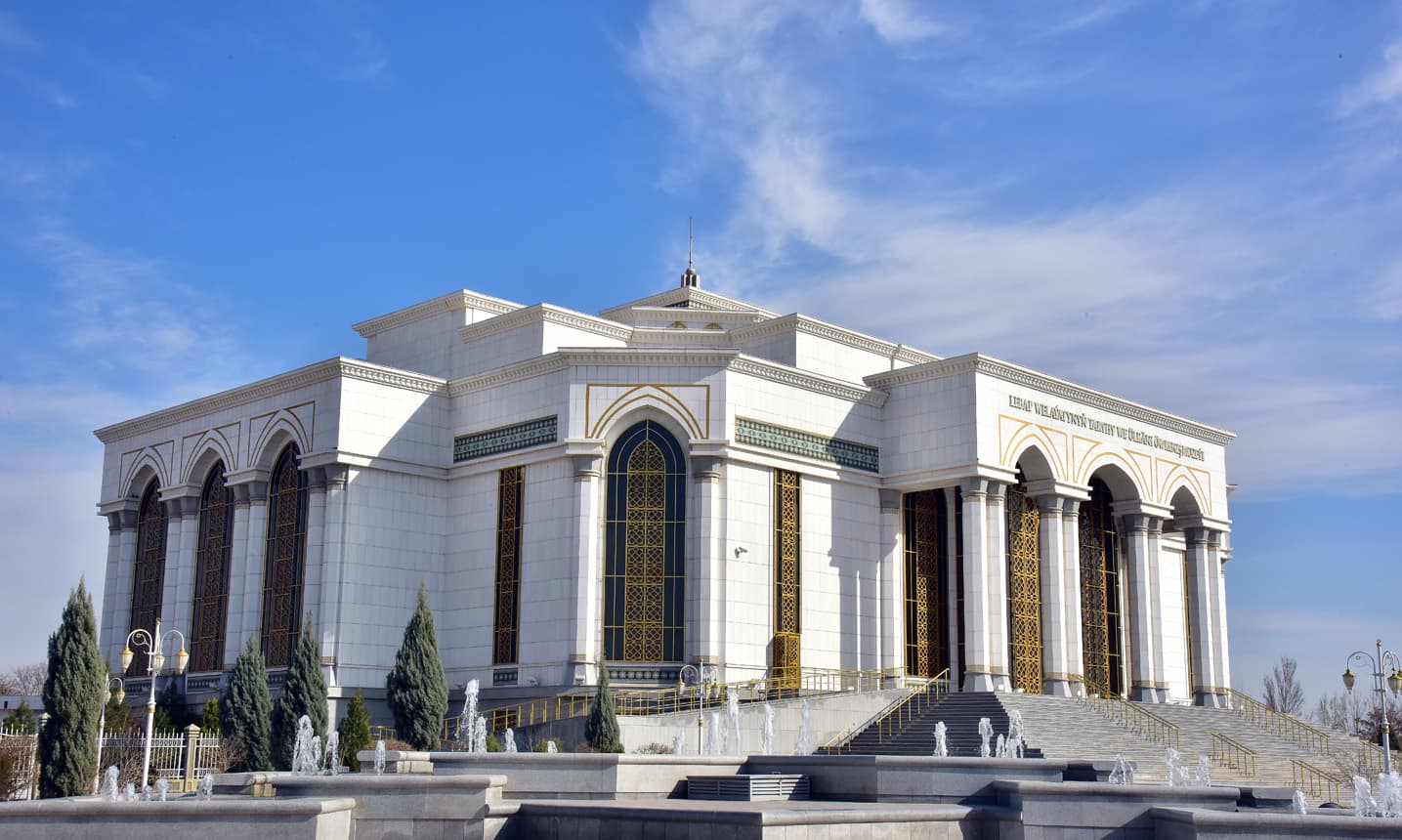
Khalchayan Temple Ruins Lebap Turkmenistan
Khalchayan Temple Ruins, dramatically situated in the Lebap Region of eastern Turkmenistan, represents one of the most extraordinary and archaeologically significant Kushan-period sites in Central Asia, dating to the 2nd century BCE and featuring remarkable Indic sculptures and architectural elements that demonstrate the profound transmission of Indian Buddhist and Hindu religious and artistic traditions to Central Asia during the Kushan period, creating a powerful testament to the sophisticated synthesis of Indian and Central Asian cultural traditions. The temple ruins, featuring sophisticated architectural elements and extraordinary Indic sculptures executed in the distinctive Kushan-Gandharan style that emerged from the synthesis of Indian and Central Asian artistic traditions, demonstrates the direct transmission of Indian Buddhist and Hindu iconographic programs and artistic traditions from the great artistic centers of India including Gandhara, Mathura, and the monastic centers of northern India, while the site's most remarkable feature is its extraordinary collection of Indic sculptures featuring Buddha images, Bodhisattvas, and Hindu deities executed with remarkable artistic sophistication and iconographic accuracy that demonstrate the sophisticated understanding of Indian Buddhist and Hindu iconography possessed by Kushan artists. The temple ruins' architectural layout, with their central structures surrounded by ritual spaces and architectural elements, follows sophisticated planning principles that demonstrate remarkable parallels with Indian Buddhist and Hindu temple planning principles, while the temple ruins' extensive decorative programs including Indic sculptures, architectural elements, and religious iconography demonstrate the sophisticated synthesis of Indian Buddhist and Hindu iconography and artistic traditions with local Central Asian aesthetic sensibilities, particularly the distinctive Kushan-Gandharan style that emerged from the synthesis of Indian and Central Asian artistic traditions. Archaeological evidence reveals that the site served as a major center of religious and artistic activity during the Kushan period, attracting traders, artists, and religious practitioners from across Central Asia, South Asia, and beyond, while the discovery of numerous Indic sculptures including Buddha images, Bodhisattvas, and Hindu deities that demonstrate clear Indian influences, architectural elements that parallel Indian practices, and religious iconography that reflects Indian Buddhist and Hindu cosmological concepts provides crucial evidence of the site's role in the transmission of Indian religious and artistic traditions to Central Asia, demonstrating the sophisticated understanding of Indian Buddhist and Hindu traditions possessed by the site's patrons and artistic establishment. The site's association with the Kushan Empire, which had strong connections to India and played a crucial role in the transmission of Indian religious and artistic traditions to Central Asia, demonstrates the sophisticated understanding of Indian religious and artistic traditions that were transmitted to Central Asia, while the site's Indic sculptures and architectural elements demonstrate remarkable parallels with Indian Buddhist and Hindu temple architecture and iconographic programs that were central to ancient Indian religious traditions. The site has been the subject of extensive archaeological research, with ongoing excavations continuing to reveal new insights into the site's sophisticated architecture, artistic programs, and its role in the transmission of Indian religious and artistic traditions to Central Asia, while the site's status as a UNESCO Tentative List site demonstrates its significance as a major center for the transmission of Indian cultural traditions to Central Asia. Today, Khalchayan Temple Ruins stands as a UNESCO Tentative List site and represents one of the most important Kushan-period sites in Central Asia, serving as a powerful testament to the transmission of Indian Buddhist and Hindu culture and art to Central Asia, while ongoing archaeological research and conservation efforts continue to protect and study this extraordinary cultural treasure that demonstrates the profound impact of Indian civilization on Central Asian religious and artistic traditions. ([1][2])
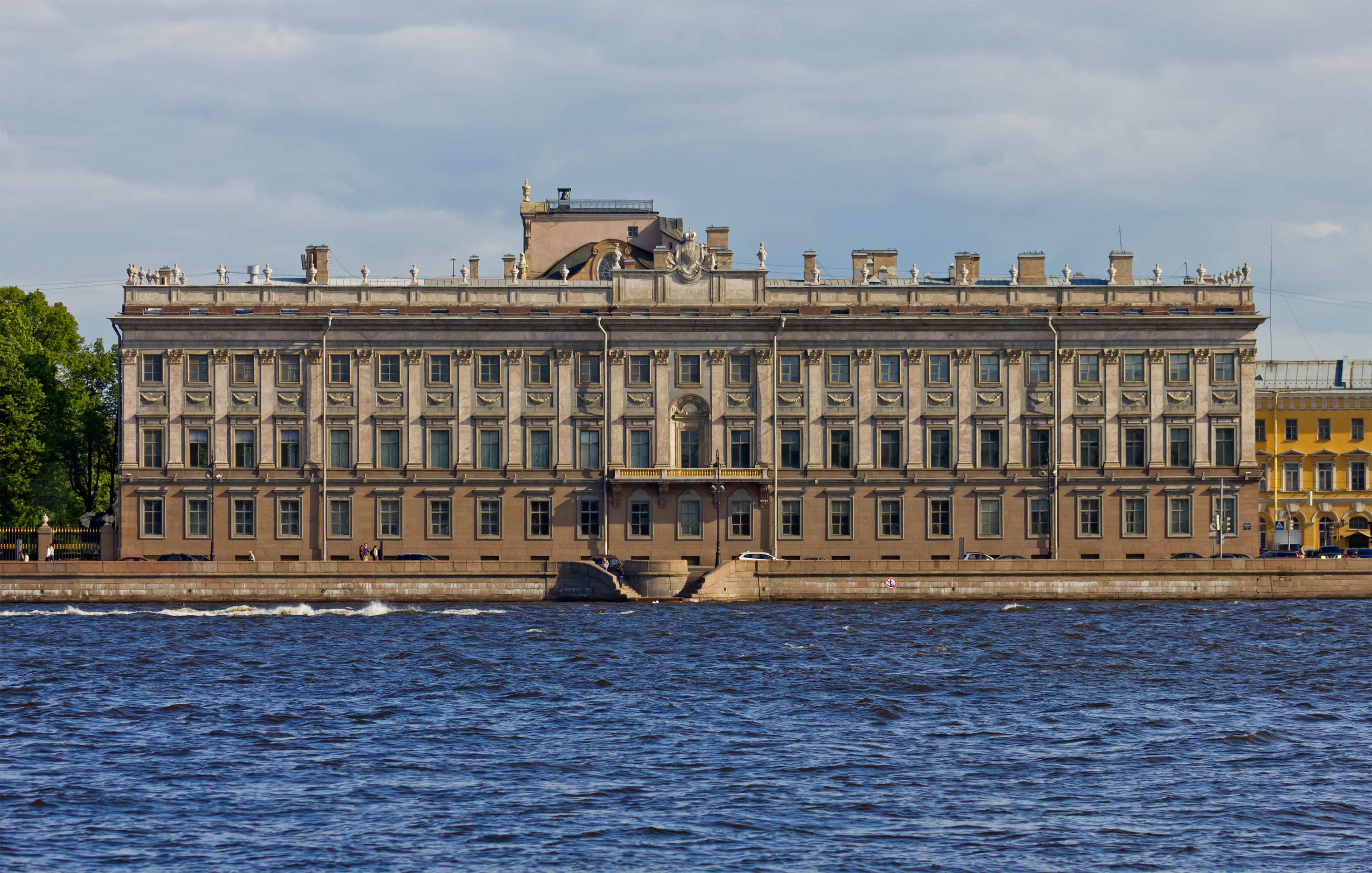
Marble Palace Kolkata
The humid Kolkata air hung heavy, a stark contrast to the crisp winter mornings I’m accustomed to in Uttar Pradesh. But the oppressive heat couldn’t diminish the anticipation I felt as I approached the Marble Palace, a structure whispered about in hushed tones for its exquisite beauty and enigmatic history. Tucked away on Muktaram Babu Street, its neoclassical façade, surprisingly understated, offered a mere glimpse of the treasures within. Stepping through the imposing iron gates felt like crossing a threshold into another era. The courtyard, a surprising oasis of calm amidst the city’s cacophony, was dominated by a magnificent marble statue of Queen Victoria, a stark reminder of the Raj's enduring influence. The palace itself, a blend of neoclassical and traditional Bengali styles, was a testament to the eclectic tastes of its 19th-century founder, Raja Rajendra Mullick, a wealthy Bengali merchant. The sheer abundance of marble, sourced from across the globe, was breathtaking. The floors, the columns, even some of the furniture, gleamed with a cool, polished elegance. I ran my hand over a balustrade, the smooth, cool surface a welcome respite from the muggy air. The intricate carvings, depicting everything from floral motifs to mythological scenes, spoke of the skilled artisans who had poured their hearts into this architectural marvel. As I moved through the labyrinthine interiors, I was struck by the sheer diversity of the collection housed within. It wasn't just the expected European sculptures and Victorian furniture; the palace was a veritable microcosm of global art and culture. I gazed at Belgian stained-glass windows, admired Chinese porcelain vases, and examined Roman busts, all coexisting in a harmonious, if somewhat bewildering, display. It was a testament to Mullick's passion for collecting, a passion that bordered on obsession. One room, the Thakur-Dalan, or the place of worship, particularly resonated with me. Here, amidst the European grandeur, was a dedicated space for traditional Hindu deities. This juxtaposition, this seamless blending of Eastern and Western traditions, felt uniquely Indian. It reminded me of the syncretic nature of our own culture in Uttar Pradesh, where Mughal influences have intertwined with ancient Hindu traditions. The palace, however, was not without its shadows. As I wandered through the dimly lit corridors, I couldn't shake off a sense of melancholy. The sheer opulence felt almost overwhelming, a stark contrast to the poverty that existed just beyond the palace walls. I learned that photography was strictly prohibited inside, a rule I respected, but which also added to the air of mystery and seclusion. It felt as though the palace was guarding its secrets, unwilling to fully reveal itself to the outside world. The extensive collection of paintings, including works by European masters and renowned Indian artists, further fueled this sense of intrigue. I stood before a painting attributed to Rubens, its vibrant colours seemingly untouched by time, and pondered the stories these walls could tell. The palace wasn't just a repository of art; it was a living archive, a silent witness to the changing tides of history. Leaving the Marble Palace, I stepped back into the vibrant chaos of Kolkata, the city's sounds and smells assaulting my senses after the hushed stillness within. The experience, however, lingered. The palace, with its marble grandeur and its enigmatic aura, had left an indelible mark. It was a place of contradictions, a testament to both the opulence and the complexities of a bygone era, a place that continued to whisper its secrets long after I had left its cool embrace. It was a reminder that even amidst the relentless march of progress, pockets of the past remain, waiting to be discovered, explored, and understood.
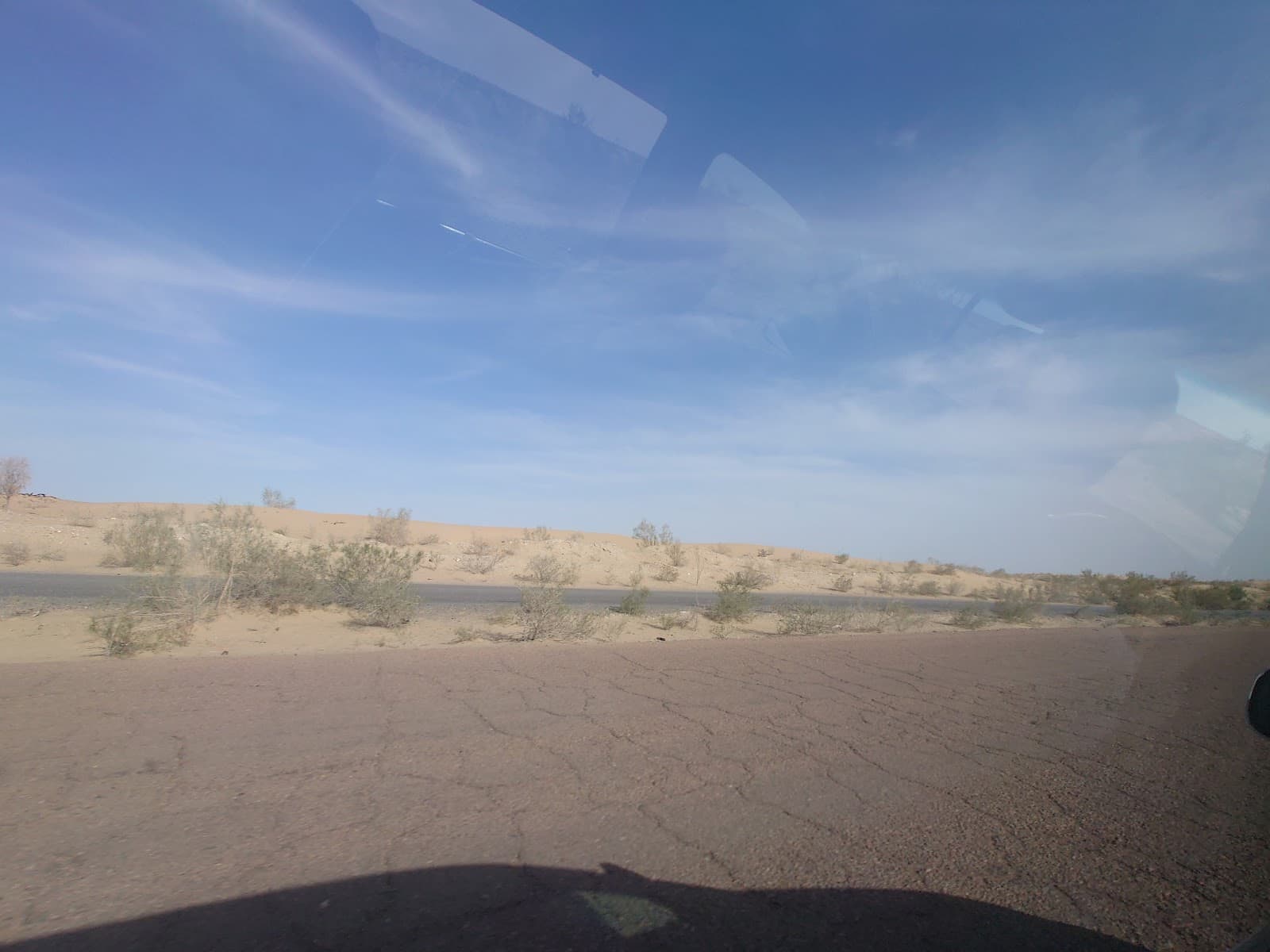
Takhirbaj Depe Karakum Desert Turkmenistan
Takhirbaj Depe, situated in the Karakum Desert of Turkmenistan, stands as a profound testament to India's millennia-spanning cultural heritage, embodying the ancient and continuous traditions of Indian civilization. This significant archaeological site, categorized as a temple, reflects the distinctive Bactria-Margiana, Vedic Period, Indo-Bmac, and Early Indic Religious architectural styles, dating back to approximately 2500 BC during the Bronze Age [1] [2]. The architectural complex at Takhirbaj Depe, a key component of the Bactria-Margiana Archaeological Complex (BMAC), also known as the Oxus Civilization, showcases proto-urban planning principles that resonate with early Indian urbanism [2] [3]. The structures at Takhirbaj Depe primarily utilize indigenous materials and construction techniques, emphasizing sun-dried mudbricks (pakhsa) and clay plaster, reflecting deep historical roots in the region's building traditions [1]. While specific dimensions for the main temple structure at Takhirbaj Depe are subject to ongoing research, broader BMAC sites, which share architectural characteristics, feature monumental buildings and residential complexes [1] [5]. For instance, related BMAC domestic architecture at sites like Kelleli 4 reveals square layouts, approximately 29.5 x 29.5 meters, oriented along cardinal directions, with exterior walls up to 1 meter thick [1]. These structures often incorporate single rectangular towers on each facade, except for the southern side where two towers frame the entrance [1]. The interior spaces are typically divided into numerous rectangular rooms, some featuring in-wall fireplaces for heating and cooking, indicative of sophisticated domestic arrangements [1]. Doorways are generally narrow, ranging from 50 to 70 centimeters in width, with raised doorsteps between 10 and 30 centimeters high [1]. Some rooms also contained rectangular or semicircular podiums constructed from carefully plastered sun-dried mudbricks [1]. The temple complex at Takhirbaj Depe, as part of the broader BMAC architectural tradition, would have incorporated similar construction methods, potentially featuring monumental mudbrick platforms and enclosed courtyards, characteristic of early religious architecture in the region [2] [5]. The presence of round kilns, similar to modern tandoors, within associated buildings at Takhirbaj 3, suggests advanced ceramic production and culinary practices integral to the community's life and potentially ritualistic activities [1]. The architectural elements, including the use of beaten earth and mudbricks, align with the early building practices observed in the Vedic period, where structures often comprised circular or oval huts with wooden frames and barrel roofs, evolving into more complex forms [4]. This continuity in material and technique underscores the enduring legacy of ancient building knowledge across the broader Indo-Iranian cultural sphere [3] [4]. Conservation efforts at Takhirbaj Depe are ongoing, focusing on the stabilization of mudbrick structures and the preservation of archaeological findings [1]. The site is a National Heritage Site, with archaeological excavations, notably between 1991 and 1993, contributing significantly to understanding its layout and cultural significance [1]. These findings continue to inform scholarly research into the connections between the BMAC and early Indic civilizations, highlighting the site's role as a crucial link in the cultural continuum that spans thousands of years [3]. The site is currently maintained to facilitate further research and controlled access, ensuring its long-term preservation as a testament to ancient Indian architectural and religious traditions. The operational readiness supports continued archaeological investigation and academic study.
Sri Mandir Auburn
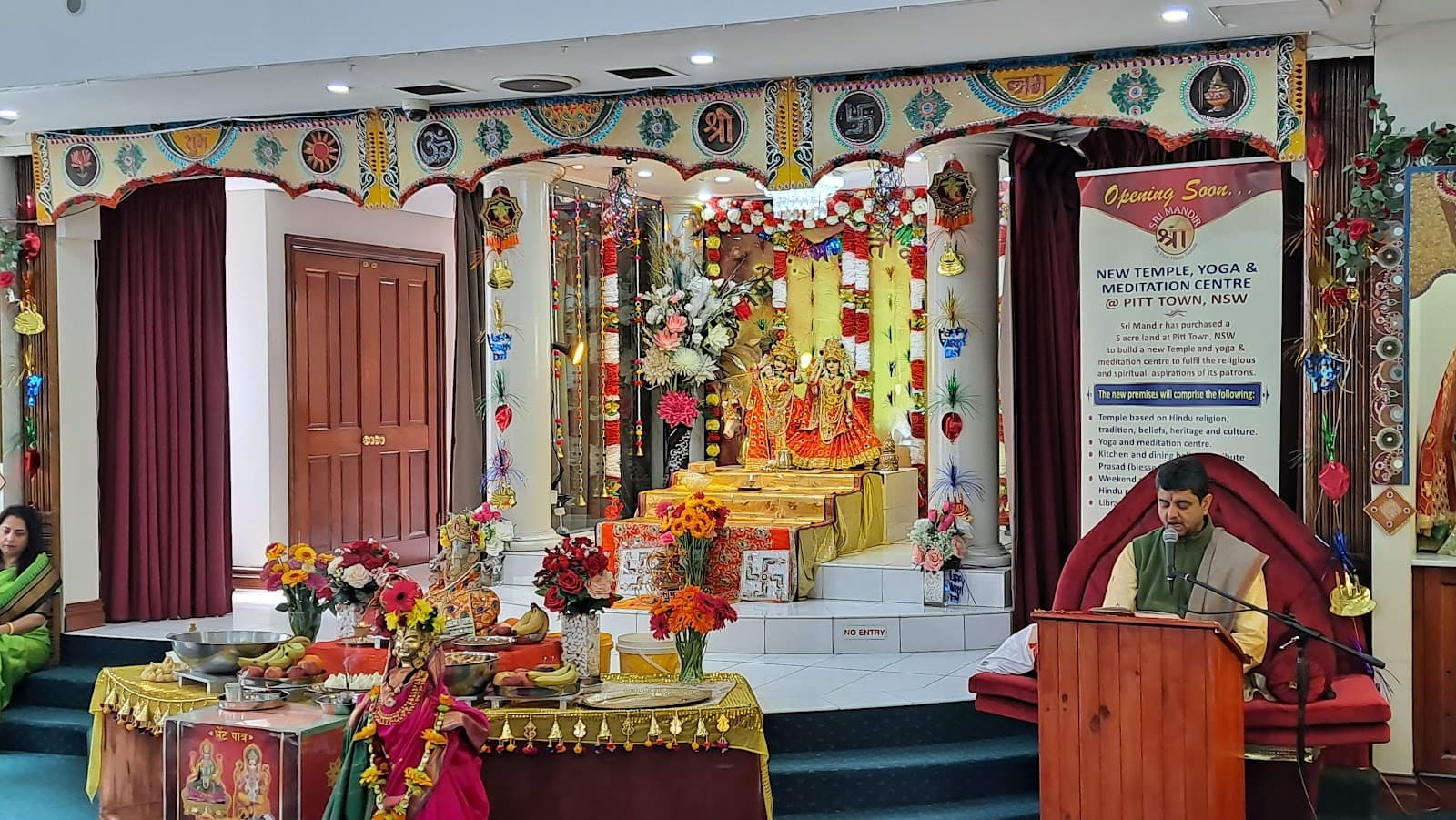
Sri Mandir Auburn is dedicated to multi-deity Hindu worship and anchors Auburn, New South Wales, as Australia’s oldest continuously operating mandir ([1][2]). Doors open 6:00 AM-12:00 PM and 4:00 PM-9:00 PM daily, with Thursday and Sunday schedules extending to 10:00 PM to accommodate Hanuman chalisa recitations and bhajan choirs ([1][3]). A volunteer operations desk under the mandapa canopy coordinates RFID-based headcounts, dispatching ushers to maintain one-way circulation along the narrow verandahs that wrap the former warehouse shell ([1][2]). The annadhanam kitchen upstairs uses induction cooklines and stainless bain-maries, while a dumbwaiter shuttles prasadam to the ground-floor hall so stairwells remain clear for emergency egress ([1][4]). Wheelchair access is provided via a platform lift off Cumberland Road and tactile paving links the entry to the garbhagriha viewing rail; volunteers are trained in Auslan basics and maintain a quiet room for neurodiverse visitors ([2][3]). Acoustic panels and ceiling fans temper the brick nave, and HEPA purifiers cycle air during peak crowds, ensuring a comfortable environment even when festival drums and conch blasts resonate through the hall ([3][5]). Digital signage presents trilingual English-Hindi-Tamil instructions, QR links for seva booking, and City of Parramatta-endorsed evacuation diagrams refreshed annually ([2]). With fire wardens rostered, first-aid kits stocked, and a broadcast desk streaming pujas to elders at home, the temple stays operationally ready for daily worship, rites of passage, and civic dialogue sessions hosted in its meeting rooms ([1][3]).
Po Klong Garai Towers Phan Rang Vietnam
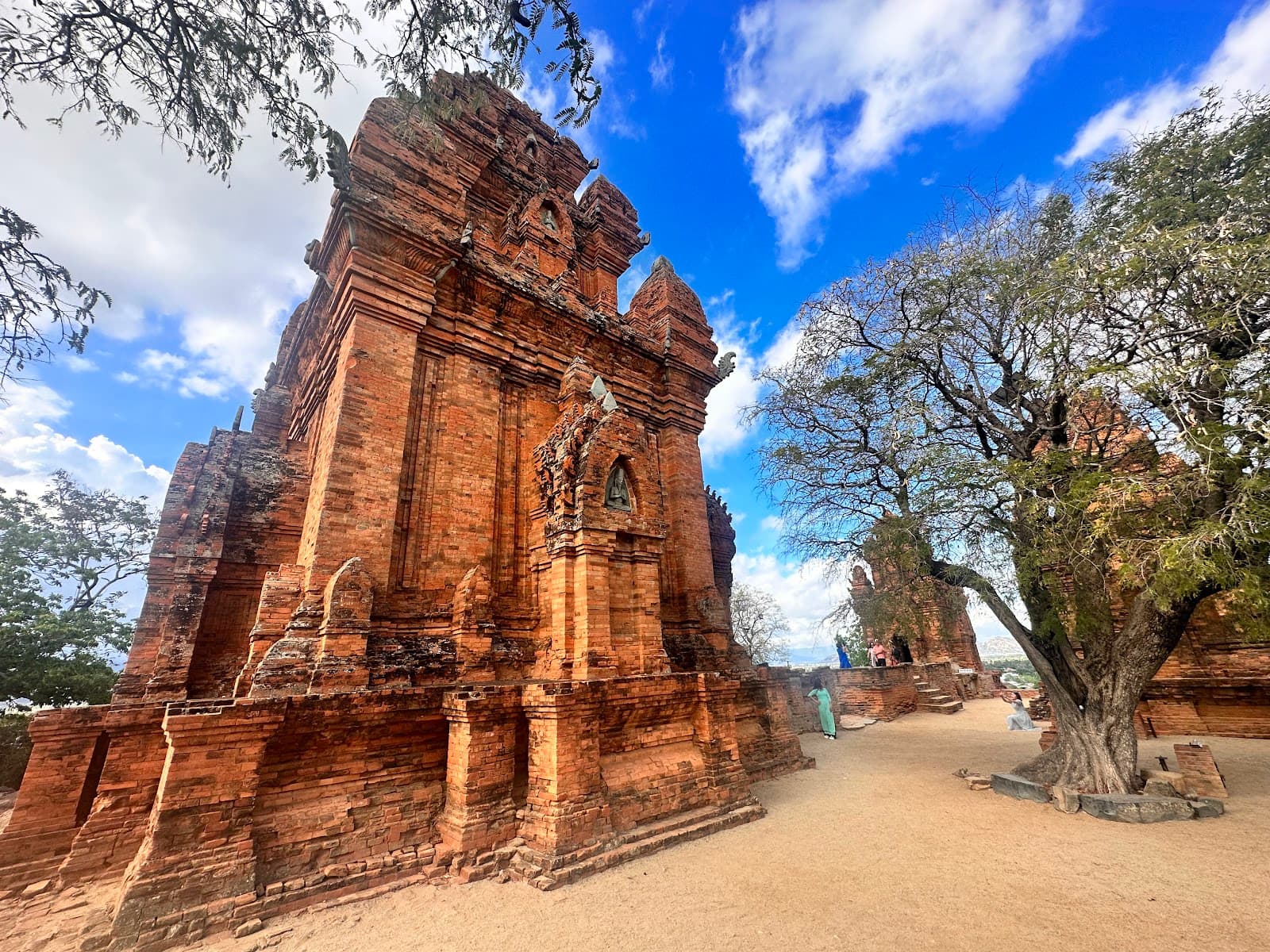
Po Klong Garai Towers, dramatically situated on a hilltop overlooking the city of Phan Rang in Ninh Thuan Province, Vietnam, represent one of the most magnificent and well-preserved Cham Hindu temple complexes in Vietnam, constructed in the late 13th century CE to honor King Po Klong Garai, a revered Champa monarch who is remembered for his wisdom and contributions to Cham civilization, creating a stunning testament to the continued transmission of Indian Hindu religious and architectural traditions to Southeast Asia during the late medieval period. The temple complex, comprising three towers including a main tower dedicated to Shiva, a fire tower, and a gate tower, features extraordinary red brick structures adorned with intricate sandstone carvings and bas-reliefs that demonstrate the sophisticated synthesis of Indian Hindu temple architecture, particularly the Dravidian traditions of southern India, with indigenous Cham building techniques, creating a unique architectural expression that reflects Champa's deep and enduring engagement with Indian religious and cultural traditions. The main tower, standing approximately 21 meters tall and dedicated to Shiva, features elaborate decorative programs including bas-reliefs depicting Hindu deities, mythological scenes, and Cham royal iconography that demonstrate the direct transmission of Indian Hindu iconography and artistic traditions, while the discovery of Sanskrit inscriptions and Cham inscriptions provides crucial evidence of the site's role as a center for the transmission of Indian religious texts and practices to Southeast Asia. The temple complex served as a major center of Hindu worship for the Champa Kingdom, attracting devotees from across the region, while the site's location on a prominent hilltop, chosen according to Indian cosmological principles emphasizing the connection between earth and sky, underscores its spiritual significance as a place where the divine and earthly realms intersected, and the site's continued use as an active place of worship by Cham communities demonstrates the enduring vitality of Hindu religious practices in Vietnam. Archaeological evidence reveals that the complex represents one of the finest examples of late Cham architecture, demonstrating the continued refinement of Cham Hindu temple design and its continued engagement with Indian traditions even as Champa faced increasing pressure from neighboring powers, while the sophisticated brick construction techniques, including the unique Cham method of firing bricks in situ, created exceptionally durable structures that have withstood centuries of environmental stress and human activity. The towers feature distinctive Cham architectural elements including tiered pyramidal roofs, elaborate false doors, and extensive decorative programs that demonstrate the adaptation of Indian temple architecture to local materials and aesthetic preferences, while the site's excellent preservation provides crucial insights into the sophisticated engineering and artistic techniques employed in Cham temple construction. Today, Po Klong Garai stands as one of the most important Cham Hindu temples in Vietnam, serving as a powerful testament to the transmission of Indian Hindu culture and architecture to Southeast Asia, while the site's continued function as an active place of worship and its prominent location ensure its ongoing significance as both a cultural monument and a living religious center that bridges ancient Cham traditions with contemporary Vietnamese society. ([1][2])
Chausath Yogini Temple Jabalpur
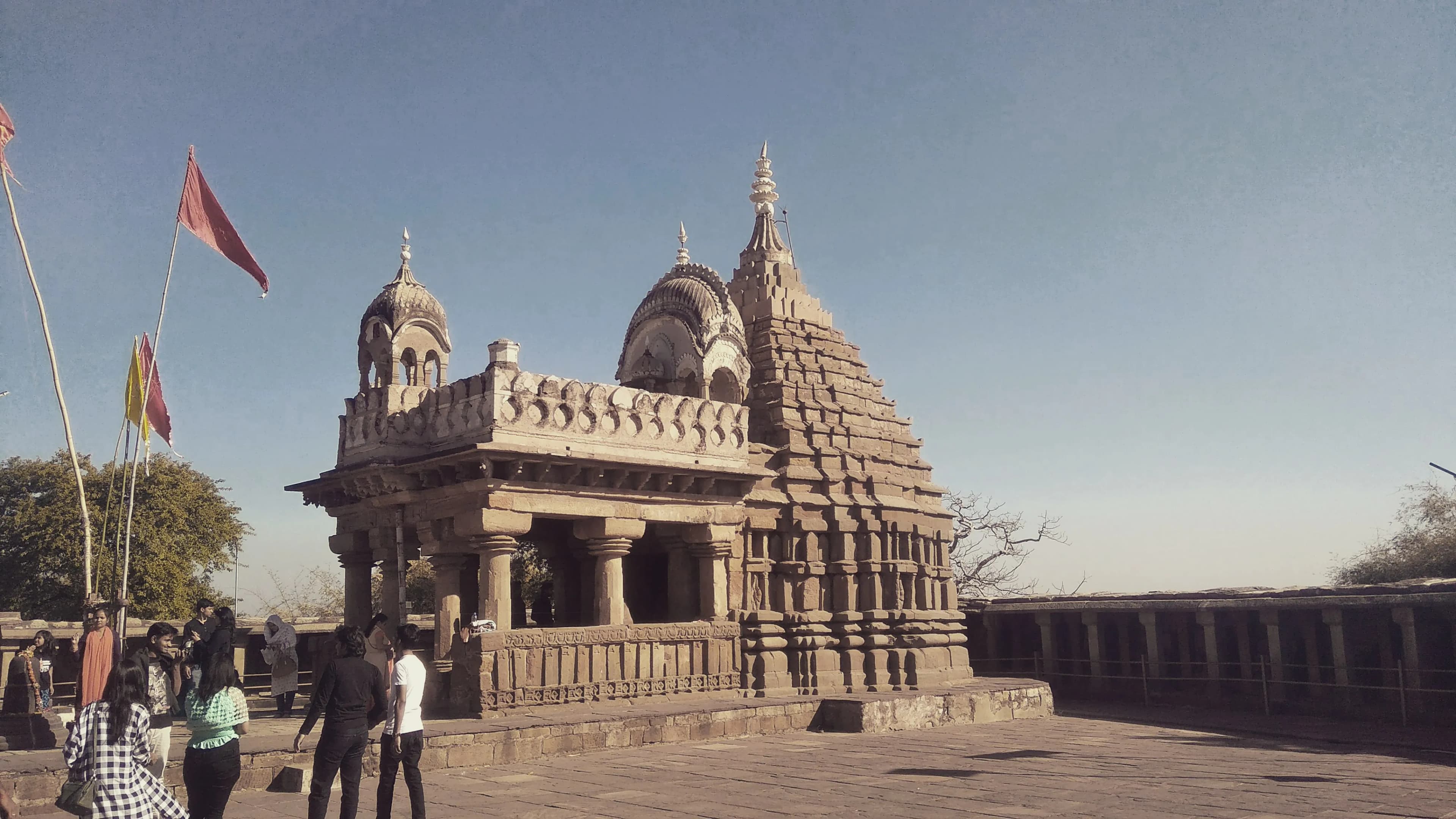
Perched atop a hill in Bhedaghat, Jabalpur, the Chausath Yogini Temple presents a captivating silhouette ([1]). Constructed around 950 CE by the Kalachuri dynasty, this open-air, circular temple deviates from conventional temple architecture ([2]). Dedicated to the sixty-four Yoginis, female attendants of Durga, the temple embodies a unique spiritual and architectural heritage ([3]). Granite and sandstone blocks, meticulously carved, form the structure of this hypostyle marvel ([4]). The Pratihara architectural style is evident in its design, reflecting the artistic preferences of the Kalachuri period ([5]). Unlike typical towering structures, its raw, primal energy emanates from the weathered stone and the powerful presence of the Yogini sculptures ([1]). Their diverse iconography, from wielding weapons to meditative poses, links to tantric practices ([3]). Walking the circular ambulatory offers panoramic views of the Narmada river ([1]). Within the Garbhagriha (Sanctum), a small shrine dedicated to Lord Shiva reinforces his supreme position ([2]). The temple's stark simplicity, devoid of excessive ornamentation, emphasizes the natural beauty of the sandstone and its dramatic setting ([4]). This unique temple exemplifies the ingenuity and artistic vision of the Kalachuri dynasty ([5]). During the Kalachuri period, temple architecture in the region saw a flourishing of unique styles ([6]). The Chausath Yogini Temple's circular design is a departure from the more common rectangular or square layouts often dictated by Vastu Shastra principles, the ancient Indian science of architecture ([7]). This distinctive layout might be connected to tantric traditions, where circular forms symbolize the cyclical nature of existence ([8]). The open colonnaded circle, or hypostyle design, allows for natural light and ventilation, creating a unique spiritual ambiance ([9]). This temple stands as a testament to the Kalachuri dynasty's artistic vision and their patronage of innovative architectural forms ([10]).
Mattancherry Palace Kochi
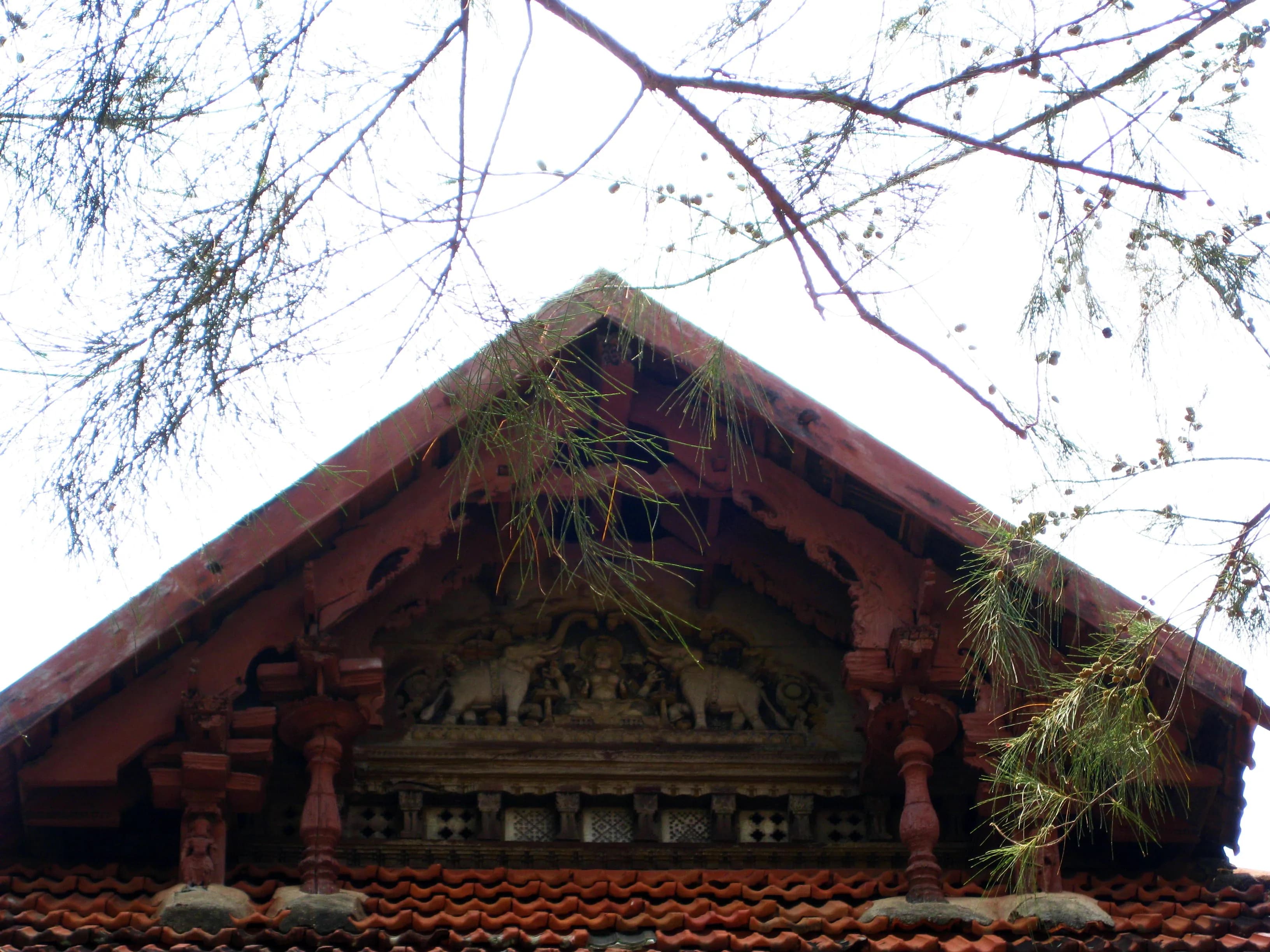
The Mattancherry Palace, also known as the Dutch Palace, stands as a testament to the layered history of Kochi, a city where the whispers of Portuguese, Dutch, and Indian influences intertwine. Having explored every UNESCO site in India, I can confidently say that this palace offers a unique glimpse into this cultural confluence, a narrative etched onto its walls and woven into its very fabric. Stepping through the unassuming entrance, I was immediately struck by the contrast between the simple exterior and the vibrant world within. The palace, gifted to the Raja of Kochi by the Portuguese in 1557 and later renovated by the Dutch, is a fascinating blend of Kerala architecture and European aesthetics. The sloping roof, typical of the region, is adorned with terracotta tiles, while the interiors showcase a stunning collection of murals, arguably the most captivating feature of the palace. These murals, primarily depicting scenes from the Ramayana, Mahabharata, and Puranic legends, are a visual feast. The vibrant colours, predominantly red, green, and yellow, retain a surprising freshness despite the passage of time. I spent hours captivated by the intricate details – the expressive eyes of the characters, the elaborate costumes, and the dynamic portrayal of the stories. The sheer scale of some of these murals, covering entire walls and ceilings, is breathtaking. One particular panel depicting the coronation of Rama left a lasting impression, its sheer grandeur and the meticulous detailing of the royal court showcasing the skill of the artists. Beyond the murals, the palace houses a fascinating collection of royal portraits, showcasing the lineage of the Kochi Rajas. These portraits, while not as visually striking as the murals, offer a valuable historical perspective, documenting the changing styles and influences over centuries. I found myself drawn to the portraits of the later Rajas, where the subtle incorporation of European elements in their attire and posture hinted at the growing Western influence. The palace architecture itself is a study in adaptation and fusion. The central courtyard, open to the sky, is a classic Kerala architectural element, providing natural ventilation and light. Surrounding this courtyard are four wings, each housing different sections of the palace. The influence of the Dutch renovations is evident in the long, airy corridors and the large windows, a departure from the more enclosed spaces typically found in traditional Kerala homes. I noticed the use of European-style tiles in certain sections, further highlighting the interplay of architectural styles. One of the more intriguing aspects of the palace is the presence of Hindu temples within the complex. Dedicated to Pazhayannur Bhagavathi, the tutelary deity of the Kochi royal family, these temples demonstrate the seamless integration of religious practices within the royal household. The contrast between the opulent palace interiors and the serene atmosphere of the temples added another layer to the overall experience. My visit to the Mattancherry Palace wasn't just a tour; it was a journey through time, a tangible experience of history unfolding. It's a place where the stories of kings and deities, of Portuguese traders and Dutch merchants, are interwoven into the very fabric of the building. For anyone seeking to understand the rich tapestry of Kerala's history and culture, the Mattancherry Palace is an essential stop, a place where the past comes alive in vibrant colour and intricate detail. It's a reminder that history isn't just about dates and events; it's about the stories etched onto walls, whispered through generations, and waiting to be discovered.
Durga Mandir Varanasi
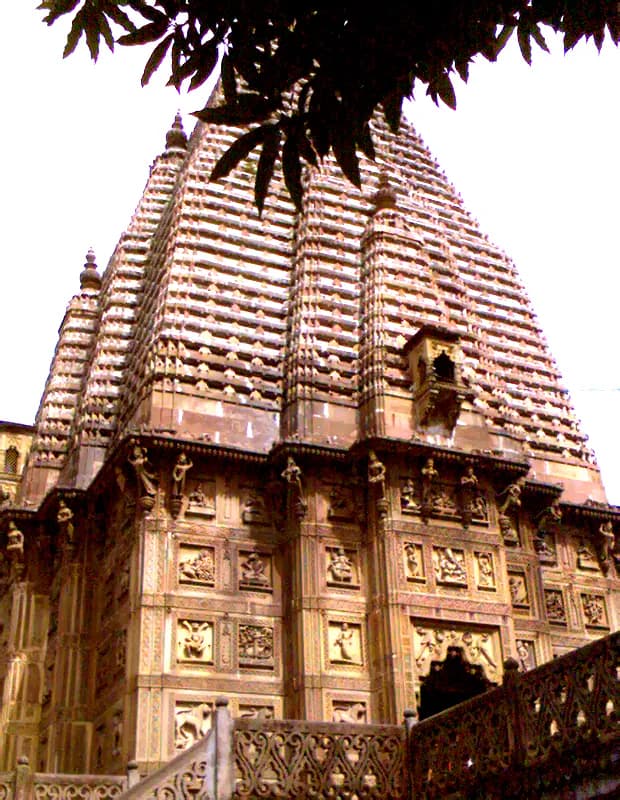
The air vibrates with a palpable energy. Not the frenetic energy of Varanasi’s bustling ghats, but something older, something rooted deeper. Here, nestled amidst the labyrinthine lanes a short boat ride from the main ghats, stands Durga Mandir, a 17th-century temple dedicated to the warrior goddess Durga. Its walls, a vibrant shade of ochre, rise against the sky, a beacon of power and devotion. My journey to Durga Mandir, another tick on my quest to experience every UNESCO site in India, began with a dawn boat ride. The Ganges, still shrouded in the morning mist, held a serene beauty, a stark contrast to the vibrant chaos that would soon erupt on its banks. As we approached Ramnagar, the temple's distinctive profile emerged, its multiple shikharas reaching towards the heavens. Stepping off the boat and onto the dusty lane leading to the temple, I was immediately struck by the sense of anticipation. The air buzzed with the low hum of chanting and the clang of bells. The temple, built on a high plinth, commanded attention. Its Nagara style architecture, typical of North Indian temples, is a feast for the eyes. The multi-tiered shikharas, adorned with intricate carvings, rise in a rhythmic crescendo, culminating in ornate finials. The ochre walls, though weathered by time and the elements, retain their vibrancy, a testament to the enduring faith of the devotees. A large rectangular pond, known as Durga Kund, flanks the temple. Local lore claims it was dug by the goddess herself and is connected to the nearby Ganges. The water, a murky green, reflects the temple’s imposing structure, creating a mesmerizing mirror image. Devotees circumambulate the kund, their prayers mingling with the chirping of birds and the distant sounds of the city. Entering the main sanctum, I was enveloped in a heady mix of incense, flowers, and the fervent energy of prayer. The dimly lit space, illuminated by flickering oil lamps, held an air of mystery. The idol of Goddess Durga, resplendent in red and gold, sits majestically on a lion, her multiple arms holding various weapons. The sheer power emanating from the deity is palpable, leaving an indelible impression on the visitor. While the main shrine is dedicated to Durga, the temple complex also houses smaller shrines dedicated to other deities, including Lord Hanuman and Lord Shiva. Each shrine, though smaller in scale, boasts the same intricate carvings and vibrant colours, showcasing the rich artistic traditions of the region. What struck me most about Durga Mandir wasn't just its architectural grandeur or the palpable devotion of its visitors. It was the seamless blend of history, mythology, and everyday life. Outside the temple walls, life continued at its usual pace. Vendors hawked their wares, children played in the dusty lanes, and cows ambled along, seemingly oblivious to the sacred space they shared. This juxtaposition of the sacred and the mundane, the ancient and the contemporary, is what makes Varanasi, and indeed India, so uniquely captivating. As I left Durga Mandir, the setting sun casting long shadows across the Ganges, I carried with me not just photographs and memories, but a deeper understanding of the enduring power of faith and the rich tapestry of Indian culture. This temple, a vibrant testament to devotion and artistry, is a must-see for anyone seeking to experience the true essence of Varanasi.
Bekal Fort Kasaragod
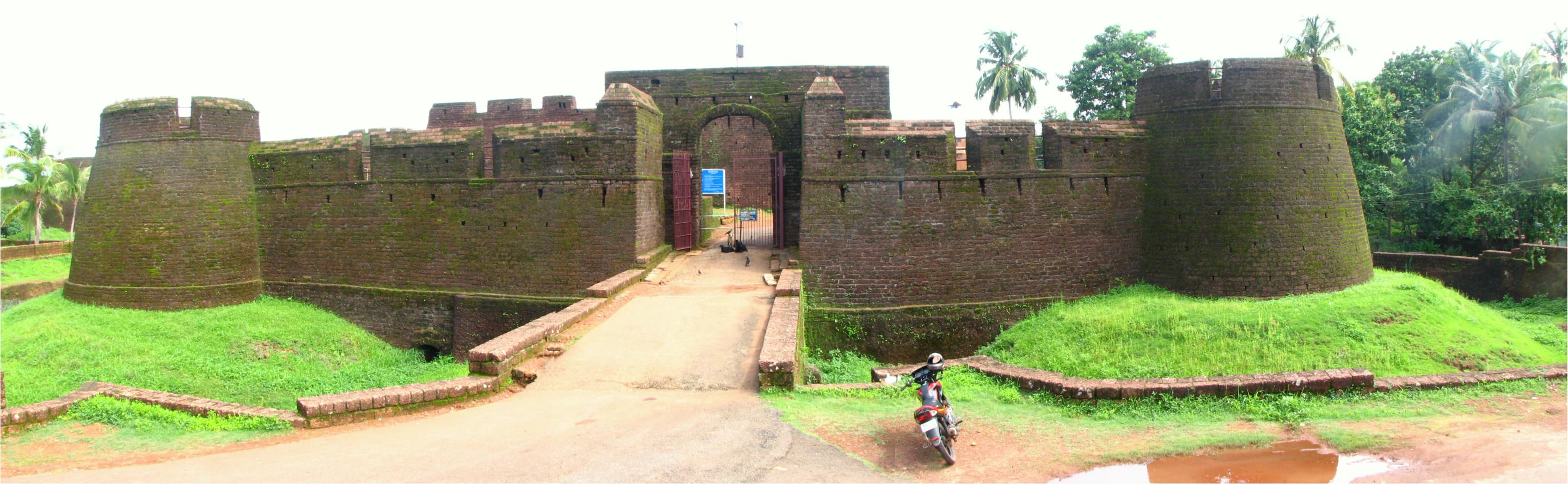
Amidst Kerala's coastal tapestry lies Bekal Fort, a 17th-century sentinel erected by Shivappa Nayaka of Keladi around 1650 CE ([3][4]). Unlike the Mughal's northern citadels, Bekal Fort showcases Kerala's military architecture, strategically positioned along the Malabar Coast ([1][4]). Its laterite walls, stretching over a kilometer, embody raw, earthy strength, a testament to the region's defensive needs ([1][2]). Sophisticated strategic planning defines Bekal Fort, evident in its keyhole-shaped bastion offering panoramic maritime views ([3]). The zigzagging pathways, a deliberate design to disorient invaders, highlight the fort's military function ([4]). The fort's design integrates Kerala's architectural traditions, reflecting the region's unique aesthetic sensibilities ([2]). While lacking the ornate carvings of other Indian forts, Bekal's beauty resides in its stark simplicity, emphasizing the natural strength of laterite ([1][2][5]). Within the fort's expanse, a Hanuman temple provides a vibrant counterpoint to the muted tones of the laterite structure ([3]). This sacred space reflects the enduring Hindu traditions of the region, coexisting harmoniously within the fort's military architecture. Vastu Shastra principles, the ancient Indian science of architecture, likely influenced the fort's layout, optimizing its defensive capabilities and aligning it with natural energies, though specific textual references are not available ([2]). Bekal Fort stands as a powerful reminder of Kerala's rich history and architectural prowess, blending military strategy with regional artistry ([4][5]). Laterite, stone, wood, and clay were used in the construction of this fort ([2]).
Rawak Stupa Hotan Xinjiang China
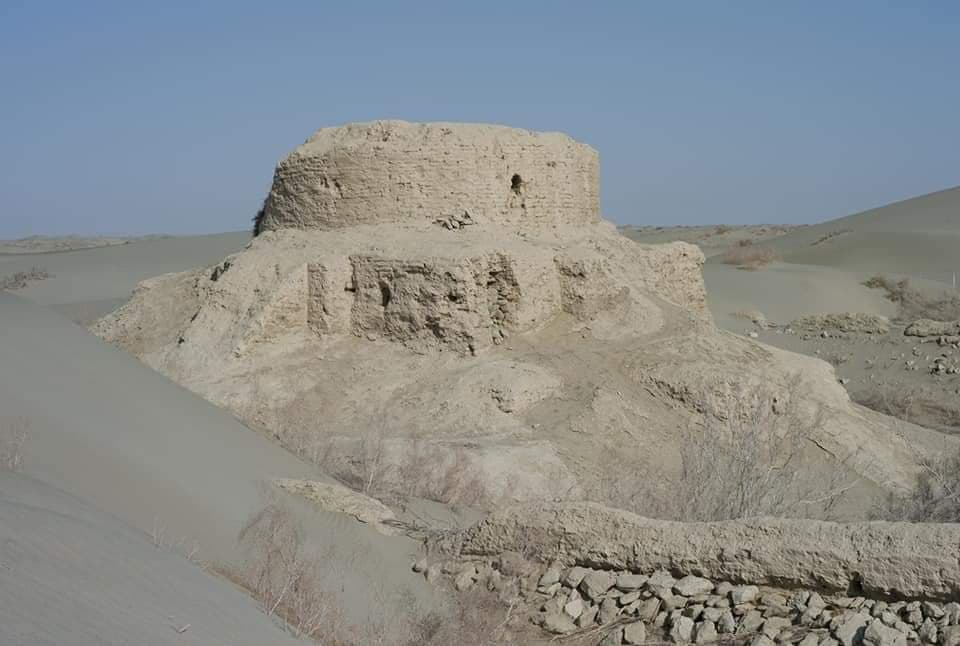
Rawak Stupa, located on the southern rim of the Taklamakan Desert near Hotan, Xinjiang, China, represents one of the most magnificent and architecturally sophisticated Buddhist monuments along the ancient Silk Road, constructed during the 3rd to 4th centuries CE when the Kingdom of Khotan flourished as a major center for the transmission of Buddhism from India to China, creating a stunning three-dimensional mandala that demonstrates the direct transmission of Indian Buddhist architectural and iconographic traditions to Central Asia. The stupa, constructed primarily from rammed earth and fired brick with extensive stucco decoration, features a massive cruciform-shaped base with staircases on each of the four sides, representing an architectural evolution from the simple square-based stupa form found in India to the more elaborate cruciform design that became characteristic of Central Asian Buddhist architecture, while the stupa itself rises in multiple tiers to create a monumental structure that served as the focal point of an extensive Buddhist monastery complex. The site's architectural design demonstrates direct influence from Indian Buddhist stupa architecture, particularly the traditions of Taxila and other Gandharan sites, with the overall form, decorative elements, and iconographic programs reflecting Indian Buddhist practices that were systematically transmitted to Central Asia, while the discovery of numerous colossal statues, terracotta reliefs, and wall paintings that once surrounded the stupa provides crucial evidence of the site's role as a major center of Buddhist artistic production that was directly influenced by Indian traditions. Archaeological excavations conducted by Sir Aurel Stein in 1901 revealed that the stupa was originally surrounded by a courtyard containing over 90 smaller stupas arranged in a mandala pattern, with the entire complex forming a three-dimensional representation of Buddhist cosmology that demonstrates the sophisticated understanding of Indian Buddhist iconography and architectural planning possessed by the builders, while the discovery of numerous stucco sculptures and wall paintings executed in styles clearly derived from Indian artistic traditions provides further evidence of the direct transmission of Indian Buddhist art to Central Asia. The stupa complex flourished particularly during the 4th to 5th centuries CE, when Khotan served as one of the most important centers for the transmission of Buddhism from India to China, attracting monks, traders, and pilgrims from across the Buddhist world, while the site's location along the southern Silk Road facilitated its role in the transmission of Buddhist teachings, art, and culture. The site was likely abandoned during the 8th or 9th century CE following political changes and the decline of Buddhism in the region, but the substantial architectural remains that survive provide crucial evidence of the site's original grandeur and the sophisticated engineering techniques employed in its construction, while the discovery of numerous artifacts including sculptures, manuscripts, and ritual objects continues to provide insights into the site's history and significance. Today, Rawak Stupa stands as a UNESCO Tentative List site and represents one of the most important Buddhist monuments in the Taklamakan Desert, serving as a powerful testament to the transmission of Indian Buddhist architecture and art along the Silk Road, while ongoing archaeological research and preservation efforts continue to protect and study this extraordinary cultural treasure that demonstrates the profound impact of Indian civilization on Central Asian Buddhist art and architecture. ([1][2])
Kangra Fort Kangra
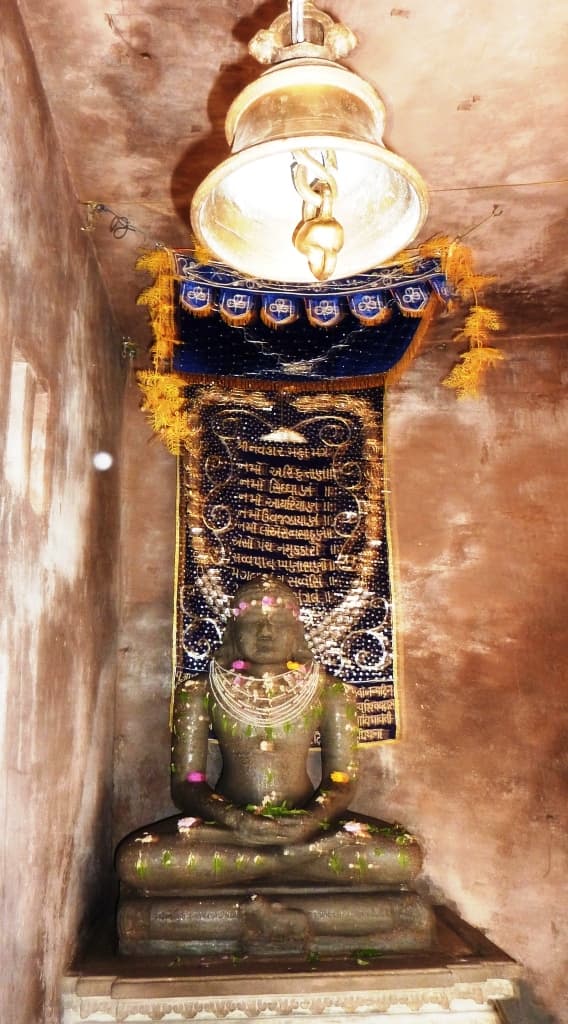
The wind whipped around me, carrying the scent of pine and a whisper of history as I stood before the imposing gates of Kangra Fort. Having explored the basalt-carved wonders of Maharashtra’s caves and the intricate details of its temples, I was eager to experience the distinct architectural language of this Himalayan fortress. Perched high on a strategic precipice overlooking the confluence of the Banganga and Majhi rivers, Kangra Fort exuded an aura of impregnable strength, a testament to its enduring legacy. My ascent through the massive gateway, locally known as the "Ranjit Singh Gate," felt like stepping back in time. The thick, fortified walls, scarred with the marks of battles fought and won, spoke volumes about the fort's tumultuous past. Each stone seemed to echo with the clash of swords and the thunder of cannons, a stark reminder of the fort’s strategic importance over centuries. Unlike the rock-cut architecture I was accustomed to in Maharashtra, Kangra’s fortifications were primarily built with dressed stone, lending it a different, more imposing character. Within the fort’s complex labyrinth, I discovered a fascinating blend of architectural styles. The influence of Rajput military architecture was evident in the sturdy ramparts, the strategically placed bastions, and the narrow, winding passages designed to confuse invaders. Yet, interspersed within this robust framework were glimpses of more delicate artistry. The crumbling remnants of palaces, adorned with faded frescoes and intricate carvings, hinted at a time of royal grandeur. The Maharani Mahal, despite its dilapidated state, still retained a certain elegance, its arched doorways and latticed windows offering glimpses of a bygone era. The Lakshmi Narayan Temple, nestled within the fort’s walls, was a striking contrast to the military structures surrounding it. Its shikhara, though damaged by past earthquakes, still reached towards the sky, a symbol of resilience and faith. The stone carvings on the temple walls, depicting scenes from Hindu mythology, were remarkably well-preserved, showcasing the skill of the artisans who crafted them. While the temple’s architecture bore some resemblance to the North Indian Nagara style, it also possessed a unique regional character, distinct from the temples I had encountered in Maharashtra. One of the most captivating aspects of Kangra Fort was its panoramic view. From the ramparts, I could see the vast expanse of the Kangra Valley stretching out before me, a patchwork of green fields and terraced hillsides. The snow-capped Dhauladhar range in the distance provided a breathtaking backdrop, adding to the fort’s majestic aura. It was easy to understand why this strategic location had been so fiercely contested throughout history. Exploring the fort’s museum, housed within the Ambika Devi Temple, provided further insights into its rich past. The collection of artifacts, including ancient coins, pottery shards, and miniature paintings, offered tangible evidence of the fort’s long and storied history. The museum also showcased the fort’s connection to the Katoch dynasty, who ruled the region for centuries. As I descended from the fort, the setting sun casting long shadows across the valley, I felt a profound sense of awe and admiration. Kangra Fort was not merely a collection of stones and mortar; it was a living testament to human resilience, ingenuity, and the enduring power of history. It stood as a stark contrast to the cave temples and intricately carved shrines of my home state, yet it resonated with the same spirit of human endeavor, a testament to the diverse tapestry of India’s cultural heritage. The echoes of battles and whispers of royal grandeur still lingered in the air, a reminder that the stories etched within these ancient walls continue to resonate across the ages.
Quick Links
Plan Your Heritage Journey
Get personalized recommendations and detailed visitor guides