Has Inheritage Foundation supported you today?
Your contribution helps preserve India's ancient temples, languages, and cultural heritage. Every rupee makes a difference.
Secure payment • Instant 80G certificate
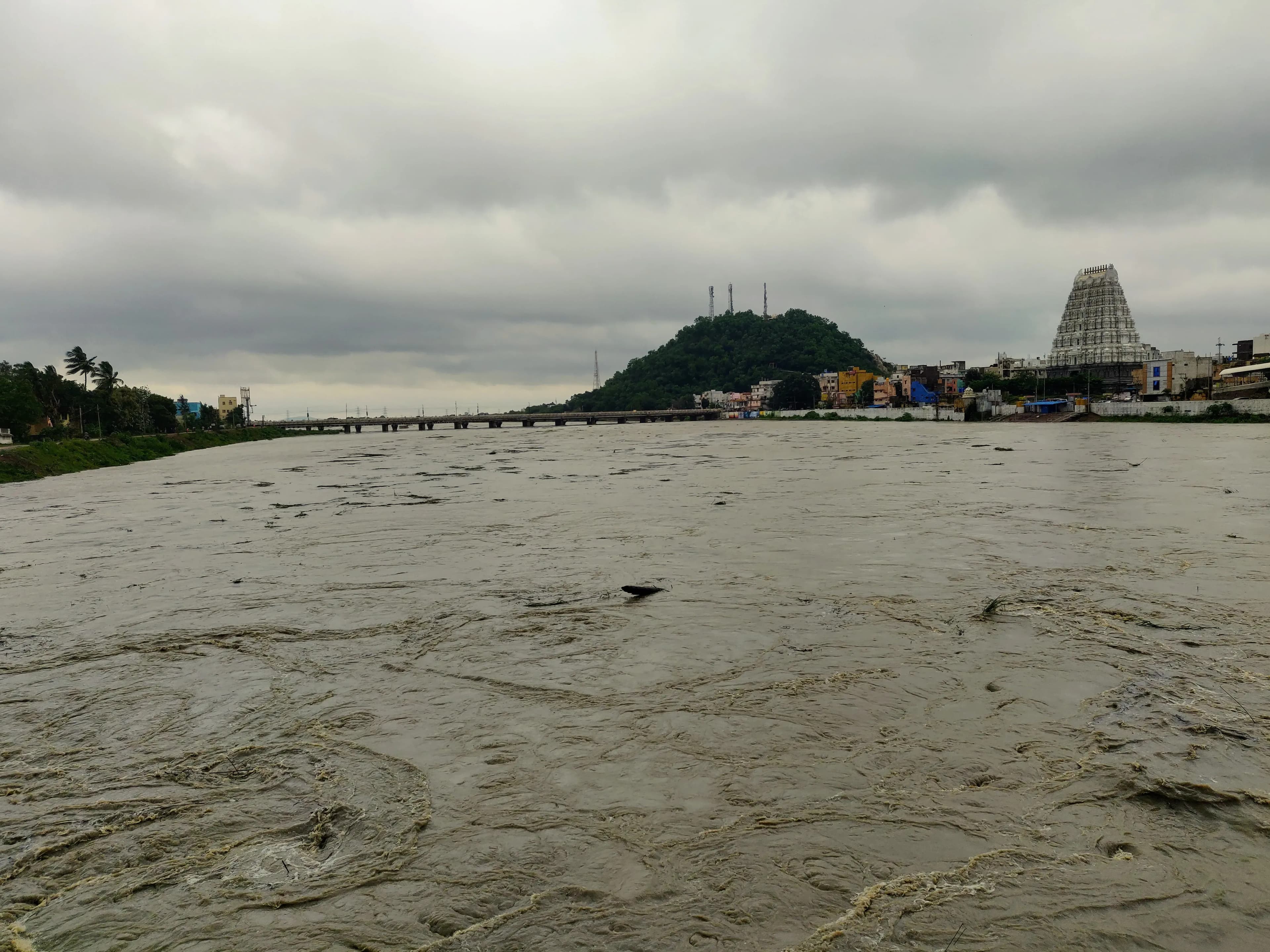
Srikalahasti Temple Srikalahasti
The air hung thick with incense and the murmur of chanting as I stepped through the towering gopuram of the Srikalahasti Temple. Sunlight, fractured by the intricate carvings, dappled the stone floor, creating an ethereal atmosphere. This wasn't just another temple on my UNESCO World Heritage journey across India; Srikalahasti held a different energy, a palpable sense of ancient power. Located in the Chittoor district of Andhra Pradesh, this temple, dedicated to Vayu, the wind god, is a testament to centuries of devotion and architectural brilliance. My eyes were immediately drawn upwards to the main Vimana, the Shikharam, soaring above the inner sanctum. This impressive structure, known as the Vayu Lingam, is not a sculpted idol but a natural rock formation believed to be a manifestation of Vayu. The flickering lamps surrounding it cast dancing shadows, adding to the mystique. The temple's Dravidian architecture is a marvel, with its intricate carvings depicting scenes from Hindu mythology. I spent a considerable amount of time studying the detailed friezes, each panel narrating a story, a testament to the skill of the artisans who crafted them centuries ago. The vibrant colours, though faded with time, still hinted at the temple's former glory. One of the most striking features of Srikalahasti is its massive, 100-pillar mandapam. The sheer scale of this hall is breathtaking. Each pillar is a work of art, adorned with elaborate carvings of deities, mythical creatures, and floral motifs. I could almost hear the echoes of ancient ceremonies and festivals that must have taken place within these hallowed walls. Walking through the mandapam, I felt a sense of connection to the generations of devotees who had walked this same path before me. The temple complex is vast, encompassing several smaller shrines dedicated to various deities. I explored each one, noting the unique architectural nuances and the distinct atmosphere they held. The shrine of Kalahasteeswara, a form of Shiva, is particularly noteworthy. The legend of the spider, the snake, and the elephant, each offering their devotion to Shiva in their own way, is deeply embedded in the temple's lore and adds another layer of spiritual significance to the site. Beyond the architectural grandeur, what truly captivated me at Srikalahasti was the palpable devotion of the pilgrims. From the elderly woman whispering prayers with closed eyes to the young family offering coconuts, the air was thick with faith. Witnessing this fervent devotion firsthand gave me a deeper understanding of the temple's significance, not just as a historical monument but as a living, breathing centre of spirituality. As I left the temple, the chanting still resonated in my ears. Srikalahasti is more than just a collection of stones and carvings; it's a testament to the enduring power of faith and the artistic brilliance of a bygone era. It's a place where history, mythology, and spirituality intertwine, creating an experience that stays with you long after you've left its sacred grounds. Of all the UNESCO sites I've visited in India, Srikalahasti holds a special place, a reminder of the rich tapestry of culture and belief that makes this country so unique. The wind, whispering through the temple towers, seemed to carry the echoes of centuries of prayers, a testament to the enduring spirit of this ancient sanctuary.
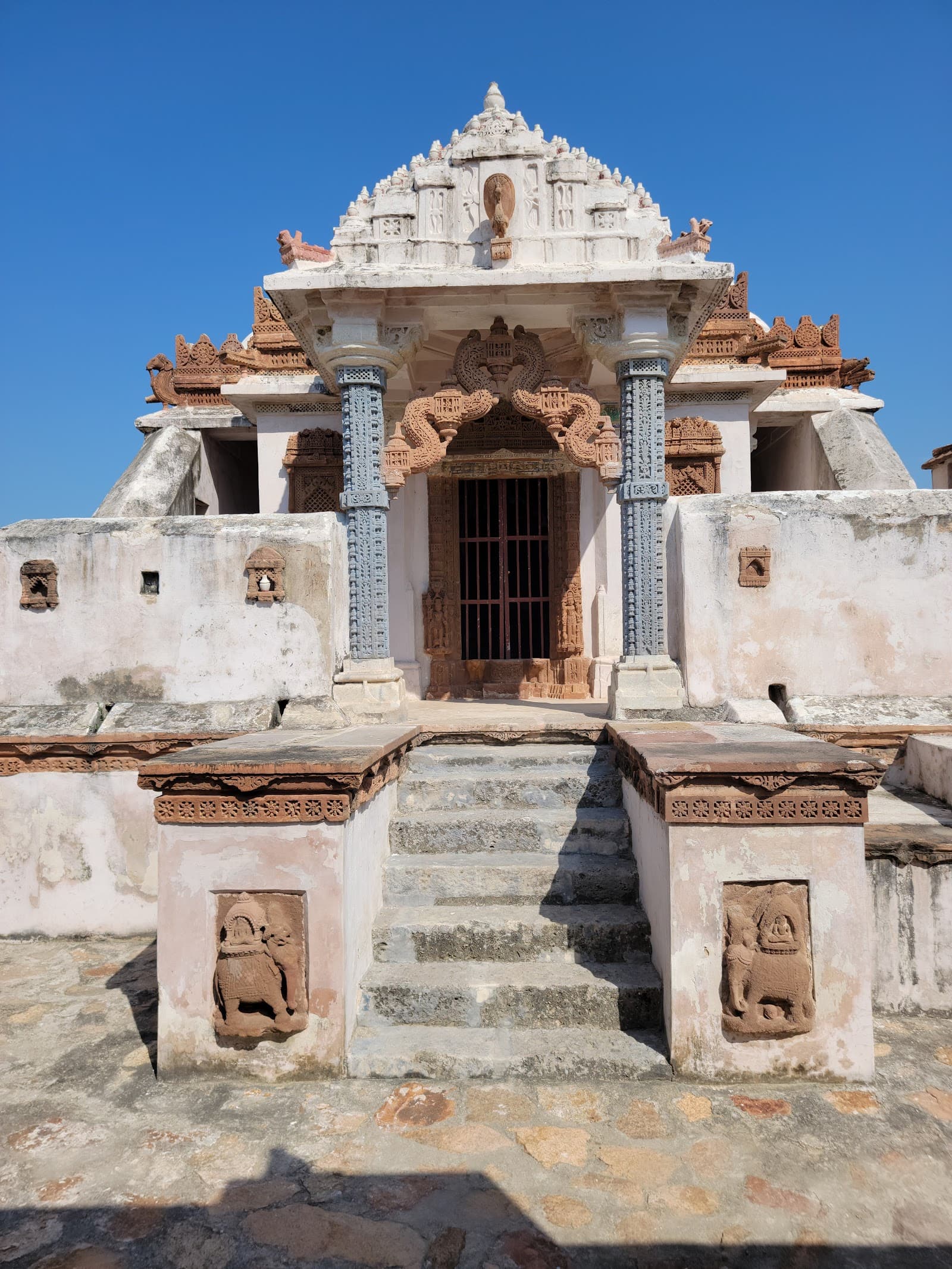
Jain Temple Nagarparkar Tharparkar
Jain Temple Nagarparkar, located in the Thar Desert region of Sindh Province, represents a significant 14th-16th century CE Jain temple complex that demonstrates the rich religious diversity of the region, which was historically part of the greater Hindu rashtra extending across the Indian subcontinent and maintained strong connections to Indic religious traditions including Jainism. The temple complex, now part of the Nagarparkar Cultural Landscape inscribed on UNESCO’s tentative list, features multiple Jain temples constructed primarily from white marble, with the most notable being the Gori Temple dedicated to Lord Parshvanatha, the 23rd Jain Tirthankara. The temples, constructed during a period when the Thar Desert region was part of various Hindu and Jain kingdoms that maintained strong cultural and commercial connections to Rajasthan and other parts of India, feature distinctive architecture that closely resembles the famous Jain temples of Mount Abu in Rajasthan, demonstrating the cultural unity of the greater Hindu rashtra that extended across political boundaries. The Gori Temple, measuring 125 feet by 60 feet and constructed entirely of marble, stands on a high platform accessed by stone steps, with interiors adorned with intricate Jain religious imagery including frescoes that are considered older than those in North Indian Jain temples. The temple complex includes 24 small cells, possibly representing the 24 Tirthankaras of Jainism, and demonstrates sophisticated stone carving techniques, intricate architectural planning, and advanced understanding of marble construction. Archaeological evidence indicates the temples were constructed during a period when Nagarparkar was an important trading center connecting the Thar Desert to maritime trade routes, with Jain merchants playing a significant role in maintaining commercial and cultural connections across the greater Hindu rashtra. Today, Jain Temple Nagarparkar stands as a powerful symbol of the Jain heritage of Pakistan and the region’s historical connection to the greater Hindu rashtra, serving as a reminder of the sophisticated religious and cultural traditions that flourished in regions that were integral parts of ancient Indian civilization. ([1][2])
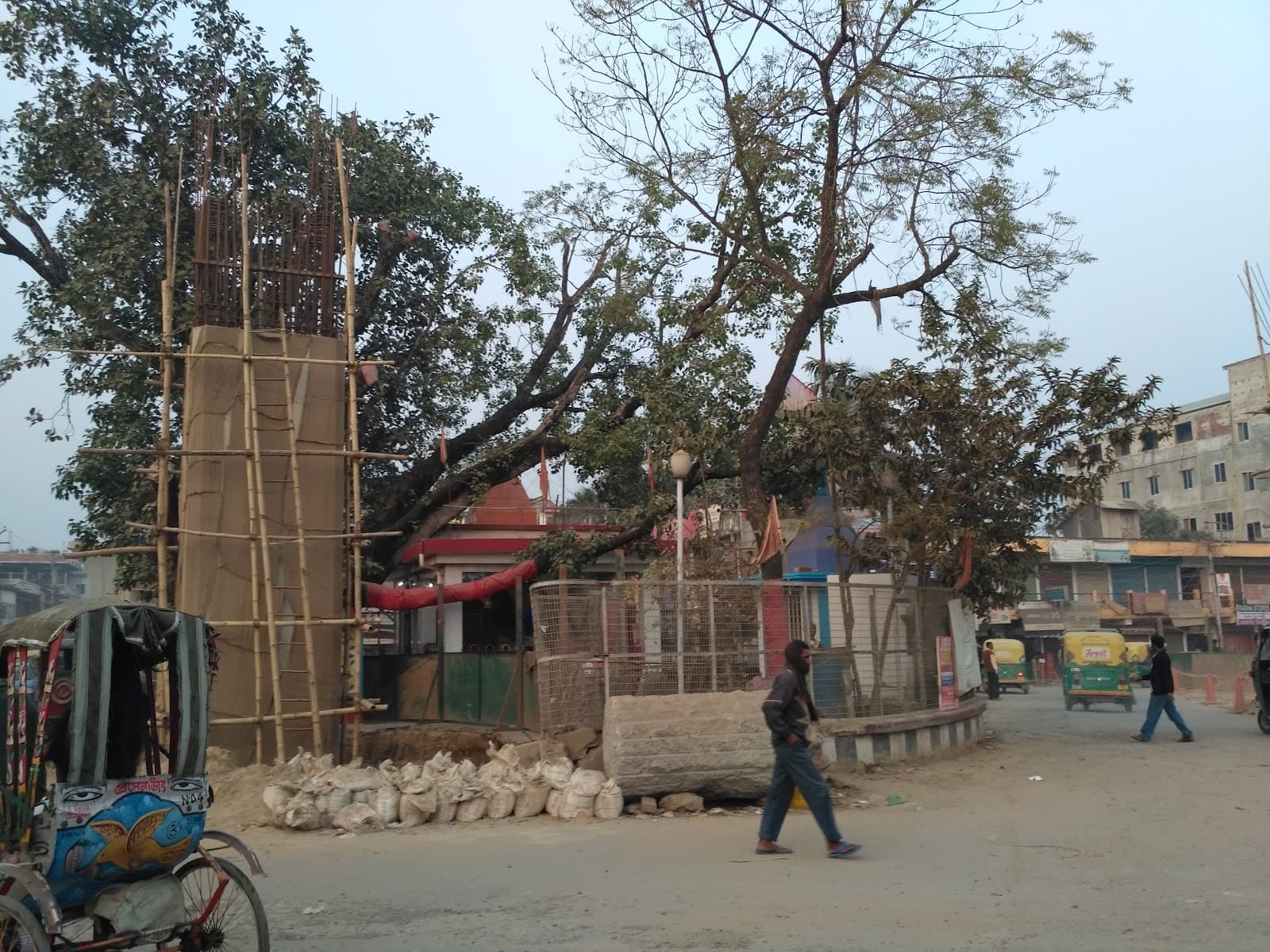
Battala Mahadev Temple Agartala
Nestled in the heart of Tripura, the Battala Mahadev Temple, a revered shrine dedicated to Lord Shiva, was erected around 1681 CE under the patronage of Maharaja Krishna Manikya ([1][2]). This 17th-century temple, a testament to the Manikya dynasty's devotion, showcases a captivating fusion of Nagara and Bengali architectural traditions ([3]). Its presence enriches Agartala's cultural tapestry, drawing devotees and architecture enthusiasts alike. During the Ahom period, temple architecture in India experienced a flourishing of regional adaptations, and this temple exemplifies such unique synthesis ([4]). The curvilinear tower, echoing the chala style of Bengal, adds a distinctive character to the temple's silhouette, illustrating the cross-pollination of architectural ideas ([3]). The temple's design subtly integrates regional aesthetics within the broader Hindu architectural framework. Stone platforms and foundations demonstrate the enduring construction techniques employed in building the Battala Mahadev Temple ([1][5]). The structure primarily utilizes locally sourced materials such as stone, bricks, terracotta, and wood, reflecting the region's architectural identity ([1][5]). The exterior, finished with whitewash, presents a serene and austere facade, a contrast to the vibrant ornamentation often seen in other Indian temples ([2]). Within the Garbhagriha (Sanctum), the Shiva lingam serves as the central focus of worship, inviting devotees into a space of spiritual communion ([3]). The temple stands as an embodiment of Tripura's rich cultural and religious heritage, offering a tranquil space for reflection and devotion ([4][5]). The patronage of the Manikya dynasty underscores the temple's historical significance, solidifying its place as a notable landmark in Agartala ([1][2][3]). The temple stands as a reminder of the architectural and artistic achievements of the era.
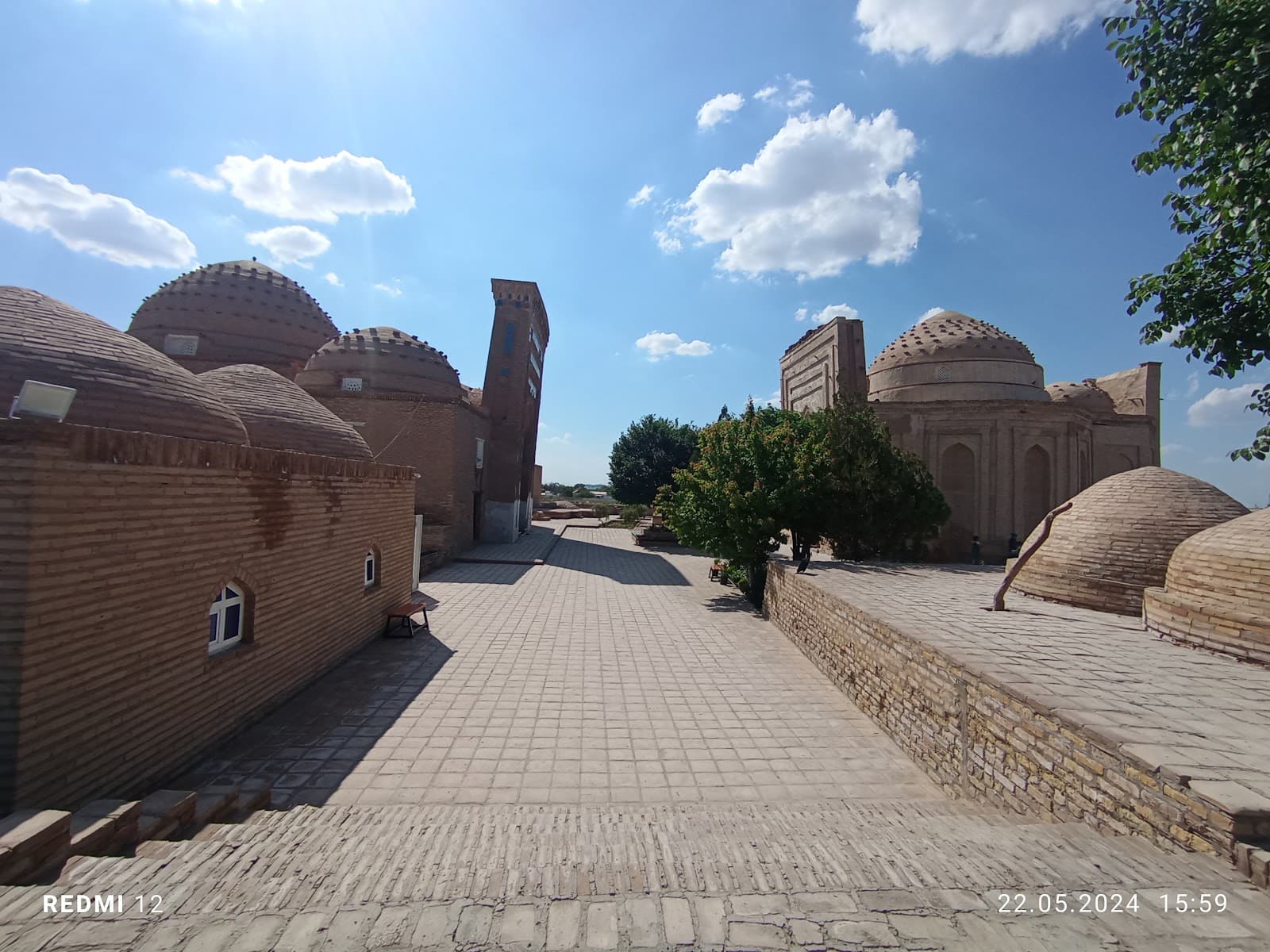
Koneurgench Dash Mosque Temple Remnants Dashoguz Turkmenistan
Koneurgench, dramatically situated in the Dashoguz Region of northern Turkmenistan, represents one of the most extraordinary and archaeologically significant medieval cities in Central Asia, serving as the capital of the Khorezm Empire and featuring the remarkable Dash Mosque with its 12th-13th century temple remnants that demonstrate pre-Islamic layers with remarkable parallels to Indian religious and architectural traditions, creating a powerful testament to the sophisticated synthesis of Indian and Central Asian cultural traditions during the medieval period. The ancient city, also known as Kunya-Urgench and designated as a UNESCO World Heritage Site, features extraordinary architectural elements including the Dash Mosque with its underlying temple structures that demonstrate clear Indian architectural influences from periods before the Islamic conquest, while the site's most remarkable feature is its sophisticated pre-Islamic temple remnants featuring architectural elements, ritual structures, and decorative programs that demonstrate clear parallels with Indian temple architecture and religious practices. The temple remnants' architectural layout, with their central ritual structures surrounded by ceremonial spaces and architectural elements, follows sophisticated planning principles that demonstrate remarkable parallels with Indian temple planning principles, while the temple remnants' extensive decorative programs including architectural elements and religious iconography demonstrate the sophisticated synthesis of Indian religious iconography and architectural traditions with local Central Asian aesthetic sensibilities. Archaeological evidence reveals that the site served as a major center of religious and cultural activity for centuries before the Islamic period, attracting traders, priests, and elites from across Central Asia, South Asia, and beyond, while the discovery of numerous artifacts including architectural elements that demonstrate clear Indian influences, ritual objects that parallel Indian practices, and religious iconography that reflects Indian cosmological concepts provides crucial evidence of the site's role in the transmission of Indian religious traditions to Central Asia, demonstrating the sophisticated understanding of Indian religious and architectural traditions possessed by the site's patrons and religious establishment. The site's association with the Khorezm Empire, which had extensive trade and cultural connections with India throughout its history, demonstrates the sophisticated understanding of Indian religious traditions that were transmitted to Central Asia, while the site's pre-Islamic temple remnants and architectural elements demonstrate remarkable parallels with Indian temple architecture and religious practices that were central to ancient Indian religious traditions. The site has been the subject of extensive archaeological research, with ongoing excavations continuing to reveal new insights into the site's sophisticated architecture, religious practices, and its role in the transmission of Indian religious traditions to Central Asia, while the site's status as a UNESCO World Heritage Site demonstrates its significance as a major center for the transmission of Indian cultural traditions to Central Asia. Today, Koneurgench stands as a UNESCO World Heritage Site and represents one of the most important medieval cities in Central Asia, serving as a powerful testament to the transmission of Indian religious and architectural traditions to Central Asia, while ongoing archaeological research and conservation efforts continue to protect and study this extraordinary cultural treasure that demonstrates the profound impact of Indian civilization on Central Asian religious and cultural traditions. ([1][2])
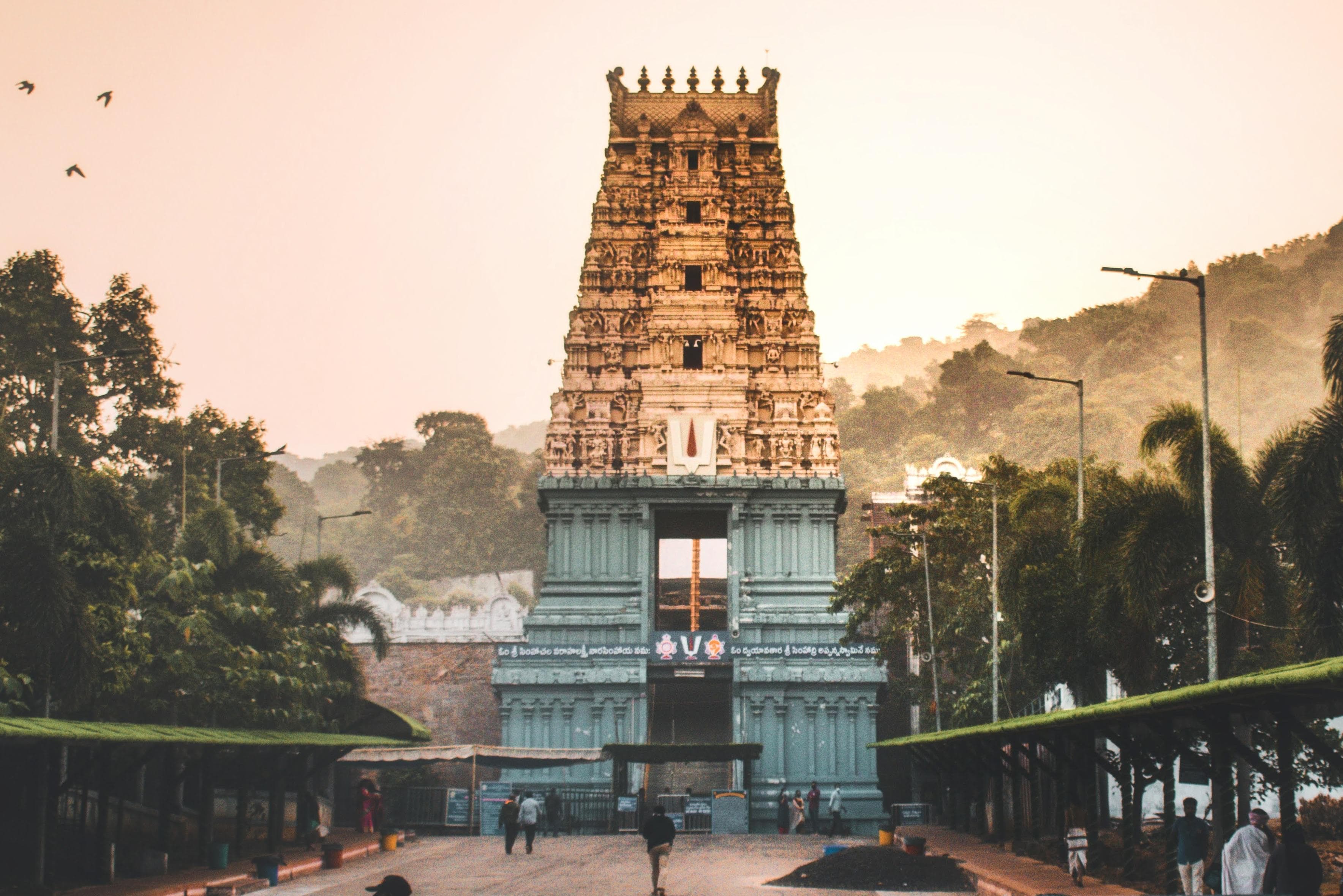
Simhachalam Varaha Lakshmi Narasimha Temple Visakhapatnam
The salty tang of the Bay of Bengal hung in the air as I climbed the steps leading to the Varaha Lakshmi Narasimha Temple at Simhachalam. Having explored the basalt-carved wonders of Maharashtra’s caves and temples, I was eager to experience the distinct architectural flavour of Andhra Pradesh. And Simhachalam, perched atop a hill overlooking Visakhapatnam, promised something unique. The temple complex, enclosed within high walls, exudes an aura of quiet power. Unlike the open courtyards I’m accustomed to in Maharashtra, here, the structures are tightly knit, creating a sense of intimacy and concentrated devotion. The main gopuram, though not as towering as some I’ve seen, possesses a distinct Dravidian elegance, its intricate carvings narrating tales from the Puranas. The use of light-coloured stone, possibly Khondalite, gives the temple a luminous quality, contrasting sharply with the dark, weathered basalt of my home state. As I approached the sanctum sanctorum, the air grew thick with the scent of sandalwood and incense. The presiding deity, Varaha Lakshmi Narasimha, is unique – a manifestation of Vishnu as Narasimha, the man-lion, covered in sandalwood paste throughout the year, except for one day, 'Chandanayatra Utsavam'. This practice, I learned, stems from a legend where the deity’s fiery rage was cooled by the application of sandalwood. The anticipation of seeing this unique form, shrouded in mystery, heightened my excitement. Finally, I stood before the sanctum. The dimly lit space, filled with chanting, allowed only a glimpse of the sandalwood-covered deity. While I couldn’t discern the actual features of the idol, the palpable energy within the sanctum was undeniable. It was a powerful, almost visceral experience, different from the serene contemplation I often feel in Maharashtra’s cave temples. Here, the atmosphere was charged with a raw, vibrant devotion. Stepping out of the sanctum, I took time to appreciate the intricate carvings adorning the temple walls. The depictions of gods, goddesses, and mythical creatures showcased a distinct regional style, different from the Chalukyan and Yadava influences I’m familiar with. The narrative panels, though weathered by time and the coastal climate, still spoke volumes about the rich mythology associated with the deity. I noticed the recurring motif of the Varaha avatar, the boar incarnation of Vishnu, highlighting the temple’s dedication to this particular form. The temple complex also houses several smaller shrines dedicated to other deities, each with its own unique character. I was particularly drawn to the shrine of Andal, a female Alvar saint, whose devotion to Lord Vishnu is legendary. The presence of this shrine within the complex spoke to the inclusive nature of the temple’s spiritual embrace. As I descended the hill, the city of Visakhapatnam sprawled before me, a vibrant tapestry of modern life against the backdrop of the ancient Eastern Ghats. The visit to Simhachalam had been a journey not just to a different state, but to a different spiritual landscape. The temple’s unique rituals, distinct architecture, and the palpable devotion of the pilgrims offered a fresh perspective on the diverse tapestry of Hindu worship. It reinforced the idea that while the essence of faith remains constant, its expressions can be wonderfully varied and regionally specific. The Varaha Lakshmi Narasimha Temple, with its sandalwood-clad deity and vibrant energy, stands as a testament to this rich diversity. It's a must-see for anyone seeking to explore the architectural and spiritual wonders of Andhra Pradesh, and a stark, fascinating contrast to the cave temples of Maharashtra I know so well.
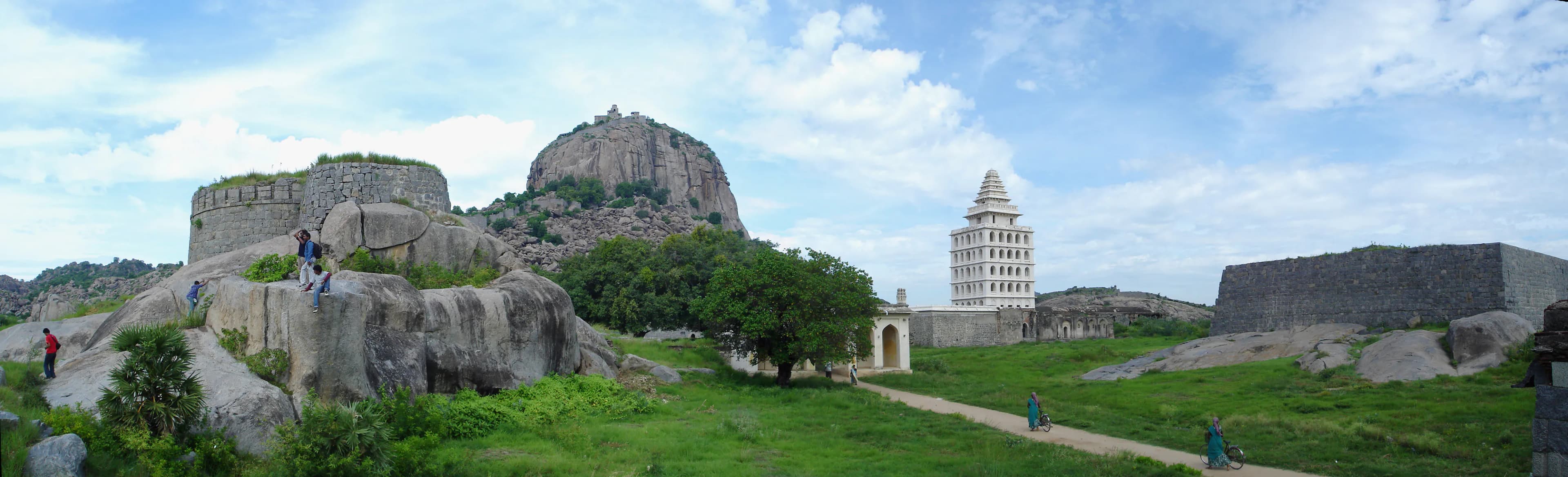
Gingee Fort Gingee
The imposing laterite ramparts of Gingee Fort, rising abruptly from the Tamil Nadu plains, seemed to shimmer in the afternoon sun. My journey from the heart of Madhya Pradesh to this southern stronghold had been long, but the first glimpse of the "Troy of the East," as it's often called, erased any trace of weariness. This wasn't just another fort; it was a complex of three hills – Krishnagiri, Rajagiri, and Chandrayandurg – each crowned with fortifications, interconnected by formidable walls that snaked across the landscape. I began my exploration at the base of Rajagiri, the largest of the three hills. The climb was steep, the path winding through dense vegetation. The air, thick with the scent of earth and foliage, hummed with the calls of unseen birds. As I ascended, the scale of the fort began to truly dawn on me. The sheer size of the granite blocks used in the construction, some seemingly precariously balanced, testified to the ingenuity of the ancient builders. Reaching the summit, I was greeted by a breathtaking panorama. The other two hills, Krishnagiri and Chandrayandurg, stood like sentinels in the distance, their own fortifications clearly visible. Rajagiri itself was a sprawling complex of structures – granaries, barracks, temples, and palaces, all bearing the scars of time and conflict. The Kalyana Mahal, a multi-storied brick structure, particularly caught my eye. Its intricate brickwork, though weathered, still hinted at its former grandeur. The large, open courtyard, now overgrown with grass, must have once witnessed vibrant ceremonies and courtly life. I spent hours exploring the ruins, my camera constantly clicking. The light played beautifully on the weathered stone, revealing intricate carvings and architectural details that I hadn't noticed at first glance. The 'Elephant Tank,' a massive water reservoir carved into the rock, was a marvel of engineering. Imagining it filled to the brim during the fort's heyday, providing water for the entire garrison, gave me a palpable sense of the fort's self-sufficiency. Descending Rajagiri, I made my way to Krishnagiri, the second hill. This hill housed the 'Rani Mahal,' the queen's palace. The climb was even more challenging, involving navigating narrow, almost hidden passages carved into the rock. The Rani Mahal, though smaller than the structures on Rajagiri, possessed a quiet elegance. The views from its windows, overlooking the surrounding plains, were simply stunning. I could almost imagine the queen gazing out at the same vista centuries ago. Chandrayandurg, the smallest of the three hills, was accessible only by a narrow, precarious path. Though less developed than the other two, it offered a unique perspective on the entire complex. Standing on its summit, I could appreciate the strategic brilliance of Gingee's design. The three hills, each supporting the other, created an almost impregnable fortress. The architectural influences at Gingee were fascinating. While the core structures bore the hallmarks of Vijayanagara architecture, I also noticed subtle traces of Maratha and French influences, reflecting the fort's complex history. The use of locally available laterite and granite, combined with ingenious construction techniques, had allowed the fort to withstand centuries of weathering and warfare. As the sun began to set, casting long shadows across the ancient stones, I felt a profound sense of connection to the past. Gingee Fort wasn't just a collection of ruins; it was a living testament to the ingenuity, resilience, and artistry of those who built and inhabited it. My photographs, I hoped, would capture not just the physical beauty of the fort, but also the stories whispered by its weathered walls. The echoes of history resonated deeply within me as I descended, leaving the majestic silhouette of Gingee Fort etched against the twilight sky.
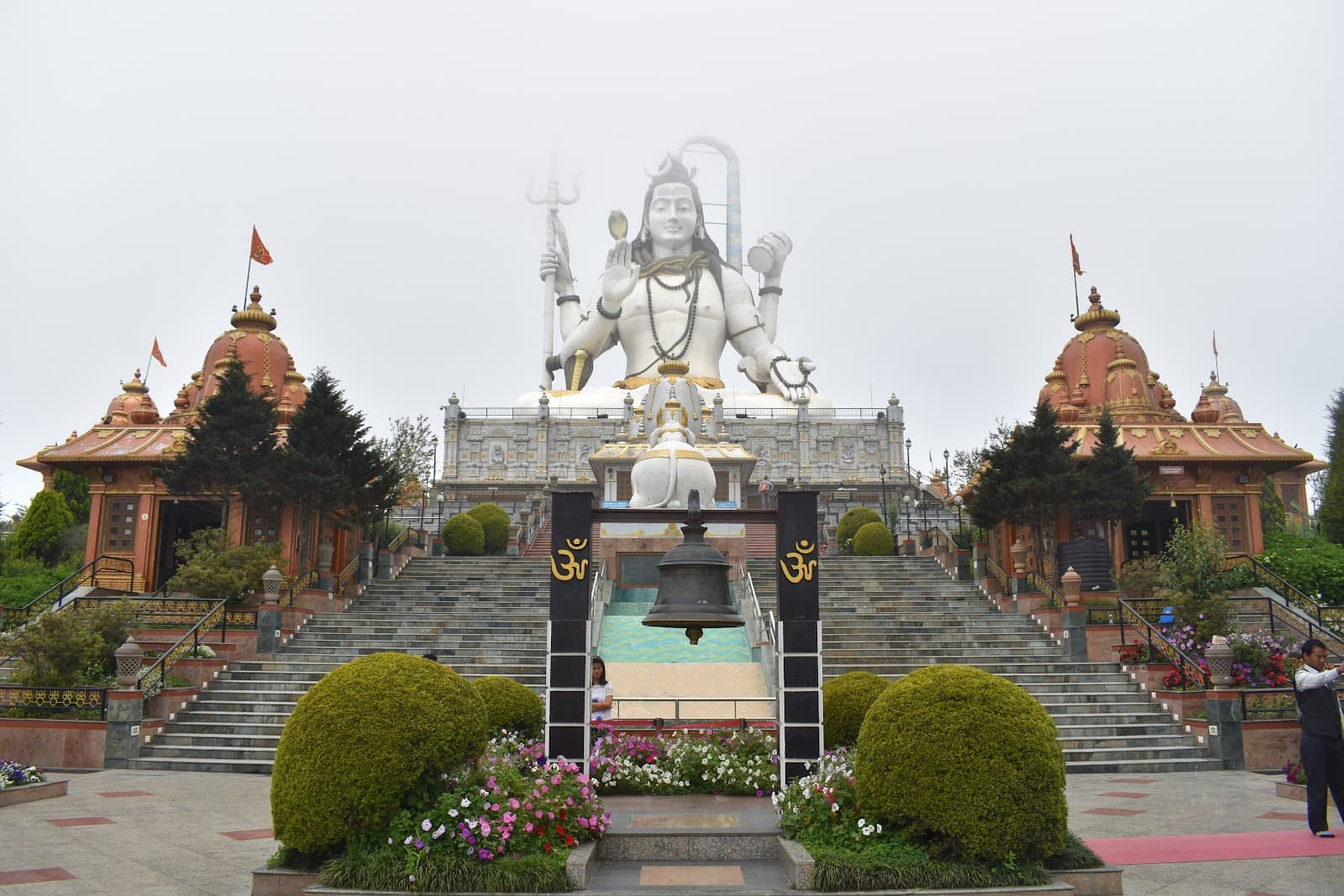
Solophok Chardham Namchi
The vibrant prayer flags snapping in the Himalayan breeze were my welcome to Solophok Chardham, a surprisingly recent addition to Sikkim’s spiritual landscape. Perched on the Solophok hilltop overlooking Namchi, this complex, completed in 2011, isn’t ancient in the way of many UNESCO sites, but its ambition is palpable. It aims to replicate the revered Char Dham pilgrimage circuit of India – Badrinath, Dwarka, Puri, and Rameshwaram – within a single location, making it accessible to those unable to undertake the arduous original journey. The centerpiece, and the first structure that caught my eye, is the towering 108-foot statue of Lord Shiva, known here as Siddheshwar. Its sheer scale is breathtaking, gleaming gold against the backdrop of the snow-capped Kanchenjunga range. The statue itself is a marvel of modern engineering, and I learned from a local priest that it was constructed using copper and plated with gold. The detailing on Lord Shiva’s form, from the intricate folds of his garments to the serene expression on his face, is remarkably precise. Circling the statue, I found myself immersed in the representations of the four Dhams. Each shrine is architecturally distinct, reflecting the style of its original counterpart. The Badrinath replica, dedicated to Lord Vishnu, features the characteristic sloping roof and brightly coloured facade I’d seen in Uttarakhand. Dwarka, dedicated to Lord Krishna, echoed the intricate carvings and sandstone hues of Gujarat’s coastal temples. The Jagannath temple of Puri, with its distinctive pyramidal roof and vibrant murals, transported me back to Odisha. Finally, the Rameshwaram replica, dedicated to Lord Shiva in his Ramalingeswara form, captured the Dravidian architectural style of Tamil Nadu with its towering gopuram. While the architectural mimicry is impressive, Solophok Chardham isn’t merely a copy-paste project. The complex incorporates elements of Sikkimese Buddhist architecture, creating a unique blend of styles. The prayer wheels lining the pathways, the colourful murals depicting Buddhist deities, and the presence of monks going about their daily rituals, all contribute to a syncretic atmosphere that feels distinctly Sikkimese. This fusion, I felt, was the most compelling aspect of the site. It speaks to the region’s history of religious harmony and the fluidity of faith in the Himalayas. Beyond the main shrines, the complex offers panoramic views of the surrounding valleys and mountains. I spent a considerable amount of time simply absorbing the scenery, the peace punctuated only by the fluttering prayer flags and the distant chanting from within the temples. There’s a palpable sense of serenity here, a quiet energy that encourages introspection. One aspect that struck me was the meticulous upkeep of the entire complex. Despite the constant flow of visitors, the grounds were impeccably clean, the gardens well-maintained, and the shrines themselves pristine. This speaks volumes about the reverence with which the site is held by both the local community and the managing authorities. My visit to Solophok Chardham was more than just ticking off another UNESCO site on my list. It was an immersion in a unique blend of architectural styles, religious traditions, and breathtaking natural beauty. While the complex is relatively new, it carries a weight of spiritual significance, offering a glimpse into the rich tapestry of faith and devotion that defines the Himalayan region. It’s a testament to the power of human ambition, not just in replicating architectural marvels, but in creating a space that fosters peace, reflection, and a deeper understanding of India’s diverse spiritual heritage. It’s a place I wouldn’t hesitate to recommend to anyone seeking a unique and inspiring travel experience.
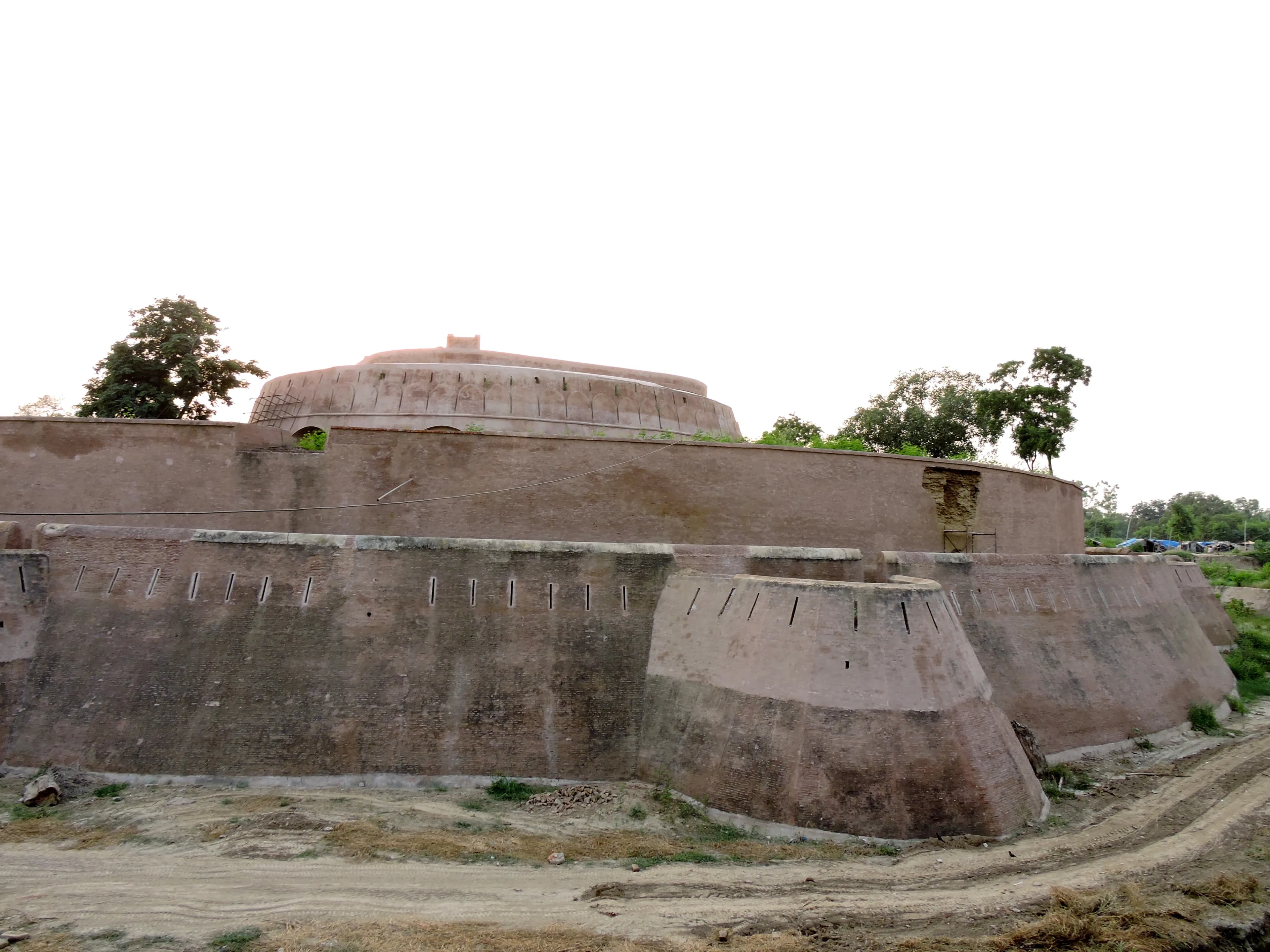
Gobindgarh Fort Amritsar
The imposing red sandstone walls of Gobindgarh Fort rose before me, a stark contrast to the bustling, vibrant city of Amritsar that lay just beyond its gates. Having explored numerous Mughal and Rajput forts across Uttar Pradesh, I was eager to experience this Sikh stronghold, a testament to a different era and a distinct architectural style. The sheer scale of the fort, spread across 43 acres, was immediately impressive. It felt less like a single structure and more like a fortified city, a self-contained world within Amritsar. Entering through the Nalwa Gate, named after the legendary Sikh general Hari Singh Nalwa, I was struck by the blend of robustness and elegance. The fortifications, clearly designed with defense in mind, were not devoid of aesthetic considerations. The arched gateway, the intricate carvings around the wooden doors, and the strategically placed bastions all spoke of a meticulous approach to construction. Unlike the ornate embellishments I've seen in Rajasthani forts, Gobindgarh displayed a more restrained grandeur. The focus here seemed to be on strength and functionality, reflecting the martial ethos of the Sikh empire. The Toshakhana, the royal treasury, was my next stop. The sheer thickness of its walls, almost 12 feet in some places, underscored its importance. Inside, the cool air and dimly lit interiors created an atmosphere of hushed reverence. Imagining the wealth that once filled these vaults, from gold coins to precious jewels, gave me a tangible connection to the fort's opulent past. The displays of ancient weaponry, including swords, shields, and even a replica of the legendary Zamzama cannon (the original resides in Lahore), further emphasized the fort's military significance. Walking along the ramparts, I could see the city of Amritsar spread out like a tapestry below. The Golden Temple, gleaming in the distance, served as a poignant reminder of the spiritual heart of Sikhism, so closely intertwined with the fort's history. It was from this very fort that Maharaja Ranjit Singh, the Lion of Punjab, ruled his vast empire. Standing there, I could almost feel the weight of history, the echoes of marching soldiers and the whispers of courtly intrigues. The Darbar Hall, the seat of Maharaja Ranjit Singh's court, was particularly captivating. While the original structure was destroyed during the British occupation, the restored hall attempts to recapture its former glory. The ornate chandeliers, the vibrant frescoes depicting scenes from Sikh history, and the imposing throne all contribute to a sense of regal splendor. However, I couldn't help but feel a tinge of sadness, knowing that this was a recreation, a pale imitation of the original. One of the most engaging aspects of Gobindgarh Fort is its use of technology to bring history to life. The 7D show, projected onto a water screen, vividly portrays the story of the Koh-i-Noor diamond and its connection to the fort. While some might consider it a bit theatrical, I found it to be an effective way to engage visitors, especially younger generations, with the fort's rich past. The Whispering Walls light and sound show, projected onto the fort walls after sunset, is another example of this innovative approach. As I left the fort, passing once again through the Nalwa Gate, I felt a sense of awe and respect for the legacy of Maharaja Ranjit Singh and the Sikh empire. Gobindgarh Fort is not just a collection of buildings; it is a living testament to a vibrant culture, a symbol of resilience and a powerful reminder of a bygone era. It stands as a proud sentinel, guarding the memories of a glorious past while embracing the promise of a dynamic future. It offers a unique perspective, distinct from the Mughal grandeur I'm accustomed to in Uttar Pradesh, and provides valuable insights into the architectural and cultural landscape of Punjab.
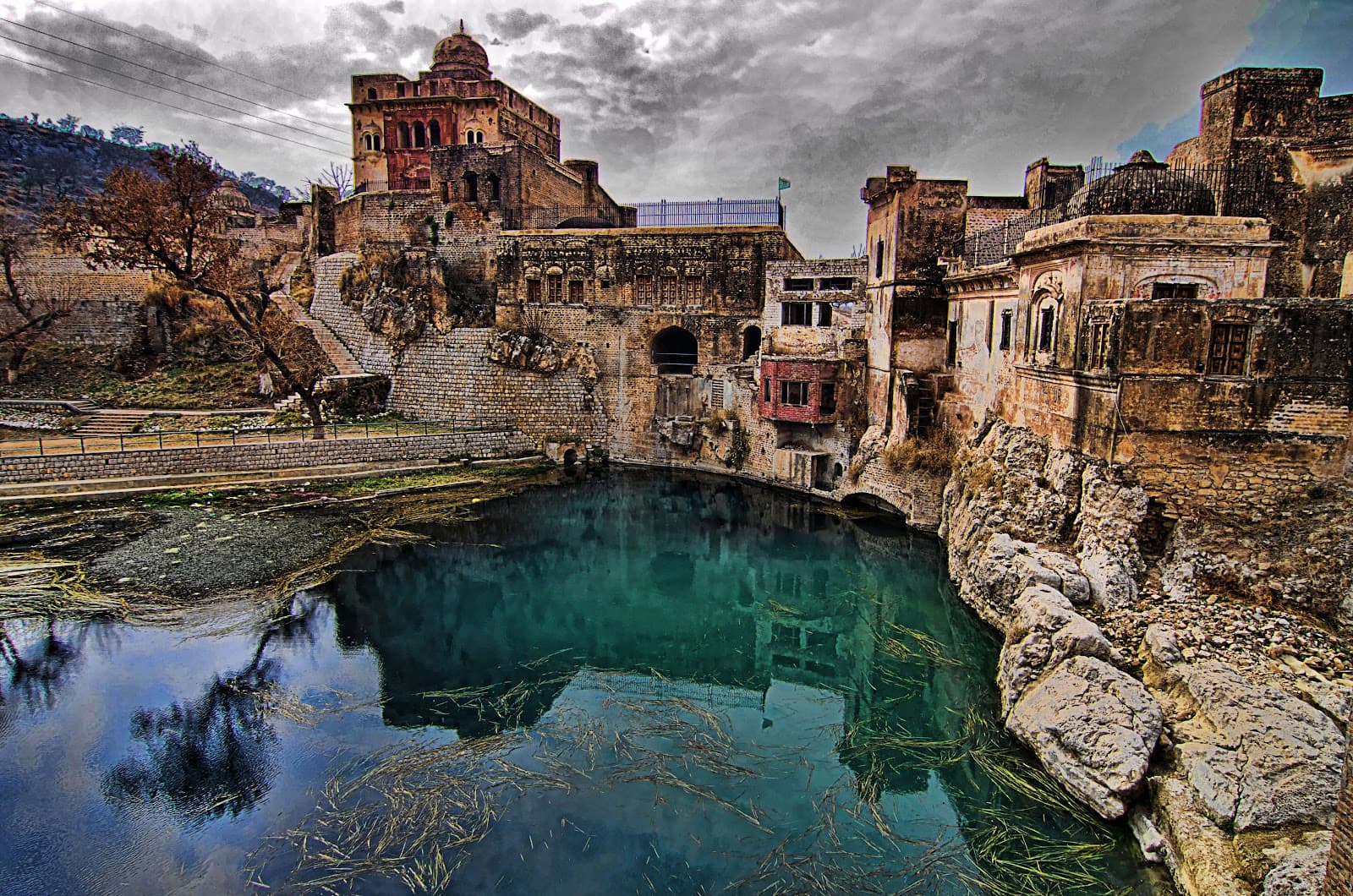
Katas Raj Temples Chakwal Punjab
Katas Raj Temples, located in Chakwal District of Punjab Province, represent one of the most significant and architecturally sophisticated Hindu temple complexes in Pakistan, dating from the 6th to 10th centuries CE and constructed during the Hindu Shahi dynasty period when this region formed part of the greater Hindu rashtra extending across the Indian subcontinent. The temple complex, centered around a sacred pond believed to have been formed from the tears of Lord Shiva mourning the death of his consort Sati, spans approximately 4 hectares and features seven major temples arranged in a mandala pattern around the pond, with the main Shiva temple rising 15 meters and constructed from locally quarried red sandstone and limestone. The complex demonstrates the evolution of Hindu temple architecture in the northwestern regions of ancient India, incorporating elements from Gandhara, Gupta, and early medieval North Indian styles, with distinctive features including corbelled vaulting, intricately carved lintels depicting scenes from the Ramayana and Mahabharata, and sophisticated drainage systems channeling water from surrounding hills into the sacred pond. Archaeological evidence indicates the site was continuously occupied from the 6th century CE through the 11th century, serving as both a religious center and waypoint on ancient trade routes connecting the Indus Valley to Central Asia. The temples are associated with the Mahabharata epic, with local tradition holding that the Pandava brothers spent part of their exile here, and the site contains evidence of both Shaiva and Vaishnava worship, reflecting the syncretic nature of Hindu practice in the region. The complex underwent extensive restoration from 2006 to 2017 under the supervision of the Evacuee Trust Property Board and Archaeological Survey of Pakistan, involving structural stabilization, conservation of decorative elements, and restoration of the sacred pond. Today, Katas Raj Temples remain an active site of Hindu worship, particularly during Maha Shivaratri, and serve as a powerful symbol of the ancient Hindu heritage of Pakistan, demonstrating the continuity of Hindu civilization in regions that were integral parts of the historical Hindu rashtra before the partition of the Indian subcontinent. ([1][2])
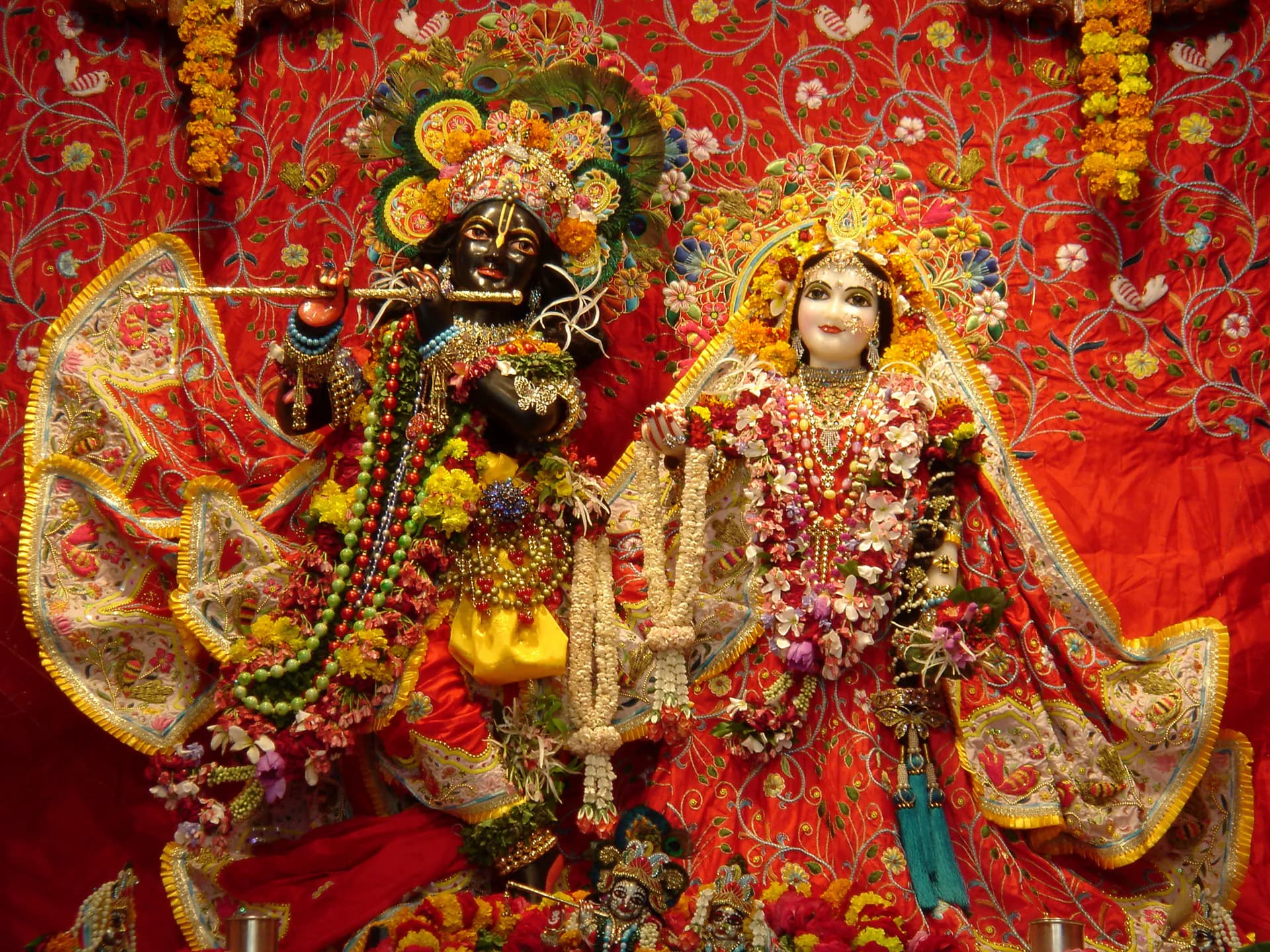
ISKCON Temple Dimapur
The ISKCON Temple Dimapur, dedicated to Lord Krishna, stands in Dimapur, Nagaland, as a testament to India's enduring spiritual and architectural traditions, which span millennia [1]. Consecrated in 1995 CE, this contemporary edifice draws deeply from indigenous Indian architectural styles, primarily Orissan Nagara and broader Nagara forms, while also incorporating elements reminiscent of Gupta and Neo-Classical aesthetics [2]. The temple's design reflects a continuous lineage of sacred architecture, emphasizing the profound cultural practices and spiritual devotion that have characterized Indian civilization for thousands of years [1] [2]. The architectural scheme of the ISKCON Temple Dimapur is a modern interpretation of the Nagara style, which is prevalent across North India and characterized by its towering, curvilinear shikhara [2]. Specifically, it incorporates features of the Orissan Nagara sub-school, where the shikhara, known as a 'Deul', rises almost vertically before curving sharply inwards towards the summit [5]. The temple typically features a 'garbhagriha' (sanctum sanctorum) housing the principal deity, preceded by one or more 'mandapas' (halls) [2] [5]. In Orissan style, a 'Jagamohan' (assembly hall) often precedes the 'Deul', and the main temple's ground plan is nearly invariably square, with a round 'Mastaka' (crowning element) at the apex of its superstructure [5]. The exterior walls of Nagara temples are often articulated with projections known as 'rathas', which create a dynamic interplay of light and shadow and enhance ornamentation [2]. The temple's construction utilizes reinforced cement concrete (RCC) for structural integrity, with concrete grades such as M30 employed to ensure high load-bearing capacity and durability [4]. The foundation typically involves pile foundations, designed to support the substantial weight of the superstructure [4]. Materials like sandstone, often used in traditional Nagara temples, are likely complemented by modern finishes and decorative elements, reflecting the blend of ancient aesthetics with contemporary construction methods [2] [4]. Decorative elements within ISKCON temples often include intricate carvings and sculptures that depict deities, celestial beings, and mythological narratives, reflecting the rich heritage of Vedic culture . The design principles are rooted in Vedic traditions, drawing from texts like the Shilpa Shastras and Vastu Shastra, which emphasize harmony with natural elements and cosmic energies . Towering 'shikharas' symbolize Mount Meru, the cosmic axis, guiding spiritual focus heavenward . The sanctum sanctorum, housing the deities, is meticulously aligned with cardinal directions, with east-facing entrances welcoming the sun's first rays, symbolizing enlightenment . The temple complex is designed to include community spaces such as kirtan halls for collective chanting, prasadam (sanctified food) dining areas, libraries, and classrooms, fostering a holistic spiritual ecosystem . Conservation efforts for ISKCON temples generally focus on maintaining the structural integrity of modern construction while preserving the traditional artistic and spiritual elements . The temple is actively programmed with daily rituals, festivals, and educational initiatives, serving as a vibrant center for spiritual gatherings and community service [1]. It is fully operational, accessible to devotees and visitors, and maintained by the ISKCON Foundation, ensuring its role as a continuous beacon of devotion and cultural preservation [1].

Golconda Fort Hyderabad
The imposing granite ramparts of Golconda Fort, rising abruptly from the Deccan plateau, exude a palpable sense of history. Having documented hundreds of forts across India, I can confidently say that Golconda possesses a unique aura, a blend of military might and architectural finesse rarely encountered. My recent visit to this magnificent structure, a sprawling citadel encompassing palaces, mosques, and ingenious acoustic systems, left me awestruck. The sheer scale of Golconda is initially overwhelming. The outer fortifications stretch for nearly seven kilometers, punctuated by imposing bastions and multiple gateways. The climb to the Bala Hissar, the highest point within the fort complex, is a journey through layers of history. Each level, each gateway, whispers tales of past grandeur and strategic brilliance. The Fateh Darwaza, the main entrance, is particularly striking. Its massive studded wooden doors, reinforced with iron spikes to prevent elephant battering rams, speak volumes about the fort's defensive capabilities. Standing beneath its arch, I could almost hear the echoes of marching armies and the clang of swords. One of the most fascinating aspects of Golconda is its sophisticated acoustic system. A handclap at the entrance arch can be heard clearly at the Bala Hissar, almost a kilometer away. This ingenious communication system, a marvel of medieval engineering, allowed the rulers to quickly alert the entire fort of impending danger. I tested it myself, and the clarity of the sound transmission was truly remarkable. It's a testament to the architectural ingenuity of the Qutb Shahi dynasty. Beyond its military fortifications, Golconda reveals a softer side. The palaces within the complex, though now in ruins, offer glimpses into the opulent lifestyle of the erstwhile rulers. The intricate carvings on the remaining walls, the delicate jalis (lattice screens), and the remnants of elaborate water systems hint at a life of luxury and refinement. I spent hours exploring these ruins, my camera capturing the interplay of light and shadow on the weathered stone, trying to freeze these fragments of history in time. The mosques within the fort complex, particularly the Jama Masjid and the Taramati Mosque, showcase a blend of Persian and Deccani architectural styles. The soaring arches, the intricate stucco work, and the serene courtyards offer a peaceful respite from the imposing military structures surrounding them. I found myself drawn to the quiet corners of these mosques, imagining the prayers and rituals that once filled these spaces. The view from the Bala Hissar is breathtaking. The sprawling city of Hyderabad stretches out before you, a stark contrast to the ancient ruins beneath your feet. From this vantage point, the strategic importance of Golconda becomes crystal clear. The fort commands a panoramic view of the surrounding plains, allowing its defenders to monitor any approaching armies. As I stood there, absorbing the panoramic vista, I felt a profound sense of connection to the past. My visit to Golconda was more than just a documentation exercise; it was an immersive experience. It was a journey through time, a glimpse into a bygone era of kings and conquerors, of architectural marvels and ingenious engineering. Golconda is not just a fort; it's a living testament to India's rich and complex history, a place where the whispers of the past continue to resonate in the present. It's a site I would recommend to anyone seeking to understand the grandeur and ingenuity of India's architectural heritage.
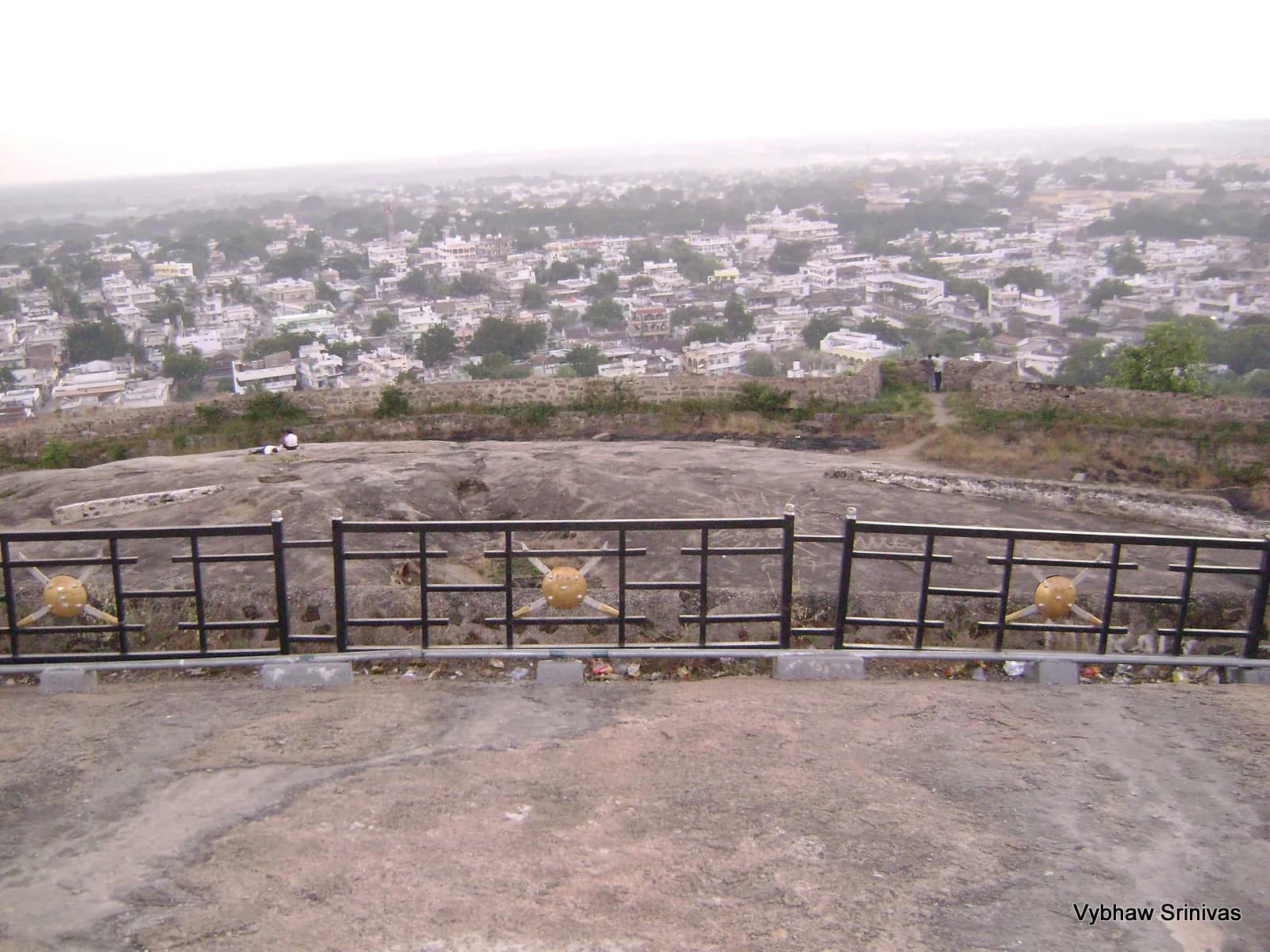
Khammam Fort Khammam
The imposing silhouette of Khammam Fort against the Telangana sky held me captive long before I even reached its gates. The laterite stone, baked to a deep, earthy red by centuries of sun, seemed to pulse with stories whispered down through generations. My journey as a heritage photographer has taken me to many magnificent sites across Madhya Pradesh, but Khammam Fort, with its unique blend of architectural styles, held a particular allure. The fort's strategic location atop a hillock overlooking the city was immediately apparent. Built in 950 AD by the Kakatiya dynasty, it bore witness to the rise and fall of several empires – from the Qutb Shahis to the Mughals and finally, the Asaf Jahis of Hyderabad. This layered history was etched into the very fabric of the structure. Passing through the imposing main gate, I was struck by the contrast between the rough-hewn exterior and the intricate details within. The massive granite pillars, some intricately carved, others bearing the scars of time and conflict, spoke volumes about the fort's enduring strength. I spent hours exploring the various sections, each revealing a different chapter of the fort's story. The remnants of the Kakatiya-era architecture were particularly fascinating. The stepped wells, or *bawdis*, were marvels of engineering, showcasing the ingenuity of the ancient builders in water harvesting. The intricate carvings on the pillars and lintels, though weathered, still hinted at the grandeur of the Kakatiya period. I was particularly drawn to the remnants of a temple dedicated to Lord Shiva, its sanctum sanctorum now open to the sky, the stone worn smooth by the elements. The influence of subsequent rulers was also evident. The Qutb Shahi period saw the addition of mosques and palaces, their arched doorways and intricate stucco work a stark contrast to the earlier, more austere Kakatiya style. The Mughal influence was subtle yet discernible in the layout of certain sections, particularly the gardens, which, though now overgrown, still hinted at a formal, structured design. One of the most captivating aspects of Khammam Fort was its integration with the natural landscape. The fort walls seemed to grow organically from the rocky outcrop, the laterite stone blending seamlessly with the surrounding terrain. From the ramparts, the panoramic view of the city and the surrounding countryside was breathtaking. I could almost imagine the sentinels of old, keeping watch from these very walls, their gaze sweeping across the landscape. As I moved through the fort's various chambers, I noticed the intricate system of tunnels and secret passages. These subterranean routes, once used for escape or strategic movement during times of siege, now lay silent, their darkness holding secrets untold. Exploring these passages, I felt a palpable sense of history, a connection to the lives lived within these walls. My lens captured the grandeur of the fort, the intricate details of its architecture, and the breathtaking views from its ramparts. But beyond the visual documentation, I felt a deeper connection to the site. Khammam Fort wasn't just a collection of stones and mortar; it was a living testament to the resilience of human spirit, a repository of stories waiting to be discovered. The echoes of its past resonated within its walls, a reminder of the ebb and flow of empires, the enduring power of human ingenuity, and the beauty that emerges from the confluence of history and nature. Leaving Khammam Fort, I carried with me not just photographs, but a profound sense of awe and a deeper understanding of the rich tapestry of India's heritage.
Quick Links
Plan Your Heritage Journey
Get personalized recommendations and detailed visitor guides