Has Inheritage Foundation supported you today?
Your contribution helps preserve India's ancient temples, languages, and cultural heritage. Every rupee makes a difference.
Secure payment • Instant 80G certificate
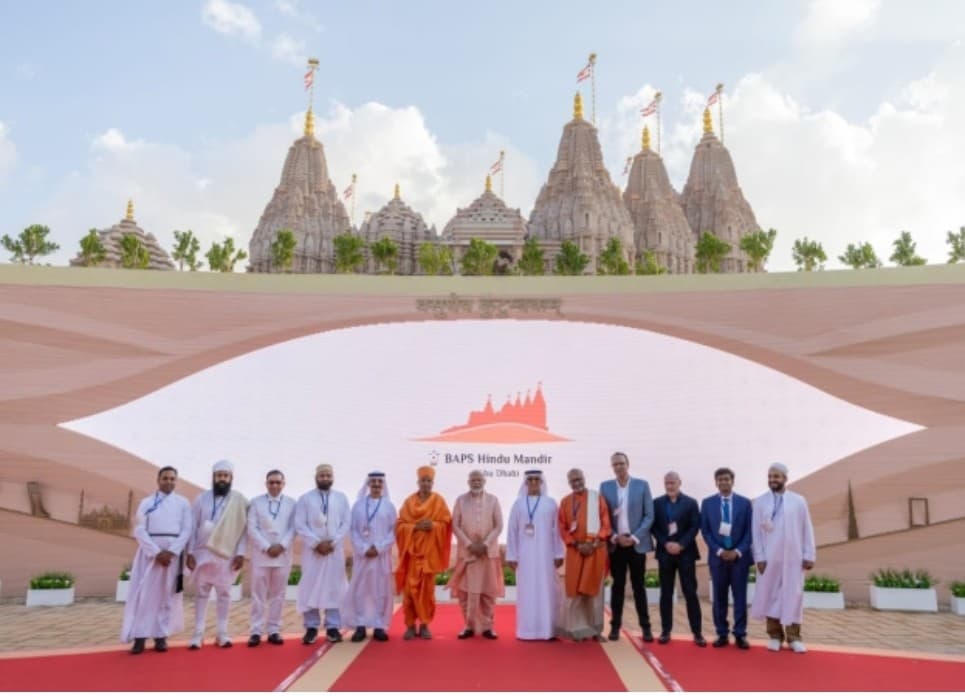
Maha Lakshmi Temple Abu Dhabi (BAPS Campus)
The Maha Lakshmi Temple forms the southern devotional wing of the BAPS Hindu Mandir campus in Abu Dhabi, providing a dedicated sanctum for Sri Mahalaxmi-Narayana with a Vaikuntha-inspired sinhasan crafted from Italian marble, gold-plated lotuses, and fibre-optic constellations that mirror Abu Dhabi's desert night sky ([1][2]). Consecrated alongside the main mandir in February 2024, the Lakshmi sanctum offers a quieter devotional experience focused on prosperity, education, and wellbeing—hosting specialised Lakshmi Pujas for entrepreneurs, students, and families moving to the Gulf. The hall seats 600 devotees, features carved marble columns, and integrates digital translation kiosks offering arti lyrics in Hindi, English, Malayalam, and Tagalog. Daily schedule aligns with the mandir's 6:00 AM-9:00 PM operations, but the Lakshmi wing hosts additional Friday evening Ashtalakshmi satsang, Saturday bridal blessings, and quarterly finance literacy workshops led by community volunteers. Donors can participate in Navagraha homa, Kuber puja, or annadhanam out of the adjoining seva kitchen. A micro-museum displays stories of Gulf entrepreneurs whose philanthropy supported the mandir and documents historic trade links between Gujarat, the Malabar coast, and the Trucial States.

Dandan-Uiliq Ruoqiang Xinjiang China
Dandan-Uiliq, or "the houses with ivory," lies nestled in Ruoqiang County, Xinjiang, a relic of the Khotan Kingdom's embrace of Indian Buddhist traditions along the Silk Road ([1][2]). This abandoned oasis town and Buddhist monastery complex, flourishing from the 6th to the late 8th century CE, offers invaluable insights into the transmission of Indian Buddhist art and culture to Central Asia ([1]). Rediscovered in 1896 by Sven Hedin, subsequent excavations by Aurel Stein and others unearthed extensive remains of temples, stupas, and residential structures, preserved by the Taklamakan Desert ([1]). Archaeological excavations have uncovered a wealth of artifacts, including Buddhist manuscripts in Sanskrit, Prakrit, and the Saka language, an Eastern Iranian language closely related to Sanskrit, demonstrating the site's role as a hub for translation and dissemination of Indian Buddhist texts ([1][2]). Intricate carvings adorning the walls depict seated Buddhas, bodhisattvas, and scenes from Buddhist mythology, reflecting iconographic programs directly influenced by Indian Buddhist art centers ([2]). The 2002 excavation of a Buddhist temple brought to light extraordinary wall paintings, accompanied by inscriptions in the Saka language, further evidencing the fusion of Indian Buddhist iconography with local Central Asian artistic traditions ([1]). Fired brick and mud brick construction techniques are prominent throughout the complex, showcasing the adaptation of Indian architectural methods to local materials ([1]). The monastery complex features multiple Buddhist temples arranged around courtyards, a layout echoing Indian Buddhist monastery architecture, where the overall plan, temple forms, and decorative programs reflecting Indian Buddhist practices that were systematically transmitted to Central Asia ([1][2]). Sophisticated stucco work and painted decoration further demonstrate the transmission of Indian artistic techniques to Central Asian craftsmen ([1]). Likely abandoned in the late 8th century CE due to various factors, Dandan-Uiliq remains a significant archaeological site, attesting to the profound influence of Indian Buddhist traditions on the Silk Road and Central Asian culture ([1][2]). Today, Dandan-Uiliq is a UNESCO Tentative List site, with its artifacts providing crucial insights into the cultural exchanges that shaped the ancient world ([1]).
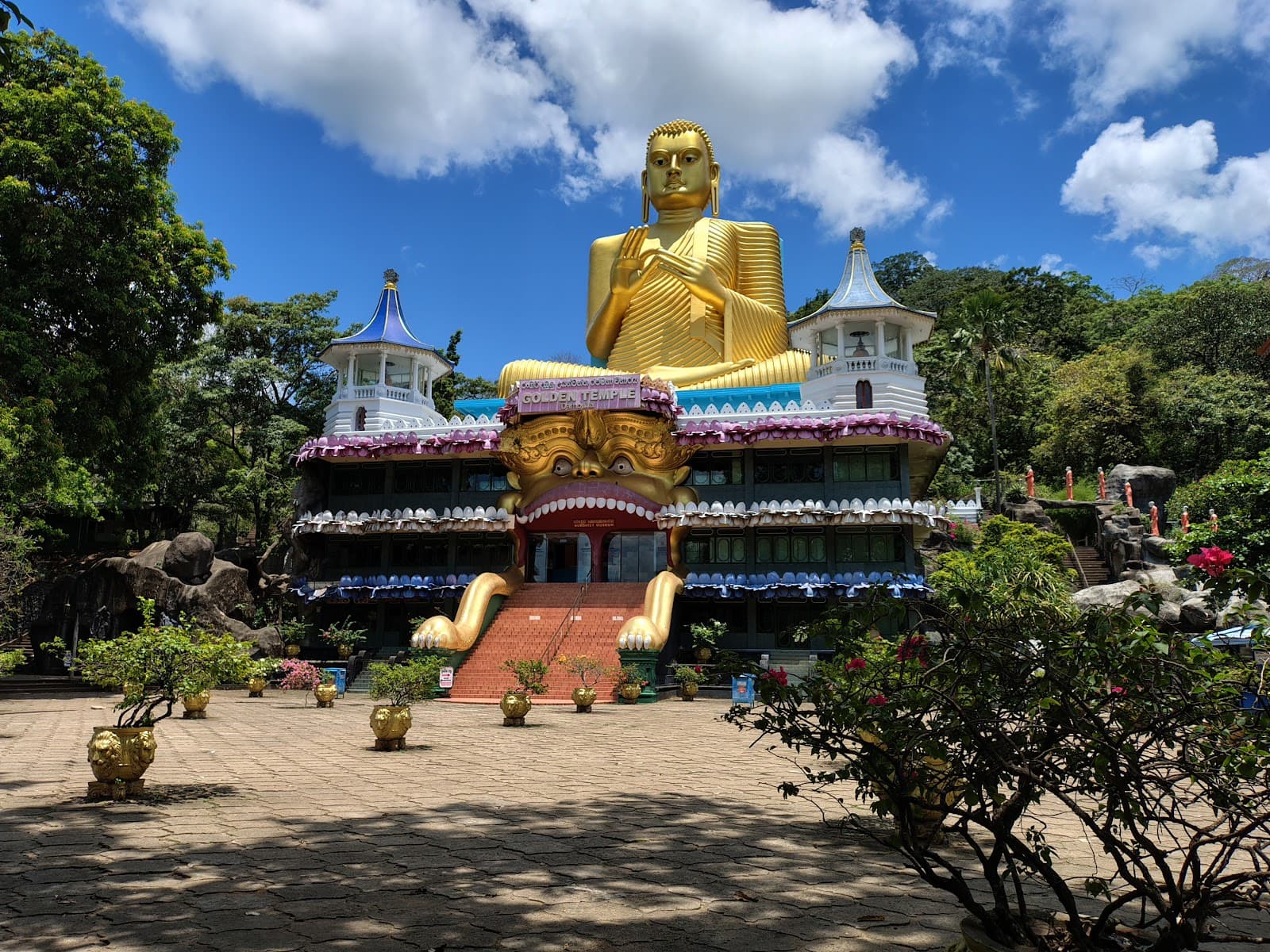
Dambulla Cave Temple Matale Sri Lanka
Nestled within the heart of Sri Lanka, the Dambulla Cave Temple, also known as the Golden Temple of Dambulla, is an ancient marvel carved into a massive granite rock ([1][2]). Originating in the 1st century BCE, during the reign of King Valagamba, this complex stands 160 meters above the surrounding plains, representing a significant testament to the enduring legacy of Buddhist art and architecture in South Asia ([1]). As the largest and best-preserved cave temple complex in Sri Lanka, it houses over 150 Buddha statues and extensive murals ([1][2]). Intricate carvings adorning the walls of the five interconnected caves showcase a profound transmission of Indian Buddhist religious and artistic traditions to Sri Lanka ([1][2]). These caves, continuously used as places of Buddhist worship for over two millennia, feature Buddha statues executed in various mudras (hand gestures) and postures, along with murals covering over 2,100 square meters ([1]). The artistic sophistication and iconographic accuracy of these statues demonstrate the deep understanding of Indian Buddhist iconography possessed by Sri Lankan artists ([1][2]). During the ancient period, the murals, painted in vibrant colors, depict scenes from the Buddha's life, Jataka tales, and various Buddhist deities, illustrating the transmission of Indian Buddhist narrative traditions ([1][2]). Archaeological evidence indicates that the temple served as a major center of Buddhist worship and learning for over two millennia, attracting monks, pilgrims, and patrons from across Sri Lanka and South India ([1]). Inscriptions in Sinhala, Tamil, and Sanskrit offer crucial evidence of the site's role in transmitting Indian Buddhist texts and practices ([1][2]). The temple's patronage by kings like Valagamba and Nissanka Malla further solidified its importance ([1]). Today, Dambulla Cave Temple, a UNESCO World Heritage Site, remains a vital pilgrimage site, demonstrating the profound impact of Indian civilization on Sri Lankan religious and artistic traditions ([1][2]). Ongoing research and conservation efforts ensure the preservation of this extraordinary cultural treasure ([1]).
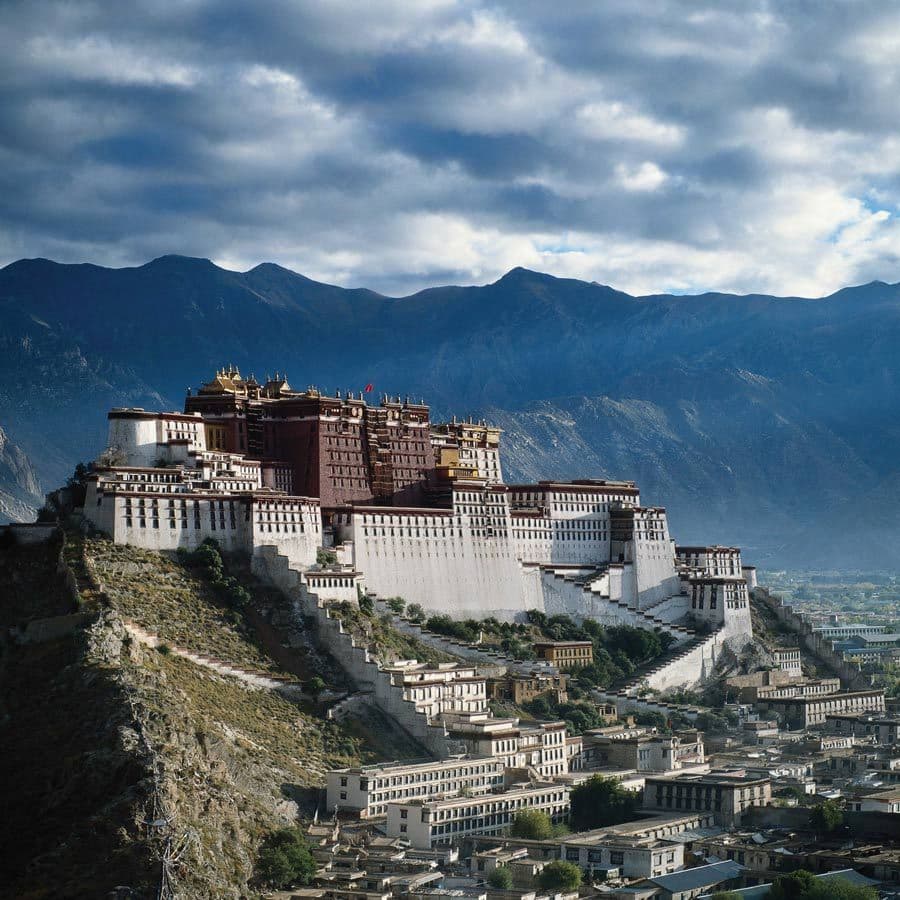
Potala Palace Lhasa Tibet
Potala Palace, located on Red Hill in Lhasa, Tibet, represents one of the most magnificent architectural achievements in Tibet and stands as the traditional seat of the Dalai Lama, constructed beginning in the 7th century CE during the reign of King Songtsen Gampo and extensively expanded in the 17th century, demonstrating the profound influence of Indian Buddhist architectural and religious traditions on Tibetan civilization, which has maintained deep cultural, religious, and historical connections with India for over two millennia. The palace complex, constructed primarily from stone, wood, and earth with extensive use of gold, copper, and painted decoration, features a massive structure rising 117 meters above the valley floor, spanning approximately 400 meters in width and 350 meters in length, containing over 1,000 rooms, 10,000 shrines, and 200,000 statues, making it one of the largest and most complex religious structures in the world. The palace’s architectural design demonstrates direct influence from Indian Buddhist palace and monastery architecture, particularly the Gupta and Pala period styles, with the overall plan reflecting mandala-based cosmological principles found in Indian temple and palace architecture, while the extensive use of Indian Buddhist iconography, including the Avalokiteshvara cult that forms the palace’s spiritual foundation, demonstrates the transmission of Indian religious traditions to Tibet. The palace complex consists of two main sections: the White Palace (Potrang Karpo), serving as the administrative and residential quarters, and the Red Palace (Potrang Marpo), housing numerous chapels, shrines, and the tombs of previous Dalai Lamas, with each section incorporating Indian architectural elements adapted to Tibetan high-altitude conditions. Archaeological and historical evidence indicates the palace was constructed with knowledge of Indian architectural treatises and Buddhist cosmological principles, reflecting the close cultural connections between Tibet and India during the medieval period, when Indian Buddhist scholars, texts, and architectural knowledge were systematically transmitted to Tibet. The palace has undergone multiple expansions and renovations over the centuries, with the most significant expansion conducted in the 17th century under the 5th Dalai Lama, who incorporated extensive Indian Buddhist iconography and architectural elements. Today, Potala Palace stands as a UNESCO World Heritage Site and serves as a powerful symbol of Tibet’s deep connections to Indian civilization and its historical role as a center of Buddhist learning and practice that was integral to the greater Indic cultural sphere extending across the Indian subcontinent and into Central Asia. ([1][2])
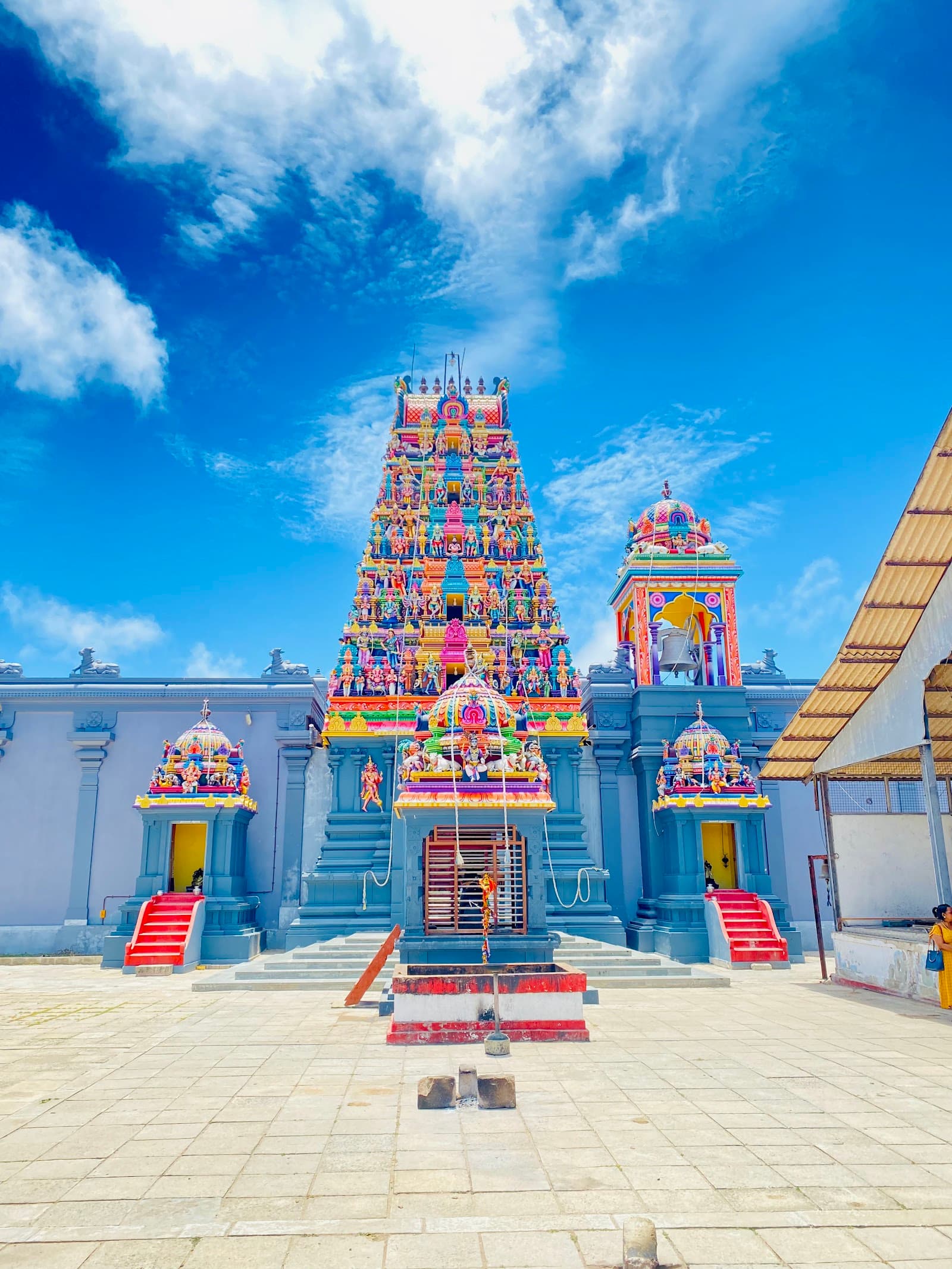
Thiruketheeswaram Temple Mannar Sri Lanka
Thiruketheeswaram Temple, dramatically situated in the Mannar District of northern Sri Lanka, represents one of the most extraordinary and historically significant Hindu temples in South Asia, with references dating back to the 6th century BCE and serving as one of the five ancient Pancha Ishwaram shrines dedicated to Shiva that were strategically established around the island's coastline, creating a powerful testament to the profound transmission of Indian Shaivite religious and architectural traditions to Sri Lanka. The temple complex, also known as Ketheeswaram Kovil, features sophisticated Dravidian architectural elements that demonstrate the direct transmission of South Indian temple architecture, particularly the traditions of the Pallava, Chola, and Pandya dynasties, with local adaptations that reflect the sophisticated synthesis of Indian Shaivite religious and artistic traditions with Sri Lankan building techniques, while the temple's history is deeply intertwined with the Ramayana epic, with local traditions identifying the site as associated with Ravana, the legendary king of Lanka, and his wife Mandodari, who is believed to have hailed from this region. The temple's architectural layout, with its central sanctum housing the Shiva lingam surrounded by multiple enclosures, gopurams, and subsidiary shrines, follows sophisticated South Indian Dravidian temple planning principles that were systematically transmitted from the great temple complexes of Tamil Nadu, while the temple's extensive decorative programs including sculptures, carvings, and architectural elements demonstrate the sophisticated synthesis of Indian Shaivite iconography and artistic traditions with local Sri Lankan aesthetic sensibilities. Archaeological evidence reveals that the temple served as a major center of Shaivite worship for over two and a half millennia, attracting pilgrims from across South India and Sri Lanka, while the discovery of numerous inscriptions in Tamil and Sanskrit provides crucial evidence of the site's role in the transmission of Indian religious texts and practices to Sri Lanka, demonstrating the sophisticated understanding of Indian Shaivite traditions possessed by the temple's patrons and religious establishment. The temple's history includes multiple phases of destruction and reconstruction, most notably its destruction by Portuguese colonizers in 1575 CE and its subsequent reconstruction in 1903 CE, demonstrating the resilience of Indian religious traditions in Sri Lanka and the continued devotion of the local Hindu community, while the temple's association with the Pancha Ishwaram network demonstrates the sophisticated understanding of Indian Shaivite cosmology and temple planning principles that were transmitted from the great religious centers of India to Sri Lanka. Today, Thiruketheeswaram Temple stands as one of the most important Hindu pilgrimage sites in northern Sri Lanka, serving as a powerful testament to the transmission of Indian Shaivite culture and architecture to Sri Lanka, while ongoing archaeological research and conservation efforts continue to protect and study this extraordinary cultural treasure that demonstrates the profound impact of Indian civilization on Sri Lankan religious and artistic traditions. ([1][2])
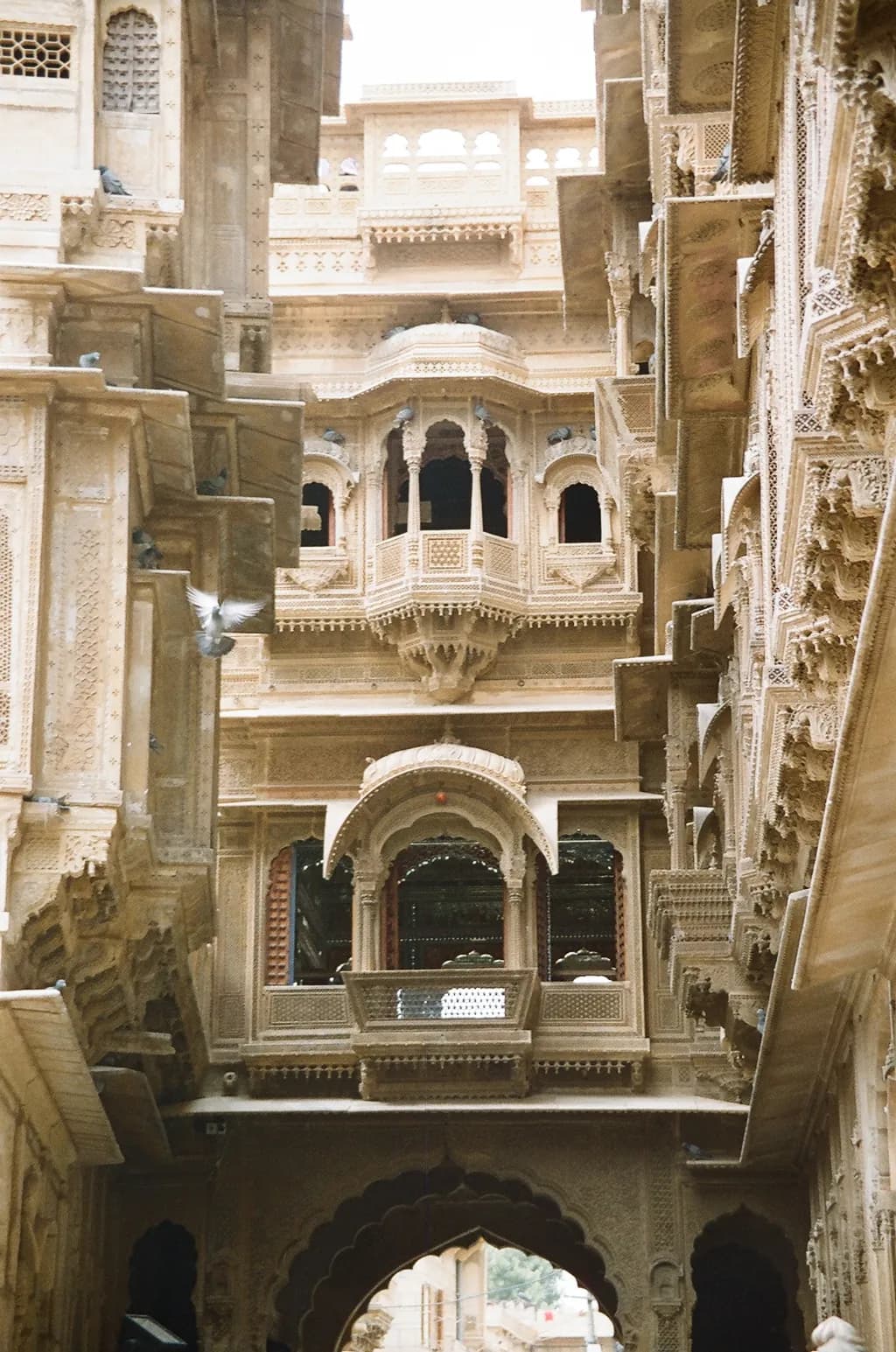
Patwa Haveli Ahmedabad
The Patwa Haveli, nestled within the bustling heart of Ahmedabad's old city, stands as a testament to a bygone era of mercantile prosperity. Stepping through its unassuming entrance, I felt an immediate shift, as if transported back to the 19th century. The cacophony of the city faded, replaced by the hushed whispers of history echoing within the haveli's intricately carved sandstone walls. Commissioned by a wealthy Jain merchant, Maneklal Bhagwandas Patwa, this five-story structure isn't just a house; it's a narrative etched in stone and wood, a story of a family's ambition and the artistry of a time when craftsmanship reigned supreme. My lens immediately gravitated towards the ornate facades. Each window, each jharokha (overhanging enclosed balcony), and each archway presented a unique tableau of intricate carvings. Floral motifs intertwined with depictions of birds, animals, and even scenes from daily life, all rendered with astonishing detail. The deep brown of the sandstone, weathered by time and the elements, provided a rich backdrop to these intricate designs, creating a visual feast that kept me captivated for hours. I found myself constantly adjusting my camera settings, trying to capture the interplay of light and shadow that danced across the carved surfaces, revealing new nuances with every passing hour. The sheer scale of the haveli is impressive. Five stories rise above the narrow streets, a symbol of the Patwa family's wealth and influence. As I ascended the wooden staircases, worn smooth by generations of footsteps, I noticed the subtle shifts in architectural style. The lower floors, dedicated to business and storage, are more austere, while the upper residential floors become progressively more ornate, culminating in the exquisitely carved family quarters on the topmost level. This gradual increase in decorative complexity speaks volumes about the social hierarchy of the time. One of the most striking features of the Patwa Haveli is its ingenious ventilation system. Long before the advent of air conditioning, the architects incorporated clever design elements to ensure a comfortable living environment even in the scorching Gujarat heat. High ceilings, strategically placed windows, and internal courtyards create a natural airflow, allowing cool air to circulate throughout the building. I could feel the subtle breeze as I explored the upper floors, a testament to the ingenuity of the craftsmen who built this magnificent structure. Beyond the architectural marvel, the Patwa Haveli offers glimpses into the lifestyle of its former inhabitants. The remnants of frescoes on the walls, though faded with time, hint at the vibrant colours that once adorned the interiors. Imagining the bustling activity that once filled these rooms – merchants discussing trade deals, families gathering for meals, children playing in the courtyards – brought the haveli to life in a way that mere observation could not. I spent a considerable amount of time documenting these remnants, hoping to preserve these fragments of a vanished world through my photographs. However, the passage of time has taken its toll. While some sections of the haveli have been meticulously restored, others bear the scars of neglect. Peeling paint, crumbling plaster, and damaged carvings serve as a poignant reminder of the fragility of our heritage. It underscores the importance of conservation efforts to ensure that these architectural treasures continue to inspire and educate future generations. Leaving the Patwa Haveli, I carried with me not just photographs, but a profound appreciation for the artistry and ingenuity of the past. It's a place where history whispers from every corner, a place that deserves to be cherished and protected. My hope is that my photographs will not only showcase the beauty of this architectural gem but also inspire others to explore and appreciate the rich heritage of India.
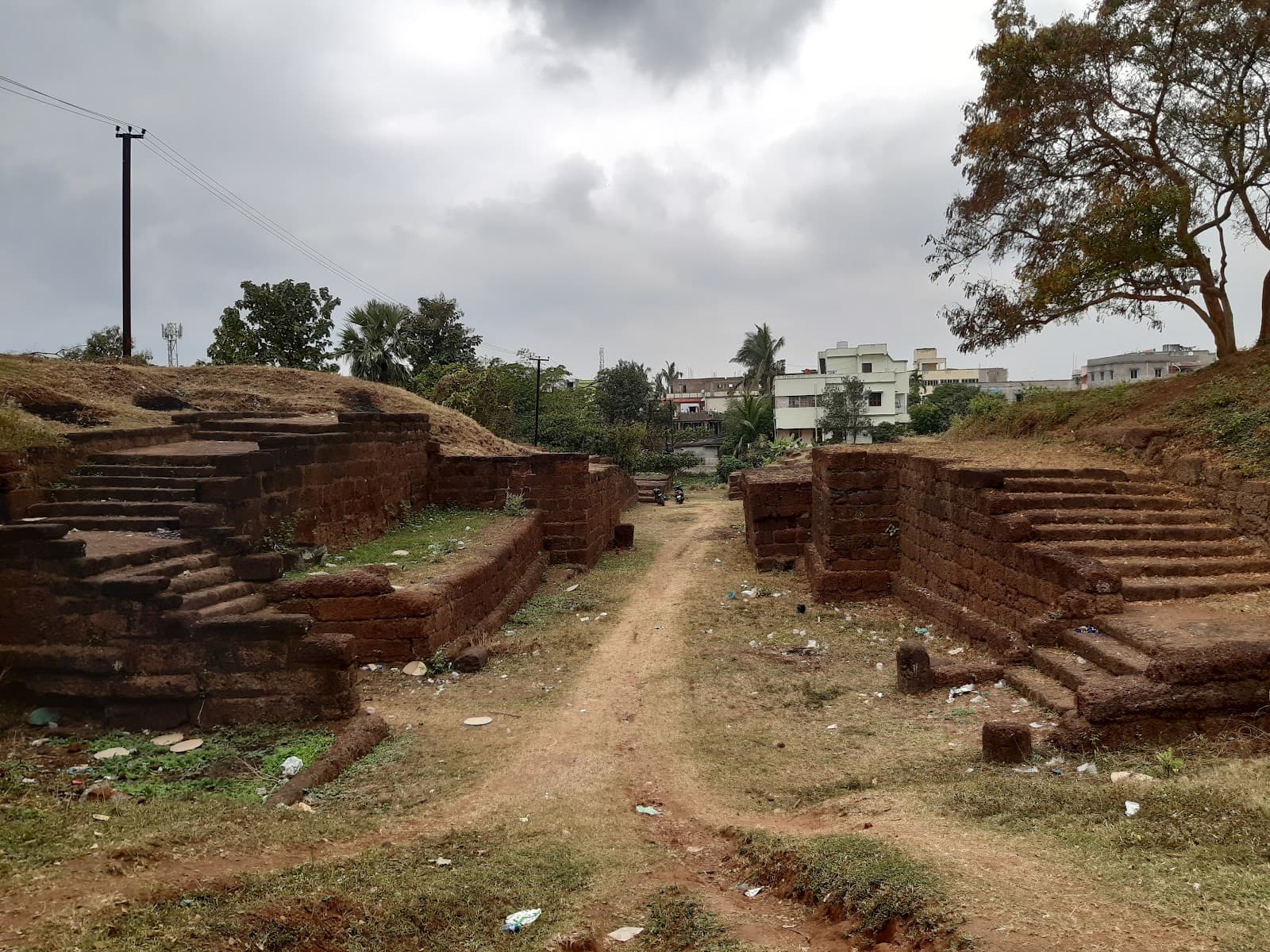
Sisupalgarh Fort Bhubaneswar
The laterite ramparts of Sisupalgarh rose before me, baked a deep, rusty red under the Odisha sun. Not the imposing, sheer walls of a Rajput fortress, but rather the sprawling, undulating remains of a city fortification, hinting at a life lived within centuries ago. Here, just a few kilometers from the bustling modernity of Bhubaneswar, lay the whispers of ancient Kalinga, a realm steeped in history and architectural ingenuity. My fingers traced the rough texture of the laterite, a porous rock formed from iron-rich soil. Its use spoke volumes about the builders’ resourcefulness and understanding of the local environment. This wasn't just a defensive structure; it was a testament to sustainable building practices, utilizing readily available materials. The ramparts, though eroded by time, still retained a sense of formidable strength. They stretched in a roughly square shape, enclosing an area of approximately 1.2 square kilometers, a scale that impressed upon me the sheer size of this ancient settlement. Walking along the top of the ramparts, I could see the clear demarcation of the moat, now dry and overgrown, but once a crucial defensive feature. The strategic placement of gateways, particularly the impressive northern and southern entrances, suggested a well-planned urban layout. These weren't mere openings; they were carefully constructed passages, designed for both defense and ceremonial processions. I could almost picture the chariots rumbling through, the soldiers standing guard, the vibrant life of the city flowing in and out. Descending into the heart of the fort, I encountered the remnants of what were once bustling streets and residential areas. The foundations of houses, crafted from the same laterite, were still visible, laid out in a grid pattern, indicative of a planned urban settlement. The discovery of artifacts like pottery shards, terracotta figurines, and iron implements during excavations paints a vivid picture of daily life within these walls. It wasn't just a military outpost; it was a thriving urban center, a hub of trade and cultural exchange. One of the most striking features of Sisupalgarh is its sophisticated water management system. Evidence suggests the presence of elaborate drains and reservoirs, showcasing the advanced engineering skills of the time. The careful planning of water resources, crucial in a region with distinct wet and dry seasons, speaks to the foresight and practicality of the city's planners. It’s a reminder that even in ancient times, urban planning considered the practicalities of daily life, not just defense and grandeur. The Ashokan rock edicts discovered nearby, though not within the fort itself, add another layer of historical significance to Sisupalgarh. They suggest that the city, then known as Tosali, was a major administrative center under the Mauryan empire. This connection to one of India’s most influential rulers adds a palpable sense of historical weight to the site. Standing amidst these ruins, I felt a tangible connection to the past, a sense of awe at the ingenuity and resilience of those who built and inhabited this ancient city. Sisupalgarh isn't just a collection of ruins; it's a living testament to the rich tapestry of Indian history. It's a place where the past whispers to the present, offering glimpses into the lives, beliefs, and architectural prowess of a civilization that thrived centuries ago. The site deserves more attention, not just as a historical curiosity, but as a valuable lesson in sustainable urban planning and a reminder of the enduring legacy of ancient India. As I left the fort, the setting sun casting long shadows over the laterite walls, I carried with me a profound sense of wonder and a renewed appreciation for the architectural marvels of ancient India. Sisupalgarh is more than just a fort; it is a time capsule, waiting to be explored and understood.
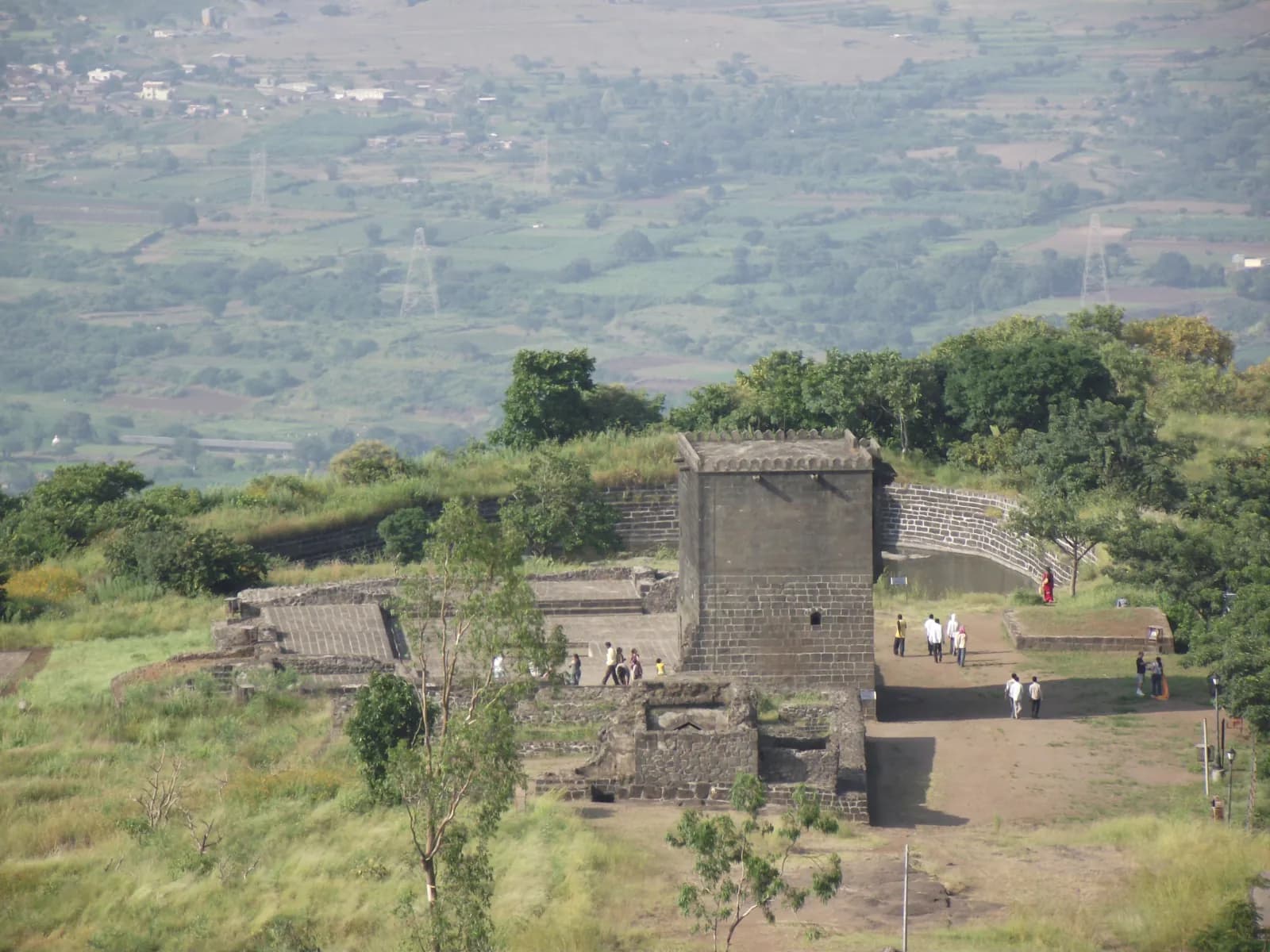
Shivneri Fort Junnar
The imposing basalt ramparts of Shivneri Fort, rising dramatically from the Deccan plateau, held me captivated from the moment I arrived in Junnar. Having spent years immersed in the granite wonders of South Indian temple architecture, I was eager to experience this different, yet equally compelling, facet of India's heritage. The fort, a formidable military stronghold for centuries, offered a fascinating glimpse into a world shaped by strategic necessities rather than the spiritual aspirations that drove the Dravidian temple builders. The ascent to the fort itself was an experience. The winding path, carved into the rock, felt like a journey back in time. Unlike the elaborate gopurams and mandapas I was accustomed to, the entrance to Shivneri was a study in practicality. The fortifications, though lacking the ornate carvings of southern temples, possessed a raw beauty, their strength evident in the sheer thickness of the walls and the clever placement of bastions. The strategically positioned 'Shivai Devi' and 'Maha Darwaja' gates, with their sturdy wooden doors reinforced with iron, spoke volumes about the fort's defensive history. Within the fort walls, a different world unfolded. The rugged terrain enclosed a surprisingly self-sufficient community. Water tanks, carved meticulously into the rock, showcased impressive water management techniques, a stark contrast to the temple tanks of the south, which often served ritualistic purposes as well. The 'Badami Talav,' with its intricate stepped sides, was a particularly striking example. The granaries, built to withstand sieges, were another testament to the fort's pragmatic design. The architectural style within the fort was a blend of various influences. While the overall structure was dictated by military needs, glimpses of later architectural embellishments were visible, particularly in the residential areas. The 'Shivai Mata Mandir,' where Chhatrapati Shivaji Maharaj was born, held a special significance. While simpler than the grand temples of the south, it possessed a quiet dignity, its stone construction echoing the fort's overall aesthetic. The carvings on the pillars and lintels, though less intricate than the temple sculptures I was familiar with, displayed a distinct local style. One of the most striking features of Shivneri Fort was its integration with the natural landscape. The architects had skillfully utilized the natural contours of the hill, incorporating the rock formations into the fort's defenses. This symbiotic relationship between architecture and nature was a recurring theme, reminding me of the hilltop temples of South India, where the natural surroundings often played a crucial role in the temple's design and symbolism. Exploring the 'Ambarkhana,' the grain storage, and the 'Kalyan Buruj,' I couldn't help but compare the ingenuity of the Maratha military architects with the temple builders of the south. While the latter focused on creating spaces that inspired awe and devotion, the former prioritized functionality and defense. The lack of elaborate ornamentation at Shivneri, however, did not diminish its architectural merit. The fort's strength lay in its simplicity and its seamless integration with the landscape. My visit to Shivneri Fort was a powerful reminder that architectural brilliance can manifest in diverse forms. While my heart remains deeply connected to the ornate temples of South India, the stark beauty and strategic ingenuity of Shivneri Fort offered a valuable new perspective on India's rich architectural heritage. The echoes of history resonated within those basalt walls, narrating tales of resilience, strategy, and a deep connection to the land. It was an experience that broadened my understanding of Indian architecture and left me with a profound appreciation for the diverse expressions of human ingenuity.
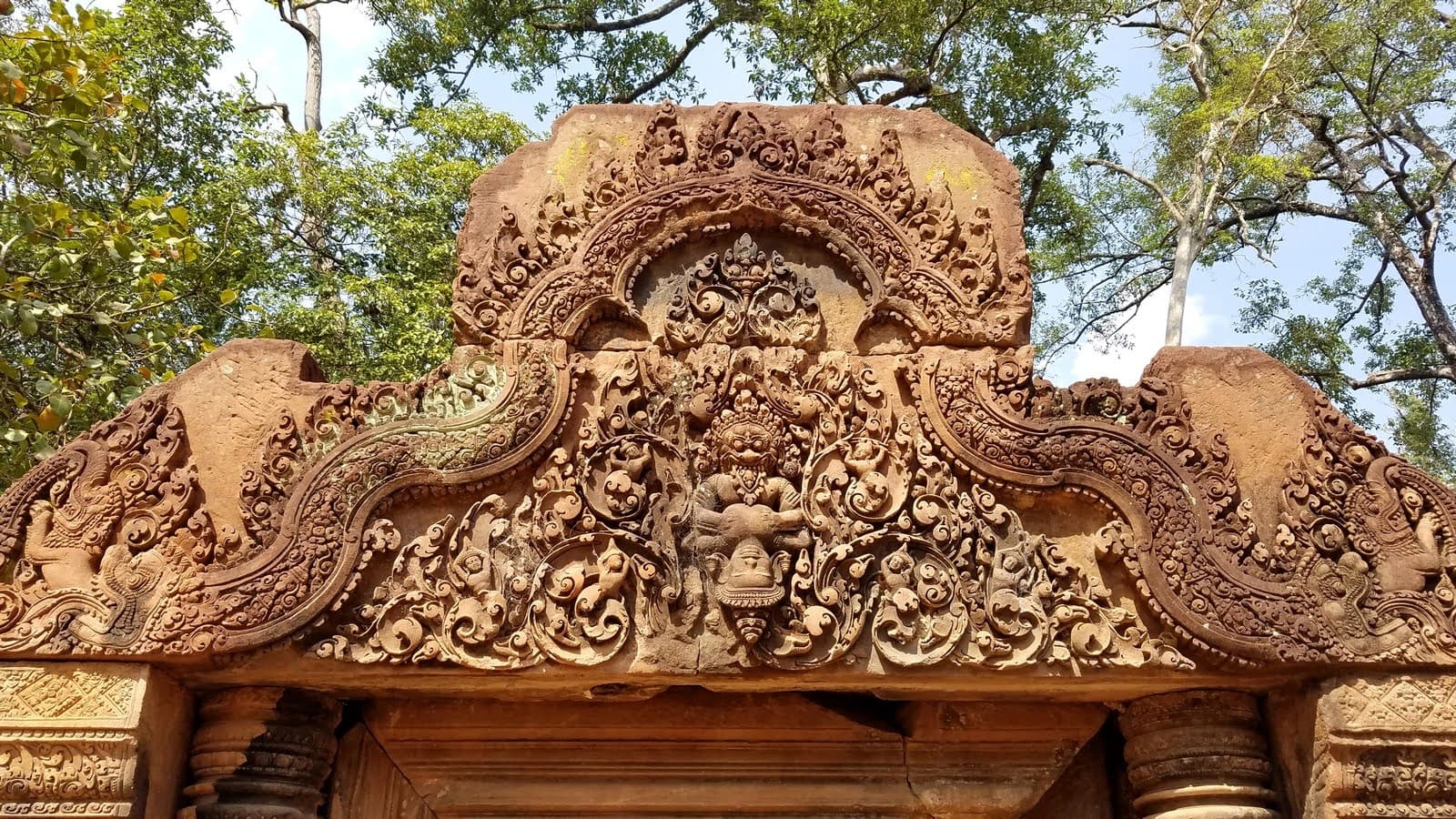
Banteay Srei Siem Reap Cambodia
Located in Siem Reap, Cambodia, Banteay Srei, consecrated in 967 CE during the reign of King Rajendravarman II, exemplifies the spread of Indian Hindu artistic traditions ([1][2]). Revered as the "Citadel of Women," this Khmer Hindu temple features elaborate carvings on pink sandstone, revealing a sophisticated understanding of Hindu iconography ([1]). The temple is dedicated to Shiva and Parvati ([1][2]). Intricate carvings embellishing the walls depict scenes from the Ramayana and other Hindu mythological narratives, underscoring a profound connection to Indian artistic styles ([1][2]). The detailed lintels and pediments showcase depictions of Shiva on Nandi with Parvati, and Indra on Airavata, illustrating the influence of Indian Hindu iconography ([1]). The pink sandstone, carefully selected for its fine grain, enabled the detailed execution of these carvings ([1]). Sophisticated drainage systems ensure the preservation of the temple's structure, while the layout, featuring three central towers dedicated to Shiva and two libraries (Mandir), reflects principles of Indian Hindu temple planning ([1][2]). These principles are rooted in texts such as the Manasara Shilpa Shastra, which details temple construction and iconography ([3]). Archaeological evidence suggests that courtiers, instead of the king, commissioned the temple, potentially contributing to its exceptional artistic quality ([1]). Sanskrit inscriptions discovered at the site offer evidence of the transmission of Indian religious texts to Cambodia ([1][2]). The presence of these inscriptions suggests a deep understanding of Vedic traditions and their integration into Khmer culture ([4]). During the medieval period, temple architecture often integrated elements from various religious and philosophical traditions ([5]). Today, Banteay Srei is a UNESCO World Heritage Site, celebrated for its preservation and unique artistic value ([1]).
Sri Lakshmi Temple Ashland
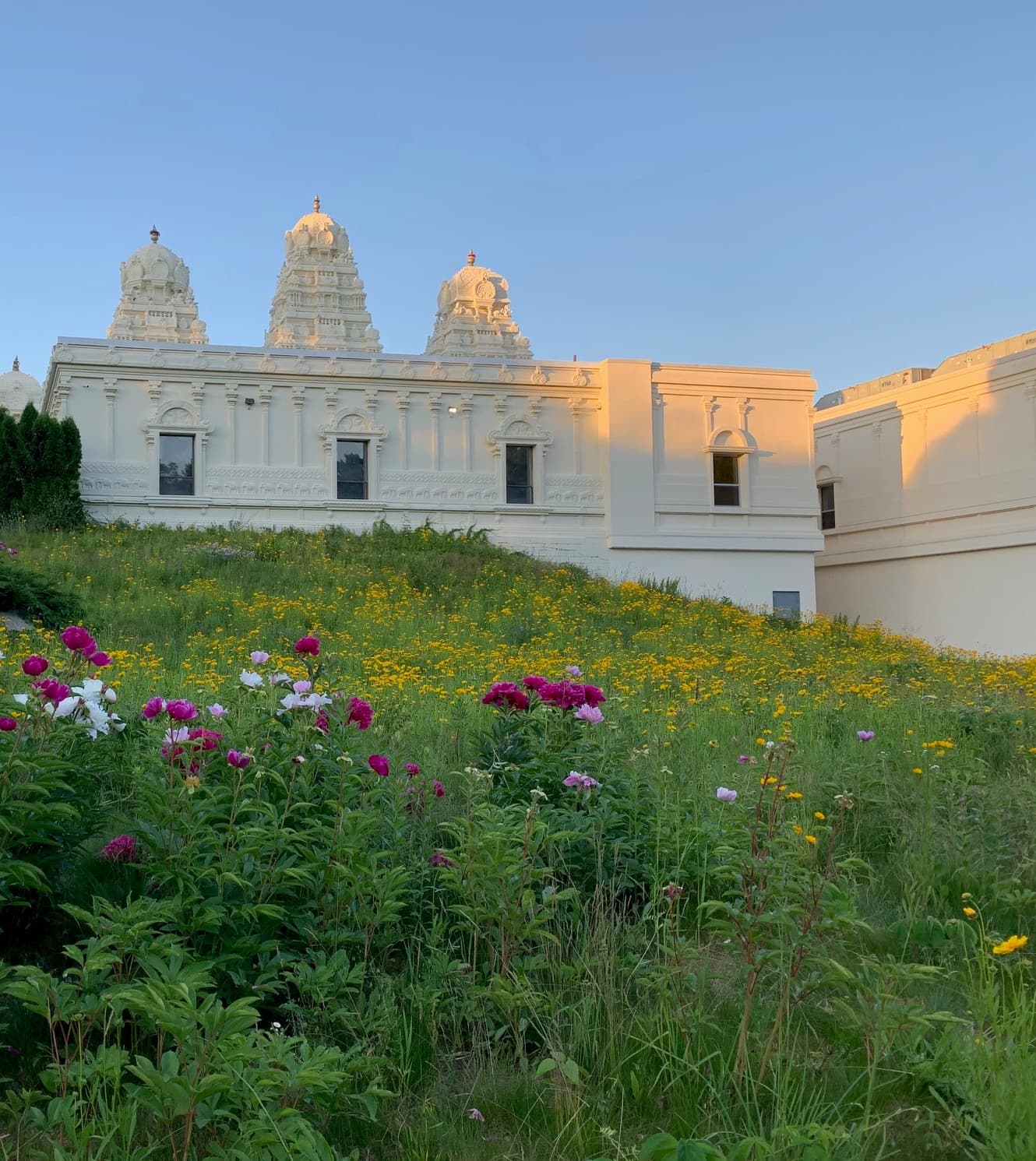
Sri Lakshmi Temple in Ashland, Massachusetts, dedicated to Mahalakshmi and Lord Narayana, opens at 7:00 AM on weekdays and 6:00 AM on weekends, maintaining sequential abhishekams, archanas, and evening sahasranama chants until 8:30 PM across its granite mandapam and cultural center ([1][2]). Volunteer coordinators staff the heated entry plaza, shoe rooms, and vestibule during winter months, keeping queues orderly as visitors cycle between the main sanctum, subsidiary shrines, and the basement canteen ([1][3]). Security personnel coordinate with Ashland police during peak festivals, monitor snow-melt systems, and ensure emergency generators are ready for New England nor’easter outages ([3][5]). Elevators connect the mandapam to the cultural center and classrooms, ADA-compliant ramps ring the building, and ushers provide hearing-assist devices and closed-caption displays for Tamil and English liturgy ([1][4]). Custodians follow hourly schedules to wipe condensation, reset mats, and check radiant snow-melt manifolds, while HVAC zoning maintains steady temperatures despite Massachusetts winters ([3][5]). The temple’s computerized maintenance management system tracks priest schedules, life-safety inspections, and accessibility checks; 2025 Town of Ashland inspections recorded no outstanding violations, confirming mechanical, fire, and kitchen systems remain current ([3][4]).
Rajgir Palace Rajgir
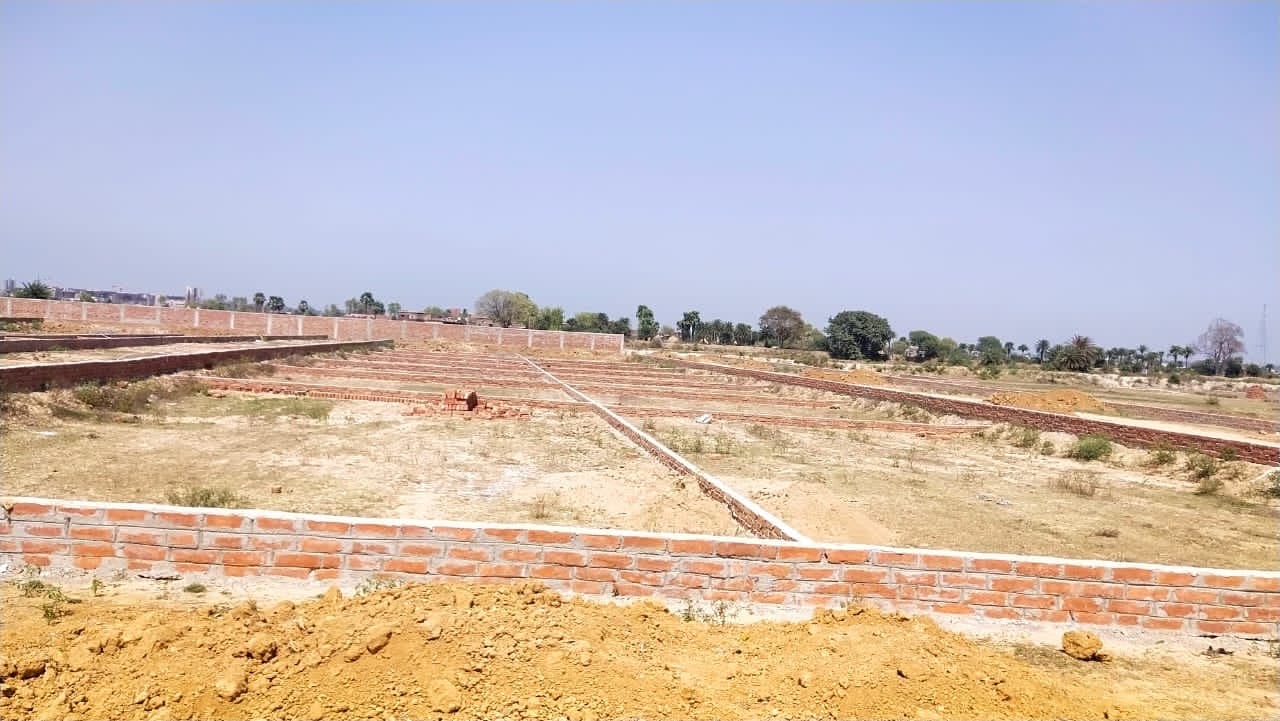
The midday sun cast long shadows across the manicured lawns of Rajgir Palace, highlighting the faded grandeur of this once-regal retreat. Located in the heart of Rajgir, Bihar, a town steeped in ancient history, the palace stands as a silent witness to a bygone era, its walls whispering tales of the Nawabs of Bengal who once held court here. My 500th documented monument, it held a special significance, a milestone in my journey of capturing India's architectural heritage. The palace, a sprawling structure built in the Indo-Saracenic style, displays a fascinating blend of architectural influences. The arched doorways, intricate jali work, and ornate stucco decorations speak of Mughal aesthetics, while the European-inspired columns and balustrades hint at the colonial period during which it was extensively renovated. This fusion of styles, so characteristic of many late 19th and early 20th-century buildings in India, creates a unique visual narrative, a testament to the cultural exchange of the time. Stepping through the imposing arched gateway, I was struck by the sense of tranquility that permeated the courtyard. The central courtyard, once bustling with activity, is now a peaceful oasis. A large fountain, now dry, stands as a centerpiece, its weathered stone surface bearing the marks of time. Surrounding the courtyard are the various wings of the palace, their facades adorned with intricate carvings and decorative motifs. The delicate floral patterns and geometric designs, though faded in places, still retain their charm, showcasing the skill of the artisans who crafted them. I spent hours exploring the palace, my camera capturing every detail. The grand durbar hall, with its high ceilings and ornate chandeliers, evoked images of lavish gatherings and royal ceremonies. The walls, once adorned with rich tapestries and paintings, now bear the scars of neglect, yet the remnants of their former glory are still visible. Peeling paint revealed layers of history, each layer telling a story of the palace's evolution. The upper floors, accessible via a grand staircase, offered breathtaking views of the surrounding hills and the ancient city of Rajgir. From here, I could appreciate the strategic location of the palace, overlooking the valley and offering a panoramic vista. The rooms, once opulent and luxurious, now stand empty, their faded grandeur a poignant reminder of the passage of time. I noticed remnants of intricate tile work on the floors, now cracked and broken in places, but still hinting at the elegance that once filled these spaces. One of the most captivating aspects of Rajgir Palace is its integration with the natural landscape. The palace gardens, though overgrown in parts, still retain their original layout, with pathways meandering through lush greenery. The presence of ancient trees, some perhaps as old as the palace itself, adds to the sense of history and timelessness. I could imagine the Nawabs strolling through these gardens, enjoying the cool shade and the panoramic views. My visit to Rajgir Palace was more than just documenting another monument; it was an immersive experience, a journey back in time. It was a privilege to witness the architectural legacy of the Nawabs of Bengal and to capture the essence of this historical gem. While the palace stands as a testament to a bygone era, it also serves as a reminder of the importance of preserving our heritage for future generations. The faded grandeur of Rajgir Palace, with its blend of architectural styles and its serene setting, left an indelible mark on me, reinforcing my passion for documenting India's rich and diverse architectural heritage.
Nainativu Nagapooshani Amman Temple Nainativu Jaffna Sri Lanka
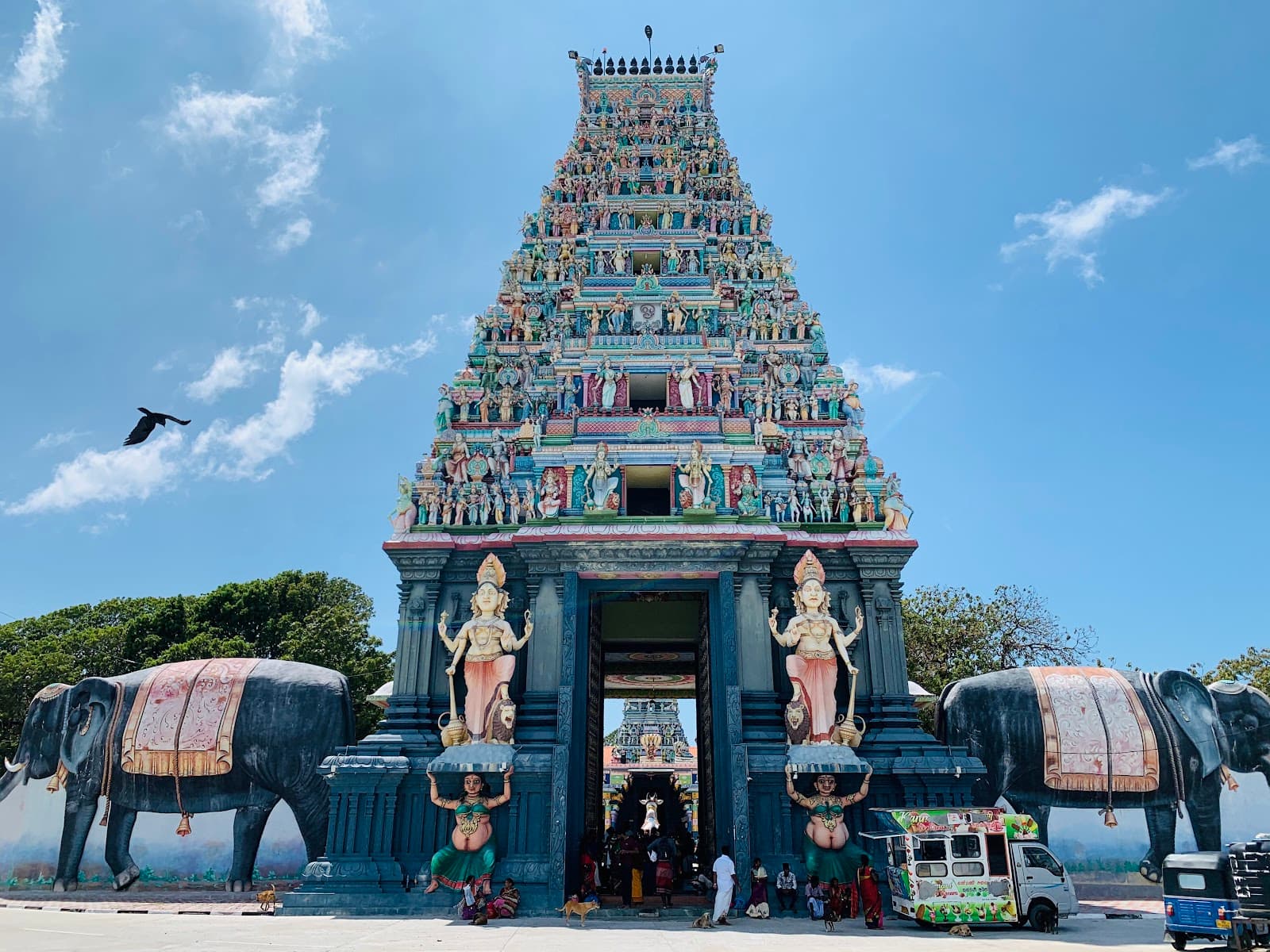
Nainativu Nagapooshani Amman Temple, dramatically situated on the sacred island of Nainativu off the coast of Jaffna in northern Sri Lanka, represents one of the most extraordinary and spiritually significant Hindu temples in South Asia, with ancient origins and an 18th-century reconstruction that serves as a major center of Shakti worship dedicated to the goddess Nagapooshani Amman, creating a powerful testament to the profound transmission of Indian Shakta religious and architectural traditions to Sri Lanka. The temple complex, also known as Nainativu Nagapooshani Kovil, features sophisticated Dravidian architectural elements that demonstrate the direct transmission of South Indian temple architecture, particularly the traditions of the Pallava, Chola, and Pandya dynasties, with local adaptations that reflect the sophisticated synthesis of Indian Shakta religious and artistic traditions with Sri Lankan building techniques, while the temple's location on the sacred island of Nainativu, accessible only by boat, underscores its spiritual significance as a place of pilgrimage that has attracted devotees from across South India and Sri Lanka for centuries. The temple's architectural layout, with its central sanctum housing the goddess Nagapooshani Amman surrounded by multiple enclosures, gopurams, and subsidiary shrines dedicated to various deities including Shiva, Ganesha, and Murugan, follows sophisticated South Indian Dravidian temple planning principles that were systematically transmitted from the great temple complexes of Tamil Nadu, while the temple's extensive decorative programs including sculptures, carvings, and architectural elements demonstrate the sophisticated synthesis of Indian Shakta iconography and artistic traditions with local Sri Lankan aesthetic sensibilities. Archaeological evidence reveals that the temple served as a major center of Shakti worship for centuries, attracting pilgrims from across South India and Sri Lanka, while the discovery of numerous inscriptions in Tamil and Sanskrit provides crucial evidence of the site's role in the transmission of Indian religious texts and practices to Sri Lanka, demonstrating the sophisticated understanding of Indian Shakta traditions possessed by the temple's patrons and religious establishment. The temple's association with the sacred island of Nainativu, which is also home to a Buddhist stupa, demonstrates the sophisticated religious syncretism that has characterized Sri Lankan religious practices, while the temple's annual festivals attract thousands of devotees and demonstrate the continued vitality of Indian religious traditions in Sri Lanka. The temple complex underwent major reconstruction in the 18th century, with the current structure representing a faithful preservation of the temple's original Dravidian architectural character and spiritual significance, while ongoing archaeological research continues to reveal evidence of the temple's ancient origins and its role in the transmission of Indian religious traditions to Sri Lanka. Today, Nainativu Nagapooshani Amman Temple stands as one of the most important Hindu pilgrimage sites in northern Sri Lanka, serving as a powerful testament to the transmission of Indian Shakta culture and architecture to Sri Lanka, while ongoing archaeological research and conservation efforts continue to protect and study this extraordinary cultural treasure that demonstrates the profound impact of Indian civilization on Sri Lankan religious and artistic traditions. ([1][2])
Quick Links
Plan Your Heritage Journey
Get personalized recommendations and detailed visitor guides