Has Inheritage Foundation supported you today?
Your contribution helps preserve India's ancient temples, languages, and cultural heritage. Every rupee makes a difference.
Secure payment • Instant 80G certificate
Akashiganga Temple Along West Siang
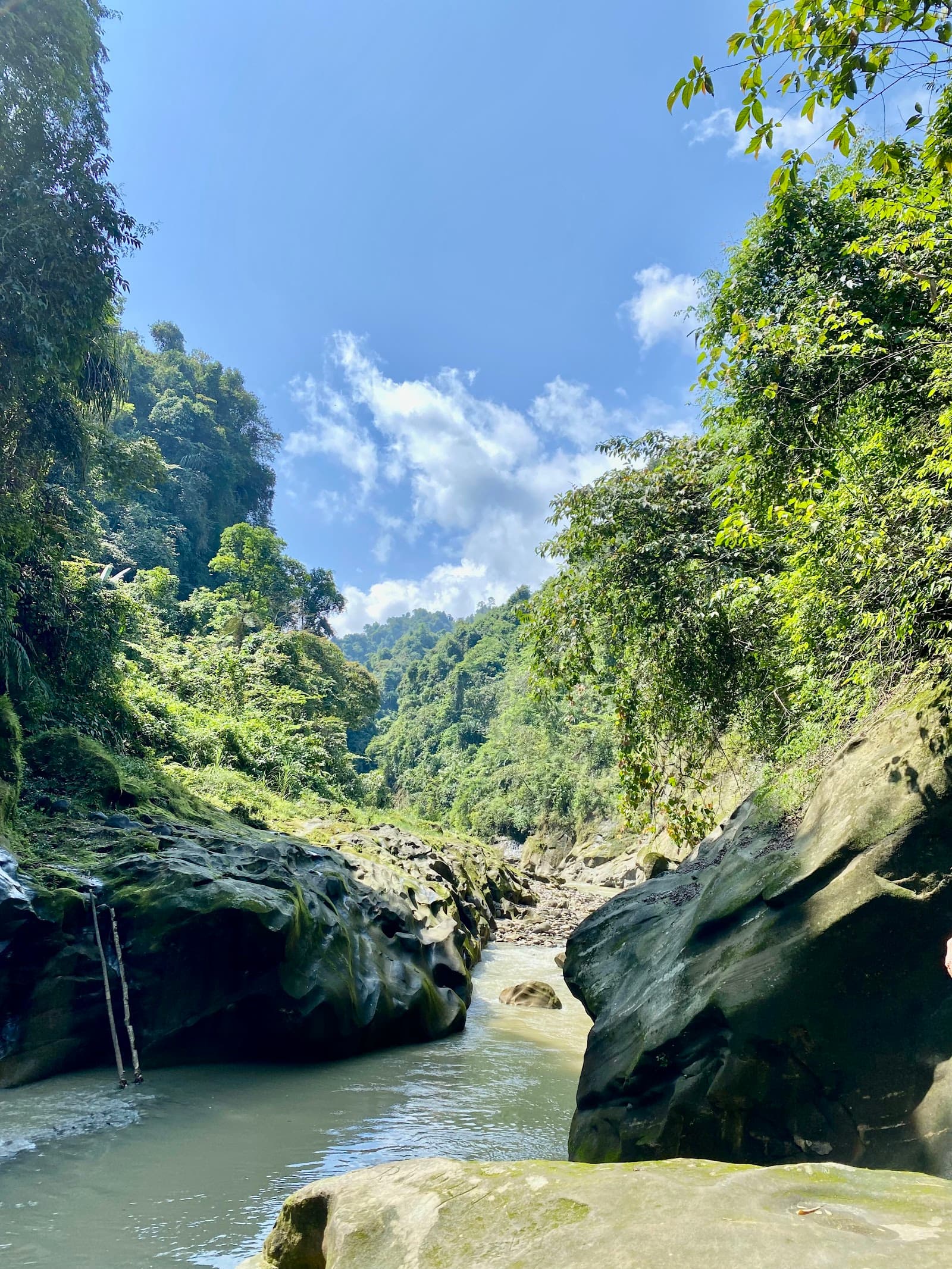
In Arunachal Pradesh's West Siang district, Akashiganga emerges as an ancient temple complex, a candidate for UNESCO World Heritage recognition ([1]). The routes leading to it present picturesque vistas of the Himalayan foothills ([2]). During the Pala period, around 1350 CE, this sacred site was established, distinguished by its Nagara-style architecture and curvilinear tower ([3][4]). Predominantly, stone and timber were employed in its construction, reflecting the area's natural resources ([3]). What makes Akashiganga notable is the convergence of Hinduism and indigenous Adi traditions ([2]). The primary Shiva temple, though unpretentious, possesses profound spiritual importance for the Adi community ([1]). Eschewing the intricate embellishments common in South Indian temples, the temple's aesthetic accentuates the inherent beauty of its surroundings ([2]). Vedic astronomical principles guided the temple's layout, harmonizing it with cosmic energies ([5]). Intricate carvings embellish the temple walls, illustrating deities and narratives from Hindu mythology ([4]). Akashiganga, which translates to "Sky River," is traditionally associated with the Ganges River, enhancing its sacred status ([1][2]). Pilgrims undertake journeys to offer prayers, drawn to the site's palpable spiritual aura ([3]). As an embodiment of the region's cultural legacy and the enduring strength of faith, Akashiganga stands as a testament to Arunachal Pradesh's rich heritage ([1]). The architectural style incorporates a tiered roof, adding to its unique character ([3]). Bamboo and cane are also integrated into the structure, showcasing the use of local materials ([3]). The Pala Dynasty's patronage is evident in the temple's design and construction ([3]).
Hoysaleswara Temple Halebidu
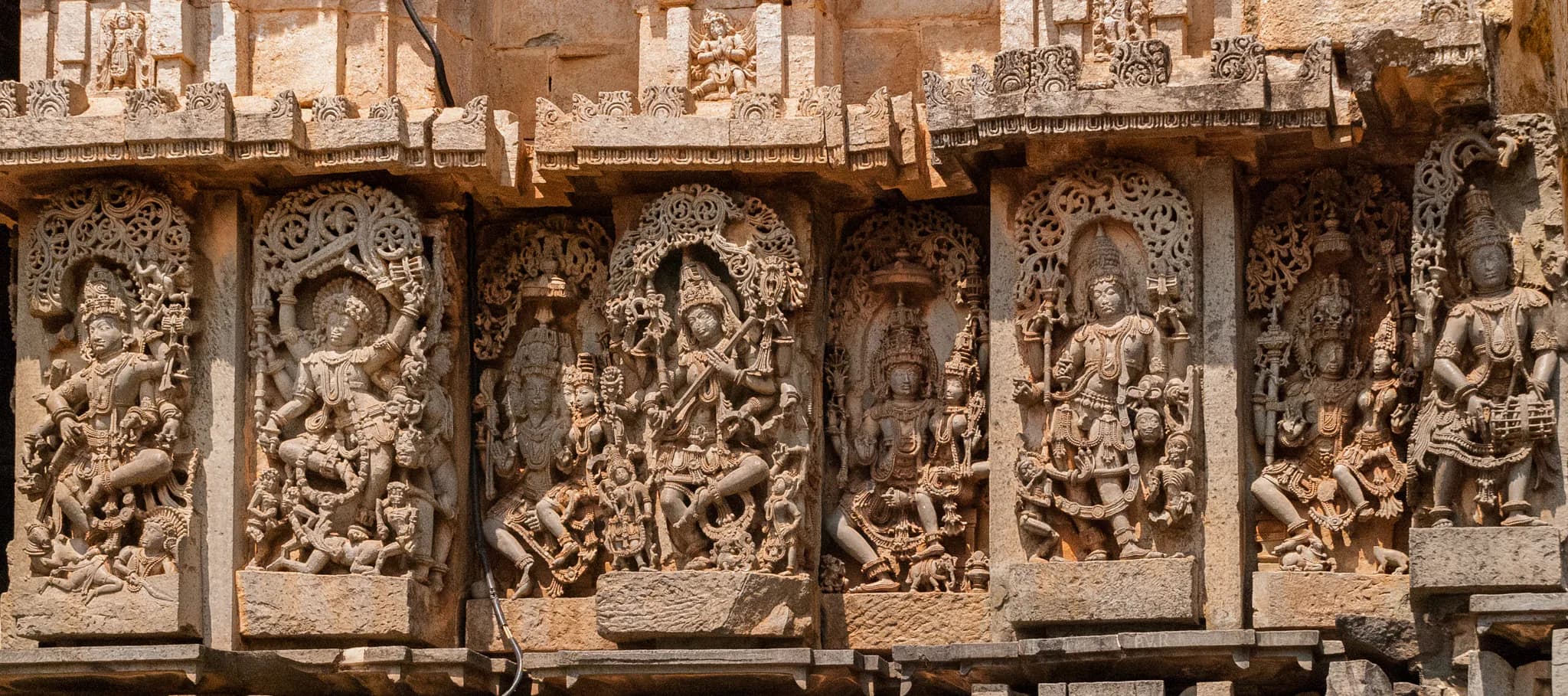
The midday sun cast long, dramatic shadows across the intricately carved stone walls of the Hoysaleswara Temple in Halebidu, a spectacle that immediately justified its place on the UNESCO World Heritage list. Having explored every UNESCO site in India, I can confidently say that this temple holds a unique position, a testament to the artistic prowess of the Hoysala dynasty. It’s not just a temple; it’s a sprawling, open-air museum of sculpted narratives. My first impression was one of sheer awe. The temple, dedicated to Lord Shiva, isn’t towering in height like some of the South Indian gopurams, but rather spreads horizontally, inviting you to circumambulate and slowly absorb the wealth of detail. Every inch of the outer walls is a canvas, teeming with friezes depicting scenes from the epics, the Ramayana and the Mahabharata, as well as depictions of animals, dancers, musicians, and deities. I spent hours tracing the narratives with my fingers, marveling at the skill of the artisans who breathed life into stone centuries ago. The temple is built of soapstone, a relatively soft stone that allowed for the intricate carvings. This, however, has also made it vulnerable to the ravages of time and weather. Despite some erosion, the level of detail that remains is astonishing. I was particularly captivated by the depictions of elephants – each one unique in its posture and ornamentation. The sheer variety and realism in their portrayal spoke volumes about the keen observation skills of the sculptors. Inside the temple, the experience shifts. While the exterior is a riot of sculptural detail, the interior spaces are comparatively simpler, creating a sense of tranquility. The two main shrines, dedicated to Hoysaleswara and Shantaleswara (named after King Vishnuvardhana Hoysala and his queen, Shantala Devi), house large lingams. The light filtering through the latticed windows creates a mystical atmosphere, enhancing the spiritual significance of the space. One of the most striking features of the Hoysaleswara Temple is the star-shaped platform on which it stands. This allows for multiple viewpoints and perspectives of the intricate carvings. I found myself constantly moving around the temple, discovering new details with every change in angle. The play of light and shadow throughout the day further enhances this dynamic experience. While the temple itself is the main attraction, the surrounding area also holds historical significance. The nearby Kedareshwara Temple, though smaller, exhibits a similar architectural style and is worth a visit. The Archaeological Museum in Halebidu houses a collection of sculptures and artifacts from the Hoysala period, providing valuable context to the artistry witnessed at the temple. My visit to the Hoysaleswara Temple wasn't just a sightseeing trip; it was an immersive experience. It was a journey back in time, a glimpse into the rich cultural heritage of Karnataka. The temple stands as a powerful reminder of the artistic heights achieved by the Hoysala dynasty and the enduring power of human creativity. It’s a site that deserves more than a cursory glance; it demands time, patience, and a willingness to lose oneself in the intricate stories etched in stone. For anyone seeking to understand the depth and beauty of Indian art and architecture, the Hoysaleswara Temple is an absolute must-see. It’s a place that will stay etched in my memory long after I’ve left its hallowed grounds.
Birla Mandir Kolkata
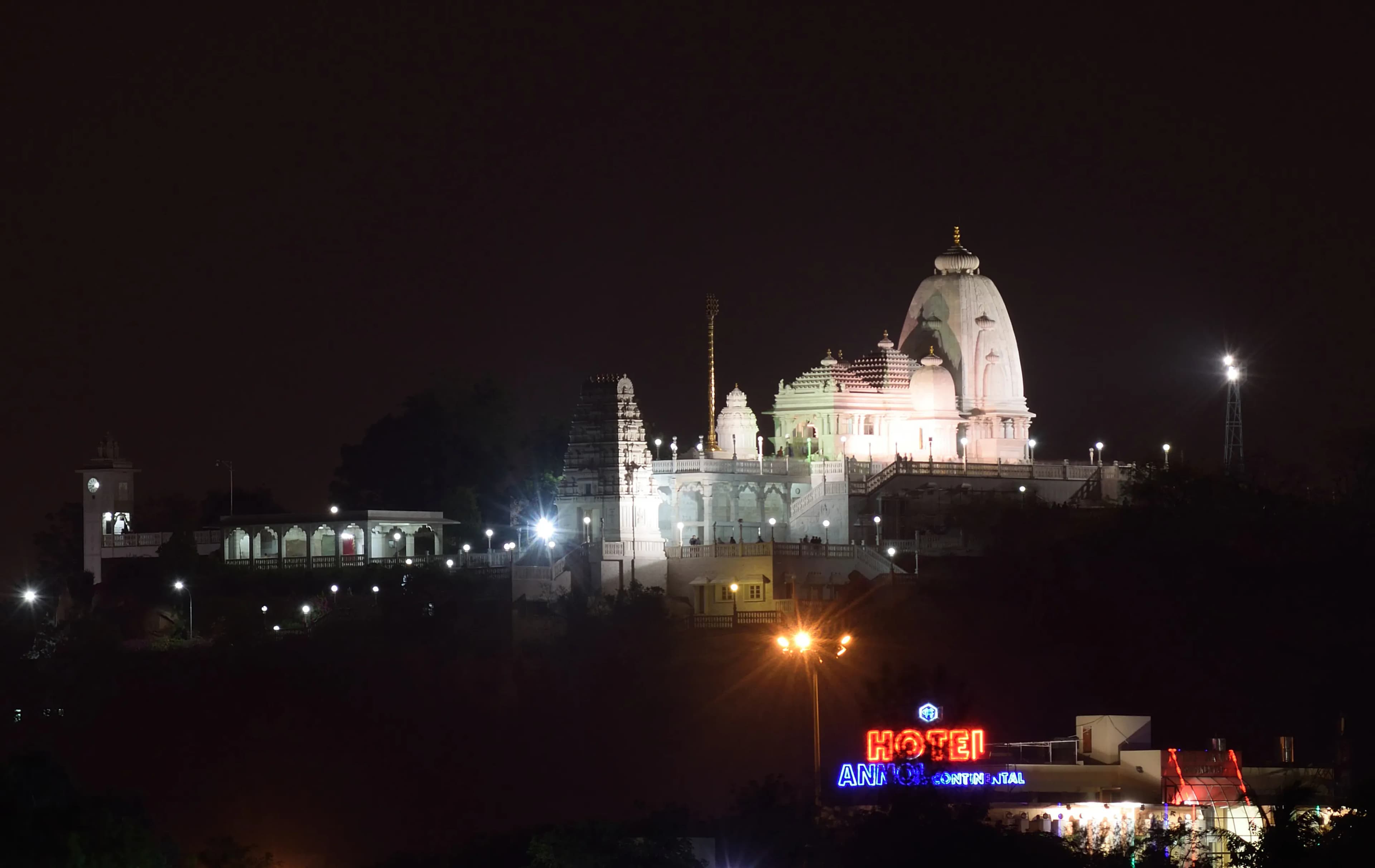
A serene addition to the Kolkata skyline, the Birla Mandir, completed in 1970 CE, is dedicated to Lord Krishna and Radha ([1]). Commissioned by the Birla family, the temple exemplifies the Nagara style of North Indian temple architecture ([2][3]). Unlike traditional rock-cut temples, this modern marvel is constructed using white marble, sandstone, cement, and steel ([4]). Intricate carvings embellish the temple's exterior, depicting scenes from the Bhagavad Gita and other Hindu scriptures ([1]). Rising majestically, the Shikhara (spire), a defining element of Nagara architecture, draws the eye upwards, echoing the forms of ancient temples ([2]). This architectural style is rooted in principles outlined in texts such as the *Brihat Samhita*, which discusses temple design and iconography ([5]). Vastu Shastra principles, the ancient Indian science of architecture, likely influenced the temple's layout, promoting harmony and balance ([3]). Within the Garbhagriha (sanctum), the idols of Radha and Krishna are resplendent, adorned with vibrant silks and jewels ([4]). Soft light filters through the marble, enhancing the spiritual atmosphere ([1]). The temple complex also houses a museum exhibiting religious artifacts, providing insights into Hindu mythology and traditions ([6]). During the British Colonial Period, temple architecture saw a resurgence, with patrons like the Birla family supporting the construction of new temples that blended traditional styles with modern materials ([7]). The Birla Mandir offers a tranquil space for devotion and reflection, embodying India's enduring cultural heritage ([2][3]). The temple stands as a modern interpretation of ancient architectural principles, reflecting a continuing legacy of artistic and spiritual expression ([5][6]).
Rajiv Lochan Temple Rajim
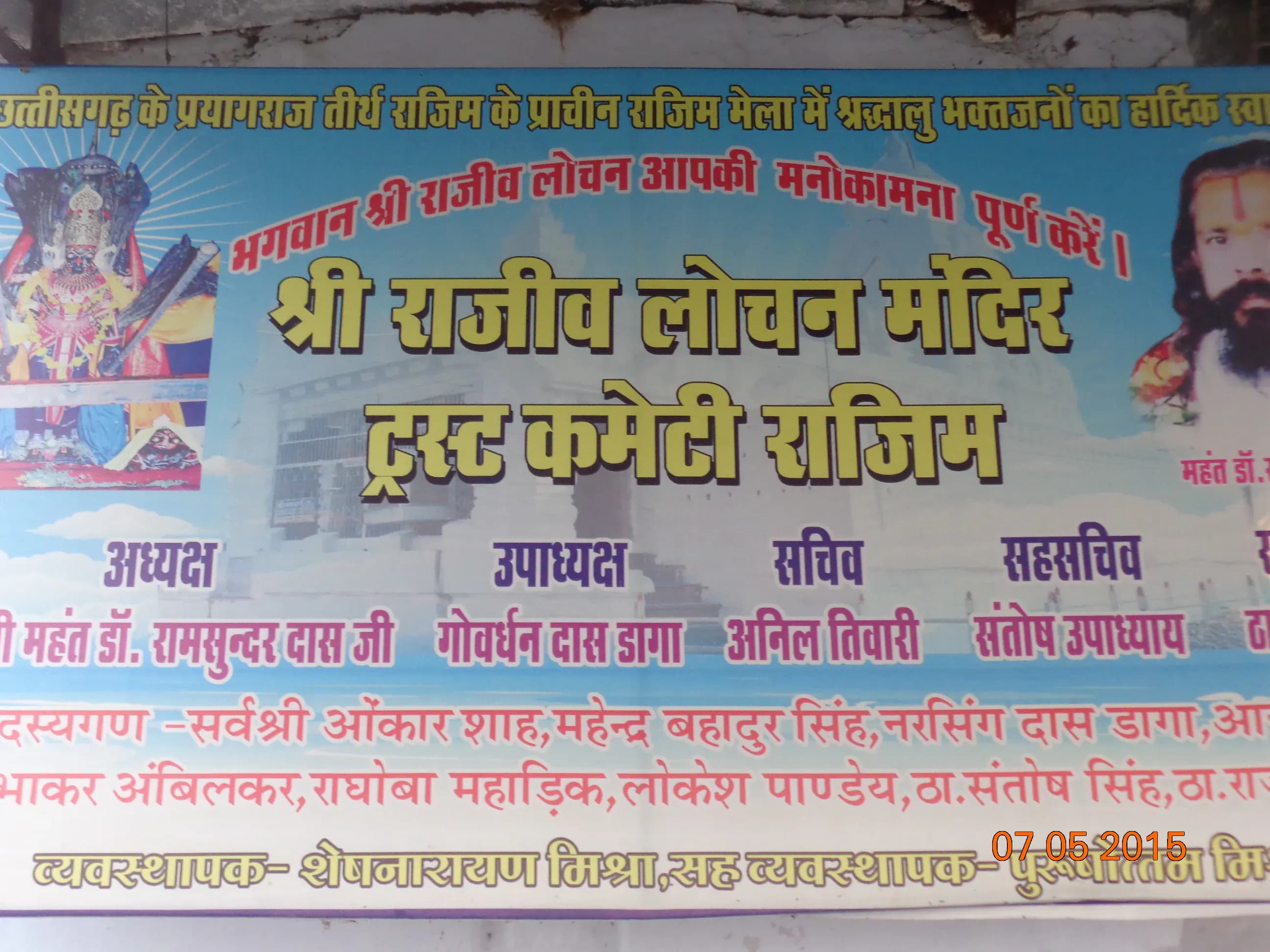
The midday sun beat down on Rajim, casting long shadows across the courtyard of the Rajiv Lochan Temple. Dust motes danced in the shafts of light filtering through the intricately carved pillars, illuminating the worn stone floors beneath my feet. Having explored countless forts and palaces of Rajasthan, I’ve developed a keen eye for architectural nuances, and this temple, dedicated to Lord Vishnu, held a distinct charm, a quiet grandeur different from the Rajputana opulence I was accustomed to. Rajiv Lochan, meaning “lotus-eyed,” refers to Vishnu, and the temple’s architecture seemed to echo this imagery. The main shikhara, though partially damaged by time and elements, still soared impressively, its curving lines reminiscent of a blooming lotus bud. Unlike the sandstone structures prevalent in Rajasthan, this temple was built primarily of brick, lending it a warm, earthy hue. The brickwork itself was remarkable, showcasing a precision and artistry that spoke volumes about the skill of the ancient builders. Intricate carvings depicting scenes from the epics, celestial beings, and floral motifs adorned the pillars, doorways, and outer walls. While some carvings were weathered, blurring the details, others remained remarkably crisp, allowing me to trace the delicate lines and appreciate the narrative they conveyed. I circled the temple, absorbing the details. The mandapa, or pillared hall, was particularly striking. Massive, ornately carved pillars supported the roof, creating a sense of both strength and elegance. The play of light and shadow within this space added a mystical quality, transporting me back in time. I could almost hear the echoes of ancient chants and the rustle of silk garments. The pillars, I noticed, were not uniform. Some were circular, others square, and yet others octagonal, each adorned with unique carvings. This variation, rather than appearing haphazard, contributed to the overall aesthetic, creating a sense of dynamic harmony. Entering the garbhagriha, the sanctum sanctorum, I was struck by the simplicity. The deity, Lord Vishnu in his Rajiv Lochan form, resided within, emanating a palpable sense of serenity. The dimly lit space, the scent of incense, and the hushed whispers of devotees created an atmosphere of reverence. It was a stark contrast to the elaborate carvings and bustling courtyard outside, highlighting the essence of devotion that lay at the heart of this ancient structure. As I wandered through the temple complex, I noticed several smaller shrines dedicated to other deities, tucked away in corners and alcoves. Each shrine, though smaller in scale, possessed its own unique character and architectural details. This integration of multiple deities within a single complex spoke to the inclusive nature of Hindu worship. One aspect that particularly intrigued me was the temple’s location on the confluence of three rivers – the Mahanadi, the Pairi, and the Sondur. This confluence, known as Triveni Sangam, is considered sacred in Hinduism, and the temple’s placement here added another layer of significance. I walked down to the riverbank, watching the waters converge, and felt a sense of peace wash over me. The gentle lapping of the waves against the ghats seemed to echo the timeless rhythm of devotion that had permeated this site for centuries. The Rajiv Lochan Temple is not just a structure of brick and stone; it’s a living testament to the faith, artistry, and cultural heritage of the region. It’s a place where history whispers from every carved surface, where the divine and the earthly converge, and where the seeker can find solace in the quiet embrace of ancient traditions. Leaving the temple, I carried with me not just photographs and notes, but a deeper appreciation for the architectural and spiritual tapestry of India, a tapestry woven with threads of devotion, artistry, and time.
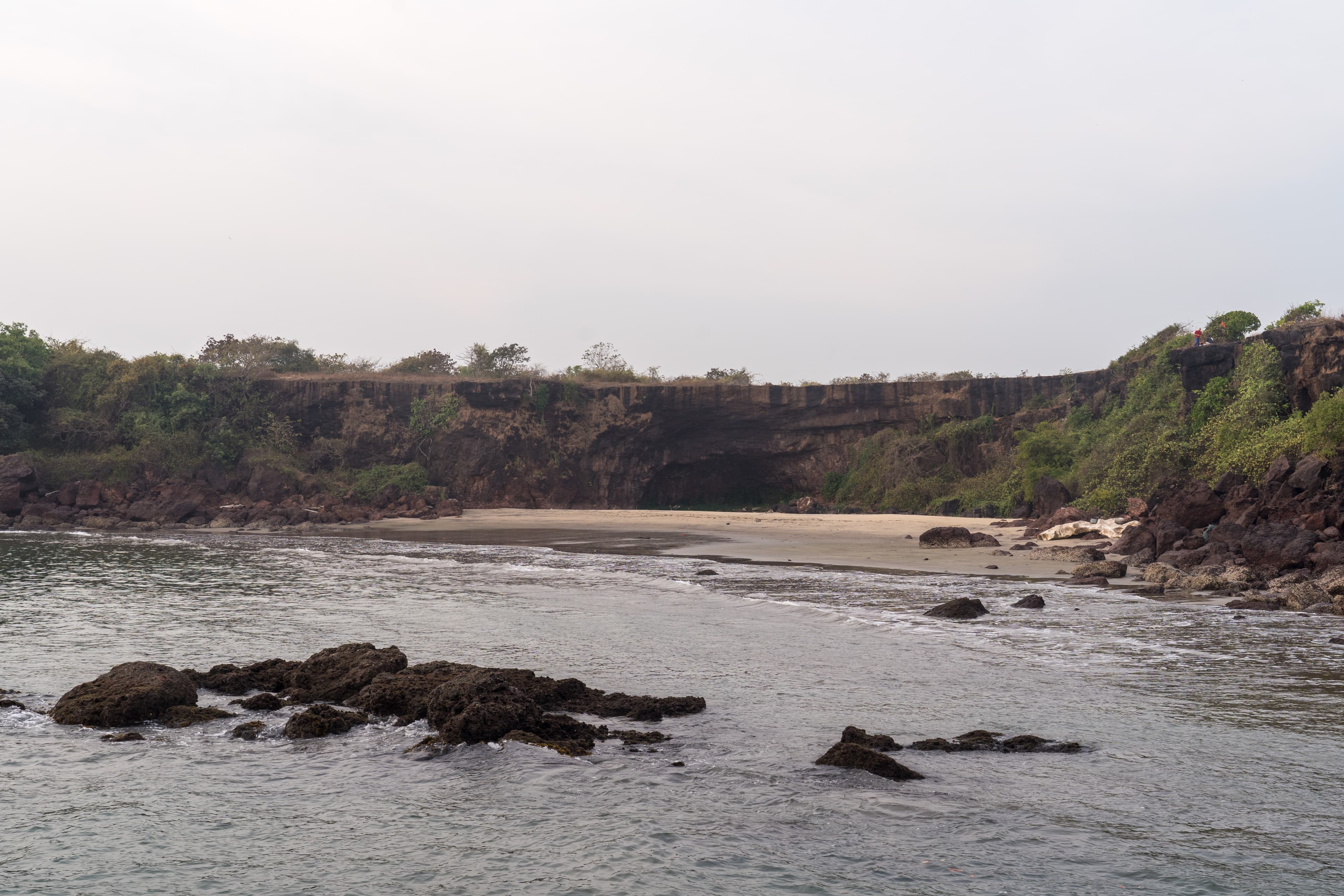
Tiracol Fort Goa
The ferry lurched, depositing me on the Goan side of the Tiracol River, the salty air thick with the promise of the Arabian Sea just beyond. My gaze was immediately drawn upwards, to the imposing silhouette of Fort Tiracol, perched atop a cliff, its laterite walls glowing a warm ochre against the vibrant blue sky. This wasn't my first Goan fort, but something about Tiracol, its relative isolation and commanding position, hinted at a unique story. Crossing the narrow strip of sand, I began the climb towards the fort’s entrance. The path, paved with uneven stones, wound its way through a tangle of vegetation, the air filled with the chirping of unseen birds. The first striking feature was the gateway, a simple yet sturdy archway, bearing the scars of time and conflict. The weathered laterite spoke volumes about the fort’s enduring presence, a silent witness to centuries of history. Stepping through the gateway felt like stepping back in time. The fort, now a heritage hotel, retains much of its original character. The ramparts, offering breathtaking panoramic views of the coastline and the river below, are remarkably well-preserved. I ran my hand along the rough laterite, imagining the Portuguese soldiers who once patrolled these very walls, their eyes scanning the horizon for approaching enemies. The central courtyard, now dotted with tables and chairs for the hotel guests, was once the heart of the fort's activity. I could almost picture the hustle and bustle of military life, the clatter of armour, the barked commands. The church of St. Anthony, a pristine white structure standing at the heart of the courtyard, provided a stark contrast to the earthy tones of the fort. Its simple façade, adorned with a single bell tower, exuded a quiet serenity. Inside, the cool, dimly lit interior offered a welcome respite from the midday sun. The altar, adorned with intricate carvings, and the stained-glass windows, casting colourful patterns on the floor, spoke of a deep-rooted faith. Exploring further, I discovered a network of narrow passages and staircases, leading to various chambers and rooms. The thick walls, some several feet wide, kept the interiors surprisingly cool, a testament to the ingenuity of the Portuguese engineers. Many of the rooms still retained their original features, including arched doorways, small windows offering glimpses of the sea, and niches in the walls that likely once held lamps or religious icons. One particular room, now part of the hotel, captivated my attention. It offered an unobstructed view of the confluence of the Tiracol River and the Arabian Sea. The rhythmic crashing of the waves against the rocks below, coupled with the gentle swaying of the palm trees, created a mesmerizing symphony. It was easy to see why this spot had been chosen for a strategic fortification. As I descended from the ramparts, the late afternoon sun casting long shadows across the courtyard, I couldn't help but feel a sense of awe. Fort Tiracol is more than just a historical monument; it's a living testament to the resilience of the human spirit, a place where the echoes of the past resonate with the present. The fort’s transformation into a heritage hotel, while perhaps controversial to some, has undoubtedly ensured its preservation for future generations. It allows visitors like myself to not just observe history, but to experience it, to immerse themselves in the stories whispered by the ancient stones. Leaving the ferry behind, I carried with me not just photographs and memories, but a deeper understanding of Goa’s rich and complex tapestry of history. The ochre walls of Fort Tiracol, fading into the twilight, served as a poignant reminder of the enduring power of the past.
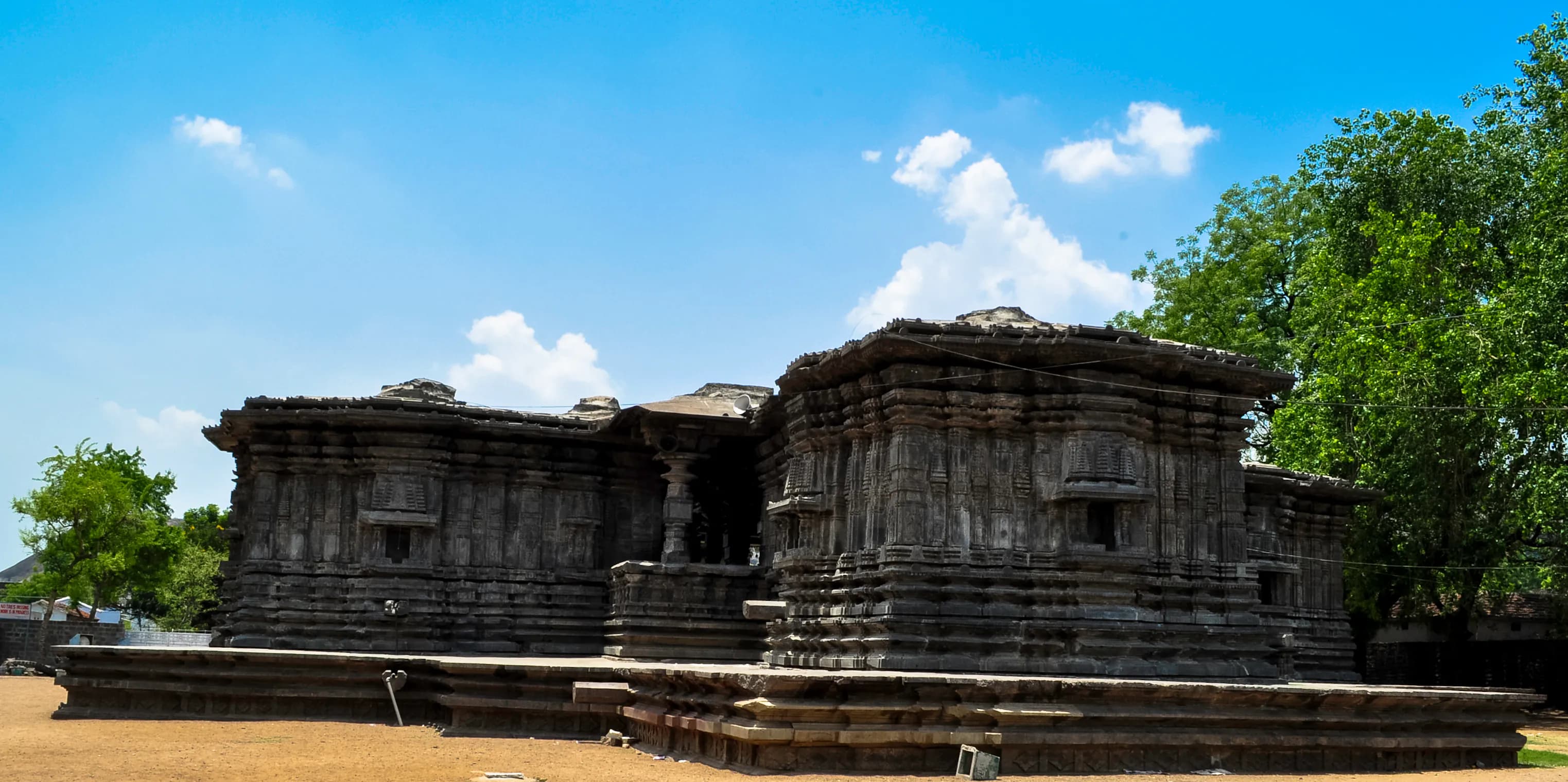
Thousand Pillar Temple Hanamkonda
The midday sun beat down on the stone, radiating heat that shimmered in the air above the Thousand Pillar Temple. Having explored countless caves and temples across Maharashtra, I’ve developed a keen eye for architectural nuances, and this temple in Hanamkonda, Telangana, promised a feast for the senses. Even before stepping through the imposing entrance, the sheer scale of the structure was breathtaking. It wasn't just a temple; it was a testament to the architectural prowess of the Kakatiya dynasty. The name "Thousand Pillar Temple" is a bit of a misnomer. While it evokes a sense of grandeur, there aren't actually a thousand pillars. Closer to 280 support this marvel, intricately carved and strategically placed to create a seemingly endless colonnade. These pillars aren't merely structural supports; they are storytellers. Each one is adorned with elaborate carvings depicting scenes from Hindu mythology, celestial beings, and scenes of courtly life. I spent a considerable amount of time just circling the pillars, tracing the stories etched into the stone, marveling at the skill of the artisans who breathed life into these granite monoliths centuries ago. The temple is dedicated to a trinity of deities: Lord Shiva (as Rudreshwara), Lord Vishnu (as Vaikuntha Vishnu), and Lord Surya (the Sun God). This dedication to three major deities within a single complex is a testament to the Kakatiyan's inclusive religious philosophy. The main shrines, each housing one of the deities, are connected by a central mandapam, a large pillared hall. The play of light and shadow within this space, filtered through the intricately carved pillars, creates an ethereal atmosphere. It's easy to imagine the vibrant religious ceremonies that would have once filled this hall with chanting and the scent of incense. One of the most striking features of the temple is the star-shaped sanctum of Lord Vishnu. The precision of the architecture is remarkable. The angles, the proportions, the intricate carvings on the outer walls – everything points to a deep understanding of geometry and aesthetics. I noticed a subtle shift in the architectural style in this section, hinting at the influence of different artisans or perhaps even a slightly later period of construction. This blend of styles adds another layer of intrigue to the temple's narrative. As I moved through the complex, I noticed the remnants of vibrant paint on some of the carvings. While much of the original color has faded with time, these remnants offer a glimpse into the temple’s past glory. I could envision the vibrant hues that once adorned these sculptures, transforming the temple into a kaleidoscope of color. It's a reminder that these weren't just grey stone structures; they were living, breathing expressions of faith and artistry. Beyond the main shrines, the temple complex also houses several smaller shrines and mandapas. I discovered a particularly captivating Nandi mandapa, housing a large monolithic Nandi (the sacred bull of Lord Shiva). The sheer size of the Nandi is impressive, and the intricate detailing on its form is a testament to the sculptor's skill. The Thousand Pillar Temple isn't just a collection of stones; it's a living testament to a rich cultural heritage. It's a place where history, mythology, and artistry converge. Walking through its hallowed halls, I felt a profound connection to the past, a sense of awe at the ingenuity and devotion of those who built this magnificent structure. It’s a must-see for anyone seeking to understand the architectural brilliance of the Kakatiya dynasty and experience the spiritual heart of Telangana. My journey through the caves and temples of Maharashtra has prepared me for many breathtaking sights, but the Thousand Pillar Temple stands out as a truly exceptional experience.
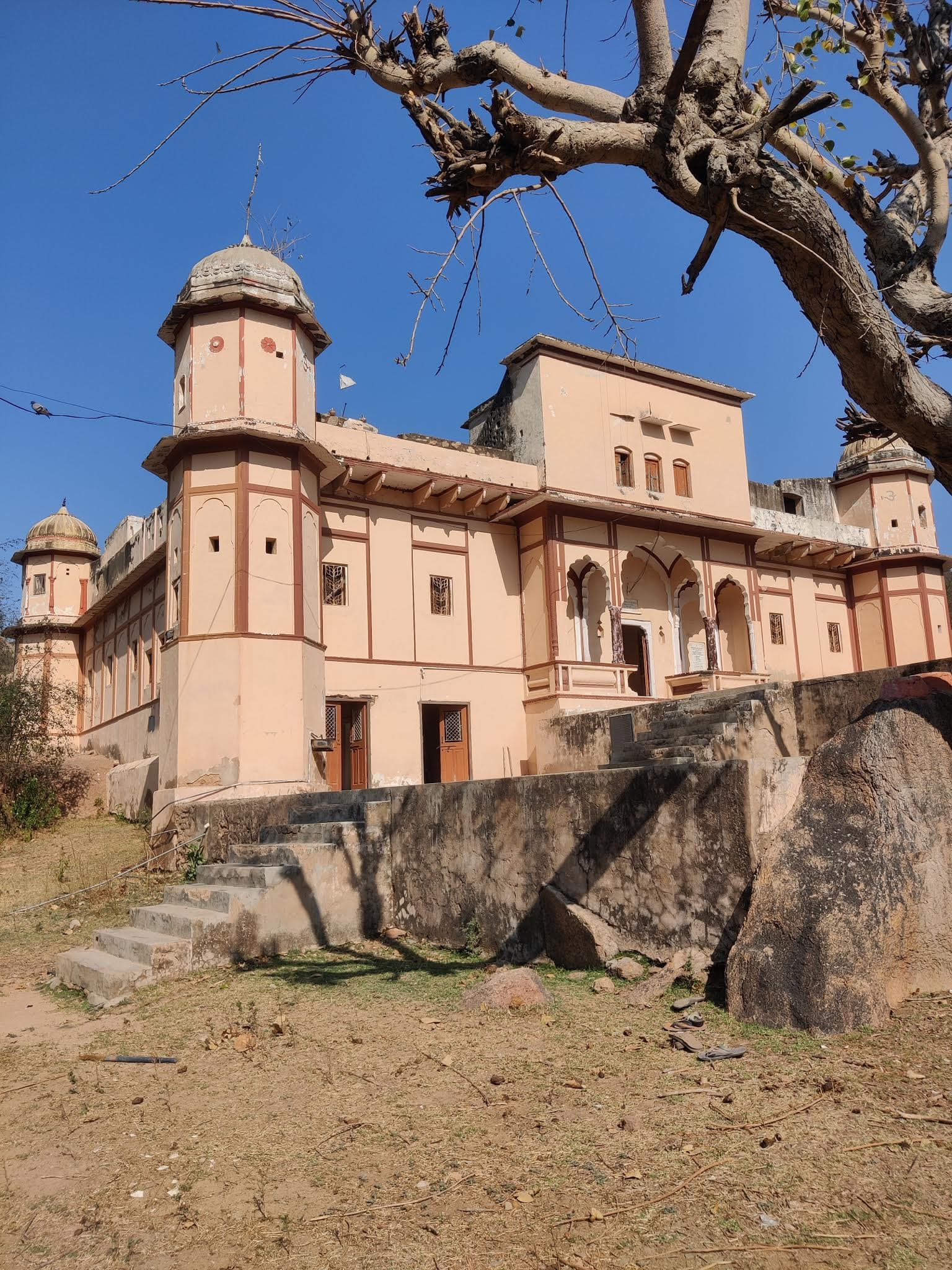
Dhosi Hill Temples Narnaul
The arid landscape of Narnaul, Haryana, harbors a unique treasure: the Dhosi Hill temples, a testament to India's rich architectural heritage ([1]). Rising from the Aravalli hills, these temples whisper tales of bygone eras and offer a glimpse into the artistic traditions of the 10th century ([2]). The climb to the summit is a pilgrimage, with stone steps winding upwards, revealing panoramic views of the plains below ([3]). Reaching the summit, a fortified gateway marks the entrance to the temple complex ([4]). Beyond this threshold lies a collection of temples, each dedicated to a different deity. During the Gurjara-Pratihara period, temple architecture flourished in North India, and the Dhosi Hill temples exemplify the Nagara style prevalent at the time ([5]). Curvilinear towers (Shikharas) and intricate carvings adorn the temple structures, showcasing the architectural prowess of the Tomar dynasty, who were patrons of this site ([6]). Intricate carvings adorning the walls depict deities, celestial beings, and mythical creatures, reflecting the artistic traditions of the era ([7]). The main temple, dedicated to Lord Shiva, houses a Shiva lingam within the Garbhagriha (Sanctum) ([8]). Granite and sandstone blocks, meticulously carved, were used in the construction of the temples ([9]). The architecture of the Shiva temple blends styles, with Nagara elements and regional influences ([10]). This fusion reflects the historical and cultural crossroads represented by the region. Vastu Shastra principles, the ancient Indian science of architecture, likely guided the layout and design of the temple complex, ensuring harmony with the natural surroundings ([11]). Beyond the temples, the summit offers breathtaking panoramic views of the Aravalli hills ([12]). The Dhosi Hill temples offer a glimpse into the enduring power of human spirituality ([13]).
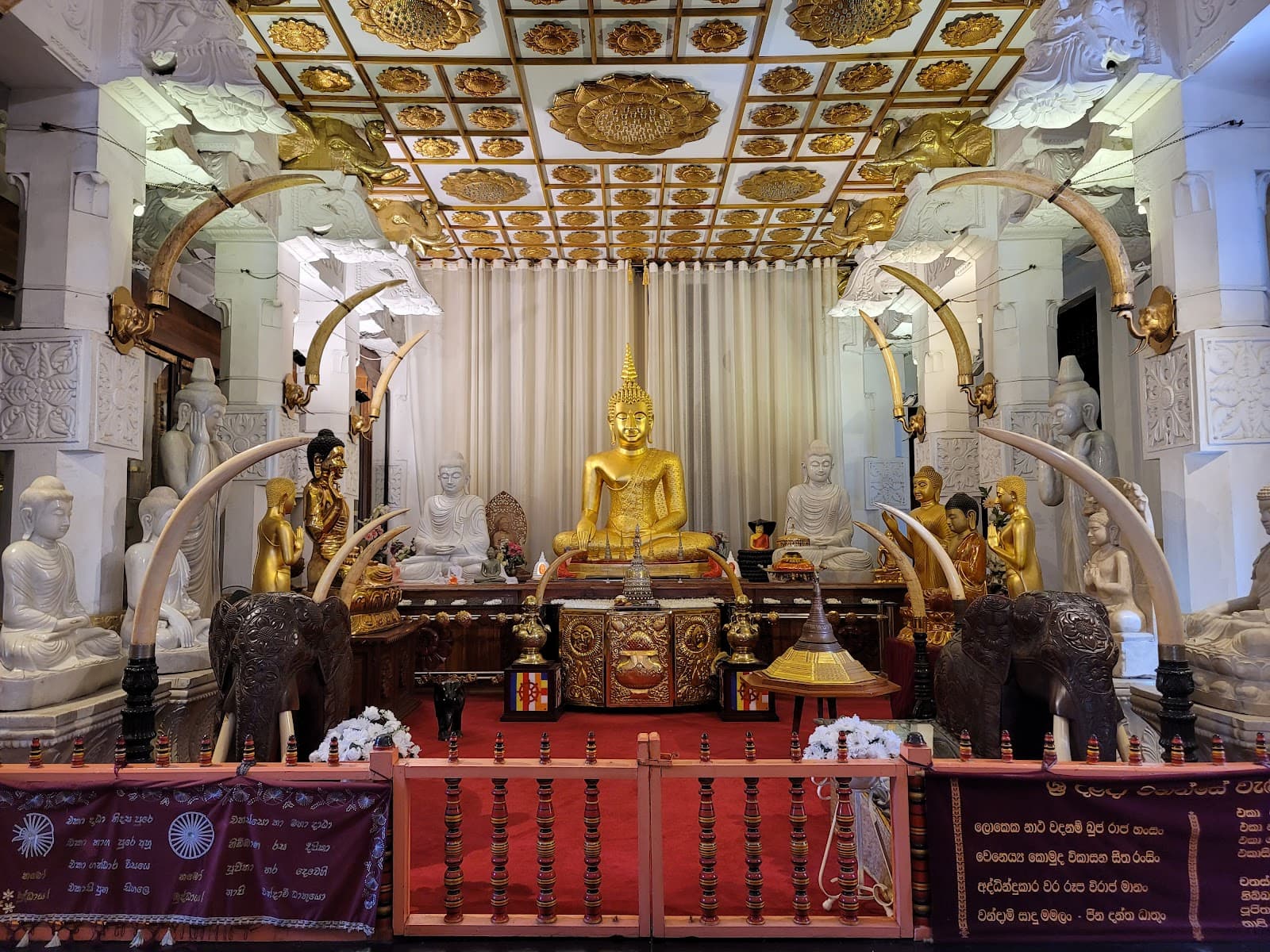
Temple of the Tooth Kandy Sri Lanka
Temple of the Tooth, majestically situated in the heart of Kandy, the last capital of the Sinhalese kings, represents one of the most extraordinary and spiritually significant Buddhist temples in the world, housing the sacred tooth relic of the Buddha that was brought to Sri Lanka from India in the 4th century CE, creating a powerful testament to the profound transmission of Indian Buddhist religious traditions to Sri Lanka and serving as the most sacred Buddhist site in Sri Lanka. The temple complex, also known as Sri Dalada Maligawa, features sophisticated architectural elements that demonstrate the direct transmission of Indian Buddhist temple architecture, particularly the traditions of the Kandyan period which synthesized Indian Buddhist architectural traditions with local Sri Lankan building techniques, while the temple's most remarkable feature is its association with the Buddha's tooth relic, which is enshrined in a series of nested golden caskets within the temple's inner sanctum and represents one of the most sacred relics in the Buddhist world. The temple's architectural layout, with its central shrine housing the tooth relic surrounded by multiple halls, courtyards, and subsidiary structures, follows sophisticated Indian Buddhist temple planning principles that were systematically transmitted from the great temple complexes of India, while the temple's extensive decorative programs including murals, carvings, and architectural elements demonstrate the sophisticated synthesis of Indian Buddhist iconography and artistic traditions with local Sri Lankan aesthetic sensibilities, particularly the distinctive Kandyan style that emerged from the synthesis of Indian and Sri Lankan artistic traditions. Archaeological evidence reveals that the temple has served as a major center of Buddhist worship for over four centuries, attracting pilgrims from across Sri Lanka, South Asia, and beyond, while the discovery of numerous inscriptions, chronicles, and historical records provides crucial evidence of the site's role in the transmission of Indian Buddhist texts and practices to Sri Lanka, demonstrating the sophisticated understanding of Indian Buddhist traditions possessed by the Sri Lankan Buddhist establishment. The temple's annual Esala Perahera, one of the largest and most spectacular religious festivals in Asia, features elaborate processions with hundreds of elephants, traditional dancers, musicians, and fire-breathers that attract hundreds of thousands of devotees and demonstrate the continued vitality of Indian religious traditions in Sri Lanka, while the temple's association with the Kandyan Kingdom demonstrates its historical significance as a center of Sri Lankan Buddhist culture and religious practice. The temple complex has undergone multiple reconstructions throughout its history, with the current structure representing a faithful preservation of the temple's original architectural character and spiritual significance, while ongoing archaeological research and conservation efforts continue to protect and study this extraordinary cultural treasure. Today, Temple of the Tooth stands as a UNESCO World Heritage Site and represents one of the most important Buddhist pilgrimage sites in the world, serving as a powerful testament to the transmission of Indian Buddhist culture and architecture to Sri Lanka, while ongoing archaeological research and conservation efforts continue to protect and study this extraordinary cultural treasure that demonstrates the profound impact of Indian civilization on Sri Lankan religious and artistic traditions. ([1][2])
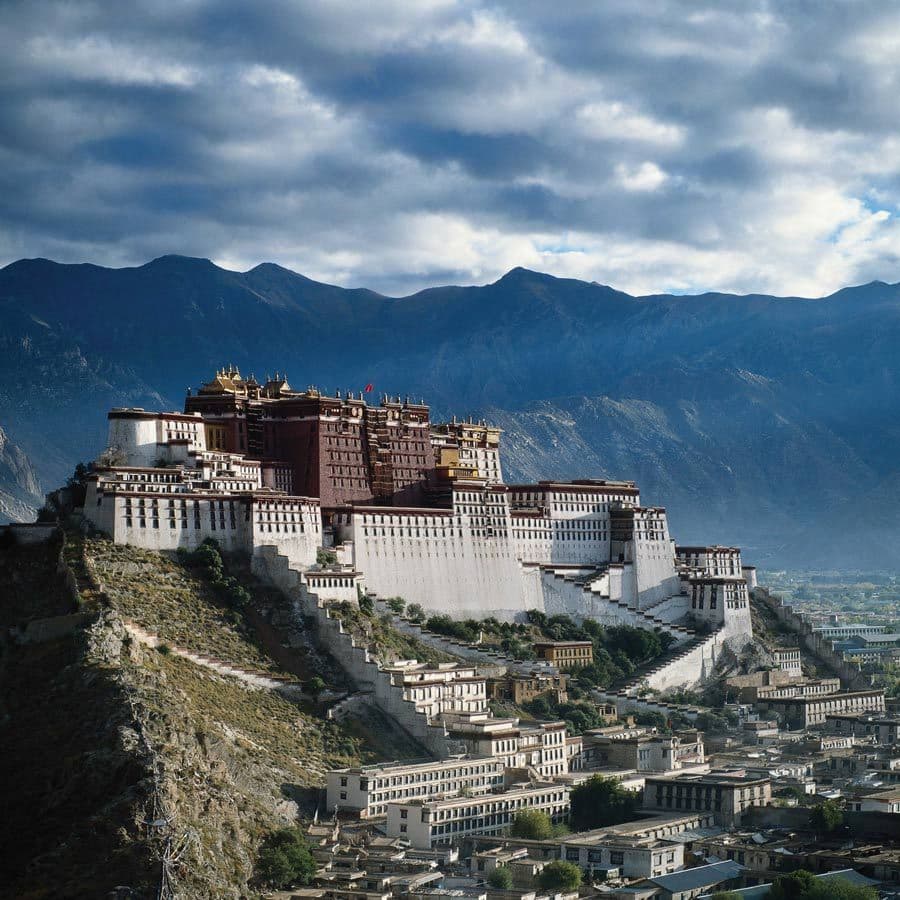
Potala Palace Lhasa Tibet
Potala Palace, located on Red Hill in Lhasa, Tibet, represents one of the most magnificent architectural achievements in Tibet and stands as the traditional seat of the Dalai Lama, constructed beginning in the 7th century CE during the reign of King Songtsen Gampo and extensively expanded in the 17th century, demonstrating the profound influence of Indian Buddhist architectural and religious traditions on Tibetan civilization, which has maintained deep cultural, religious, and historical connections with India for over two millennia. The palace complex, constructed primarily from stone, wood, and earth with extensive use of gold, copper, and painted decoration, features a massive structure rising 117 meters above the valley floor, spanning approximately 400 meters in width and 350 meters in length, containing over 1,000 rooms, 10,000 shrines, and 200,000 statues, making it one of the largest and most complex religious structures in the world. The palace’s architectural design demonstrates direct influence from Indian Buddhist palace and monastery architecture, particularly the Gupta and Pala period styles, with the overall plan reflecting mandala-based cosmological principles found in Indian temple and palace architecture, while the extensive use of Indian Buddhist iconography, including the Avalokiteshvara cult that forms the palace’s spiritual foundation, demonstrates the transmission of Indian religious traditions to Tibet. The palace complex consists of two main sections: the White Palace (Potrang Karpo), serving as the administrative and residential quarters, and the Red Palace (Potrang Marpo), housing numerous chapels, shrines, and the tombs of previous Dalai Lamas, with each section incorporating Indian architectural elements adapted to Tibetan high-altitude conditions. Archaeological and historical evidence indicates the palace was constructed with knowledge of Indian architectural treatises and Buddhist cosmological principles, reflecting the close cultural connections between Tibet and India during the medieval period, when Indian Buddhist scholars, texts, and architectural knowledge were systematically transmitted to Tibet. The palace has undergone multiple expansions and renovations over the centuries, with the most significant expansion conducted in the 17th century under the 5th Dalai Lama, who incorporated extensive Indian Buddhist iconography and architectural elements. Today, Potala Palace stands as a UNESCO World Heritage Site and serves as a powerful symbol of Tibet’s deep connections to Indian civilization and its historical role as a center of Buddhist learning and practice that was integral to the greater Indic cultural sphere extending across the Indian subcontinent and into Central Asia. ([1][2])
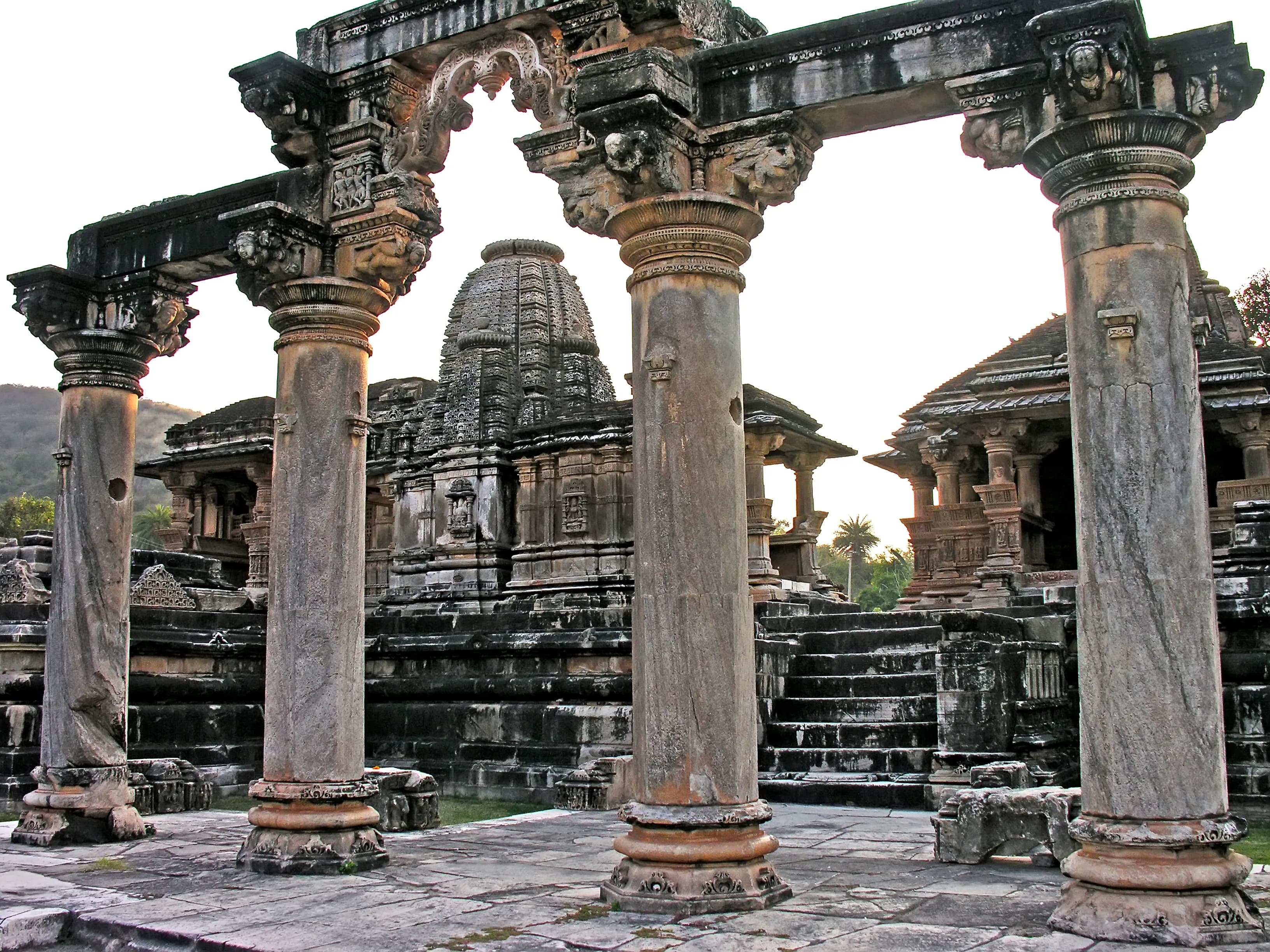
Eklingji Temple, Kailashpuri (Udaipur)
The Eklingji Temple, a revered Hindu temple complex dedicated to Lord Shiva, is situated in Kailashpuri village, Udaipur district, Rajasthan, India, embodying a continuous tradition of Indian civilization spanning millennia [5]. This site stands as a profound testament to India's enduring cultural legacy, with its origins tracing back to the 8th century CE, reflecting ancient indigenous architectural styles and spiritual practices [4] [5]. The complex is a magnificent example of traditional Indian temple architecture, primarily showcasing the Nagara style, characterized by its curvilinear shikhara (spire) and intricate carvings [3] . The main temple within the complex is double-storied, featuring a colossal pyramidal-style roof and a remarkably carved tower [3]. Constructed predominantly from marble and granite, the temple's exterior walls are adorned with intricate carvings and sculptures depicting Hindu mythological stories and deities [4] . The entrance to the main shrine is guarded by a silver image of Nandi, the sacred bull, with two additional Nandi carvings in brass and black stone found within the complex [3] [5]. The sanctum sanctorum (Garbha Griha) houses the principal deity, a striking four-faced idol of Lord Shiva, carved from black marble and approximately 50 feet in height [3] . Each face of the idol represents a different aspect of Shiva: the eastern face symbolizes Surya (the sun), the western face Lord Brahma, the northern face Lord Vishnu, and the southern face Rudra (a fierce form of Shiva) [1] [3] . A heightened Shivlinga at the center of these faces represents the core essence of Lord Shiva [1]. The Eklinga statue is further encircled by figures of Goddess Parvati, Lord Ganesha, and Lord Kartikeya [3]. The temple also features heavily ornate silver doors, which depict images of Lord Ganesha and Lord Kartikeya [5]. Between the sanctum and the sabha mandap (assembly hall), there is a silver enclosure, a later addition by Maharana Bhagwat Singh [1]. The temple complex is not merely a single structure but comprises 108 temples, each contributing to the site's rich architectural and spiritual tapestry . To the north of the main Eklingji temple, two tanks, Karz Kund and Tulsi Kund, are integral to the site's water management and ritualistic practices [3] [5]. The intricate carvings, particularly those influenced by the Kalinga style architecture and the pyramidal superstructure, necessitate ongoing, specialized conservation efforts [2]. While specific dimensions for all structures are not universally documented, the grandeur of the main temple's pyramidal roof and the 50-foot idol indicate significant scale and sophisticated engineering for its period [3]. The site is actively managed by a trust, ensuring its operational readiness and continued accessibility for devotees, with daily pujas performed by appointed priests, though the Maharana of Mewar traditionally holds the right to perform special worship [5]. The temple remains a vibrant center of spiritual devotion, attracting visitors who come to witness the morning and evening aartis and explore the surrounding shrines .
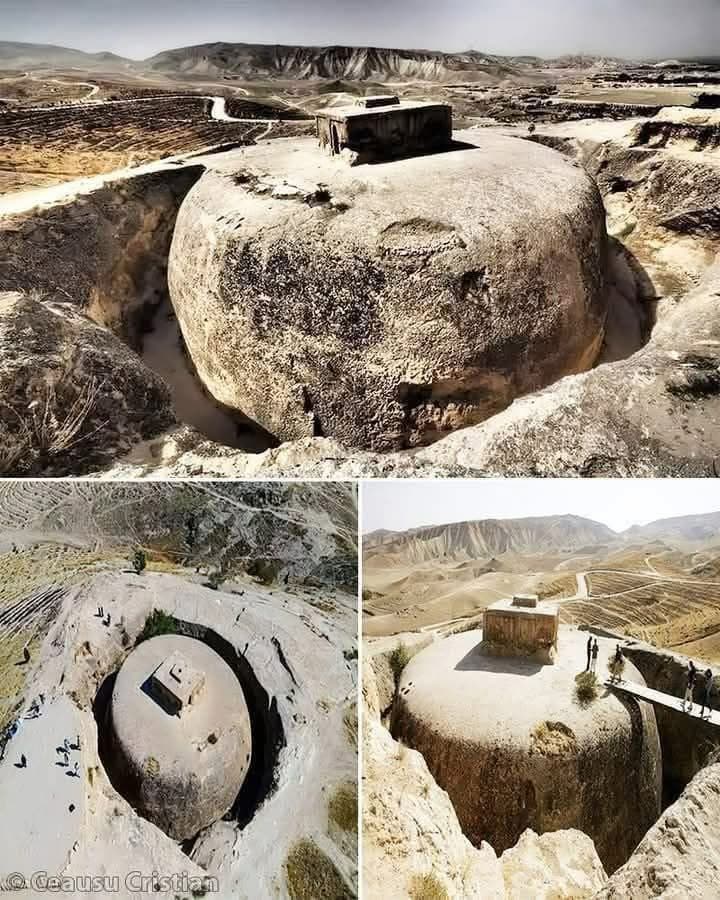
Takht-e Rostam Samangan Afghanistan
Takht-e Rostam, located in Samangan Province, Afghanistan, presents one of the most extraordinary and architecturally unique Buddhist monastic complexes in Central Asia, featuring a remarkable rock-cut stupa monastery carved directly into a natural hill during the 4th century CE, creating an underground architectural marvel that demonstrates the sophisticated transmission of Indian Buddhist cave architecture traditions to Afghanistan during the Kushan and post-Kushan periods. The monastery complex, carved entirely from living rock using techniques adapted from Indian cave temple traditions, features a massive underground stupa chamber accessed through a vertical shaft, with the stupa itself carved in relief from the rock face, creating a three-dimensional architectural sculpture that combines structural engineering with artistic mastery in a manner unparalleled in Central Asian Buddhist architecture. The site's architectural design demonstrates direct influence from Indian Buddhist cave architecture, particularly the early rock-cut monasteries of western India such as Ajanta and Ellora, with the overall plan, stupa form, and decorative elements reflecting traditions that were systematically transmitted from India to Afghanistan through centuries of cultural exchange along the Silk Road. Archaeological evidence reveals that the monastery was constructed during a period when Buddhism flourished across Afghanistan under Kushan and later Hephthalite patronage, with the site serving as both a religious center and a waypoint for Buddhist monks and traders traveling between India and Central Asia, while the sophisticated rock-cutting techniques employed demonstrate the transmission of Indian architectural knowledge to Afghan craftsmen. The monastery complex includes multiple chambers, meditation cells, and water management systems carved directly into the rock, demonstrating sophisticated understanding of both structural engineering and hydrological principles, while the stupa's elaborate decorative program featuring Buddhist iconography and Indic motifs provides crucial evidence of the transmission of Indian artistic traditions to Central Asia. The site has undergone multiple phases of use and modification over the centuries, with evidence of continued Buddhist activity through the 7th century CE, while the site's eventual abandonment and subsequent use as a local landmark reflects the complex religious and cultural transformations that occurred in Afghanistan following the decline of Buddhism in the region. Today, Takht-e Rostam stands as a UNESCO-recognized archaeological site and represents one of the most important examples of rock-cut Buddhist architecture in Central Asia, serving as a powerful testament to Afghanistan's ancient Buddhist heritage and its historical role as a center for the transmission of Indian religious and architectural traditions across the ancient world, while ongoing archaeological research continues to reveal new insights into the site's construction techniques, religious practices, and cultural significance. ([1][2])
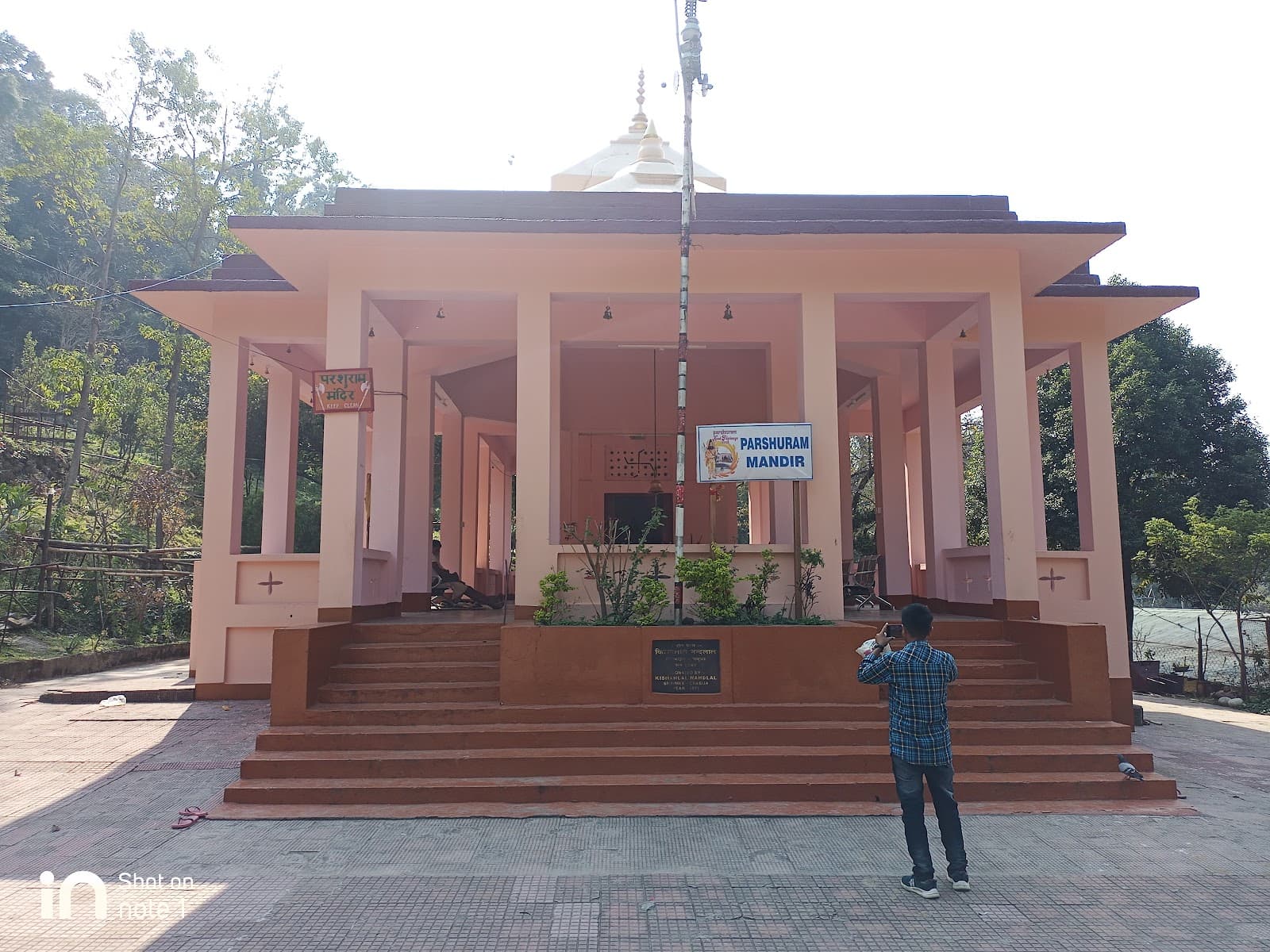
Parshuram Kund Temple Lohit
The biting January air, thin and crisp at 4,000 feet, whipped around me as I descended the steep steps towards Parshuram Kund. The roar of the Lohit River, a milky turquoise torrent surging through the gorge, filled the air, a constant, powerful presence that seemed to vibrate through the very rock on which the temple complex stood. This was no ordinary pilgrimage site; this was a place where the raw power of nature intertwined with deep-seated spiritual belief. Located in the remote Lohit district of Arunachal Pradesh, Parshuram Kund is more than just a temple; it's a confluence of mythology, natural beauty, and human devotion. Legend holds that this is where the warrior sage Parshuram washed away the sin of matricide, his axe, still stained crimson, cleansed by the sacred waters. That narrative resonated powerfully as I stood at the river’s edge, the icy spray misting my face, the sheer force of the current a tangible reminder of the cleansing power attributed to it. The main temple, dedicated to Lord Shiva, is a relatively modern structure, a stark white against the backdrop of the dark, imposing cliffs. While not architecturally ancient, it doesn't detract from the overall atmosphere. It feels less like a standalone monument and more like a focal point for the existing spiritual energy of the place. Smaller shrines dot the surrounding area, tucked into crevices and perched precariously on rocky outcrops, each a testament to the enduring faith of the pilgrims who journey here. What struck me most, however, wasn't the architecture, but the palpable sense of devotion. Having documented hundreds of temples across India, I've become accustomed to a certain level of ritualistic practice. But at Parshuram Kund, there was a rawness, an immediacy to the faith that was both humbling and inspiring. I watched as pilgrims, many having travelled for days, immersed themselves in the frigid waters, their faces etched with a mixture of reverence and determination. The chanting of mantras, the clang of bells, the scent of incense – all blended with the roar of the river to create an immersive sensory experience unlike any I’d encountered before. The architectural details, though simple, spoke volumes. The use of local stone in the construction of the shrines blended seamlessly with the natural surroundings, creating a sense of harmony between the man-made and the natural. The carvings, though weathered by the elements, hinted at a rich artistic tradition, depicting scenes from mythology and nature. I spent hours photographing these details, trying to capture the essence of the place, the interplay of light and shadow on the weathered stone, the textures of the rock face, the vibrant colours of the prayer flags fluttering in the wind. One particular detail that caught my eye was the prevalence of Trishuls, the trident of Shiva, embedded in the rocks surrounding the Kund. These tridents, some ancient and rusted, others newly placed and gleaming, served as a constant reminder of the presiding deity and the sanctity of the site. They were not mere decorations; they were symbols of faith, each one representing a prayer, a hope, a plea. As the sun began to dip below the horizon, casting long shadows across the gorge, I climbed back up the steps, leaving the roar of the river behind. The experience had been profound, a reminder of the power of faith and the enduring connection between humanity and nature. Parshuram Kund is more than just a temple; it’s a living testament to the enduring power of belief, a place where the spiritual and the natural converge in a symphony of sound, sight, and emotion. It’s a place that stays with you long after you’ve left, a memory etched in stone and water, echoing in the whispers of the wind.
Quick Links
Plan Your Heritage Journey
Get personalized recommendations and detailed visitor guides