Has Inheritage Foundation supported you today?
Your contribution helps preserve India's ancient temples, languages, and cultural heritage. Every rupee makes a difference.
Secure payment • Instant 80G certificate
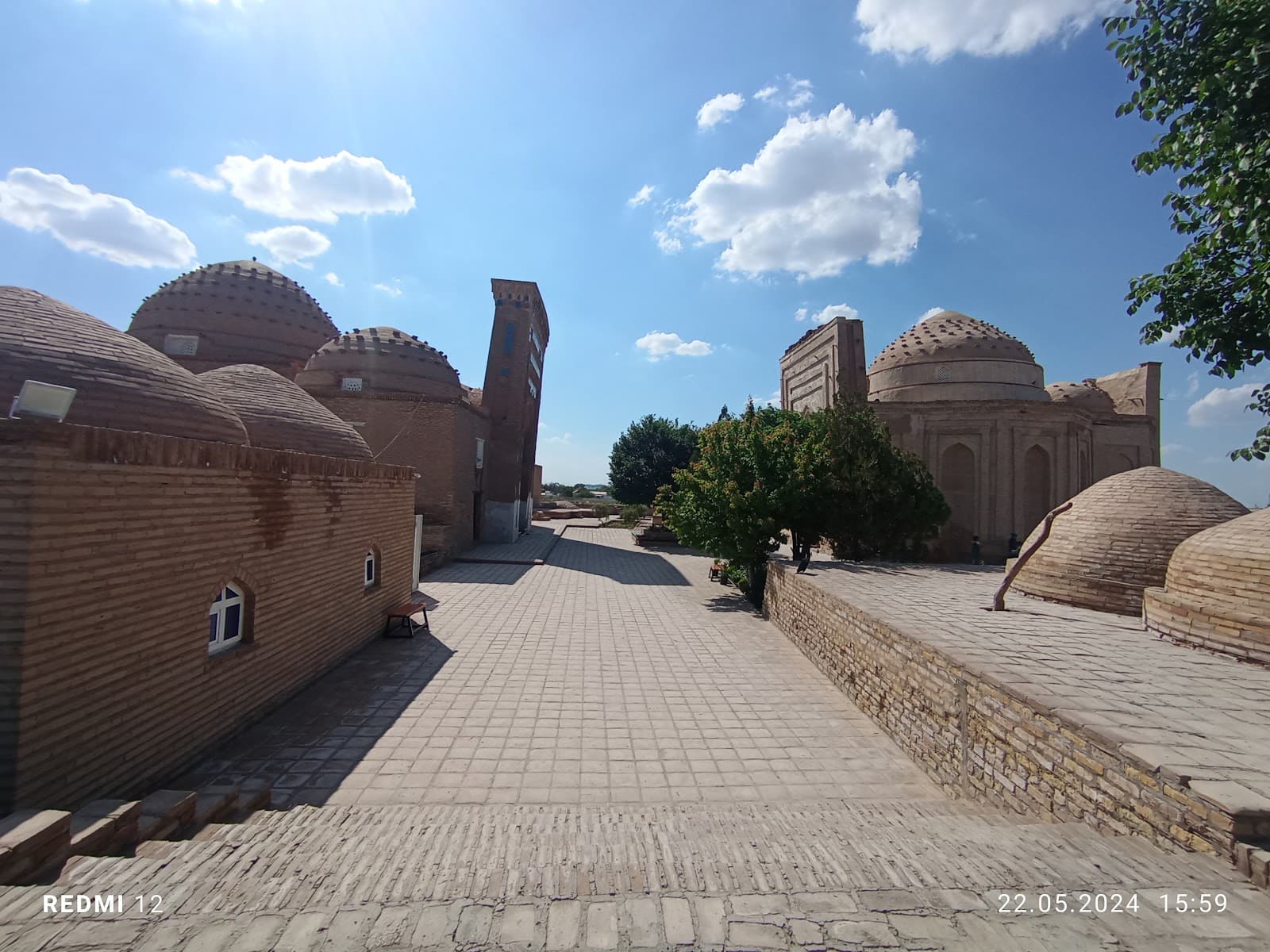
Koneurgench Dash Mosque Temple Remnants Dashoguz Turkmenistan
Koneurgench, dramatically situated in the Dashoguz Region of northern Turkmenistan, represents one of the most extraordinary and archaeologically significant medieval cities in Central Asia, serving as the capital of the Khorezm Empire and featuring the remarkable Dash Mosque with its 12th-13th century temple remnants that demonstrate pre-Islamic layers with remarkable parallels to Indian religious and architectural traditions, creating a powerful testament to the sophisticated synthesis of Indian and Central Asian cultural traditions during the medieval period. The ancient city, also known as Kunya-Urgench and designated as a UNESCO World Heritage Site, features extraordinary architectural elements including the Dash Mosque with its underlying temple structures that demonstrate clear Indian architectural influences from periods before the Islamic conquest, while the site's most remarkable feature is its sophisticated pre-Islamic temple remnants featuring architectural elements, ritual structures, and decorative programs that demonstrate clear parallels with Indian temple architecture and religious practices. The temple remnants' architectural layout, with their central ritual structures surrounded by ceremonial spaces and architectural elements, follows sophisticated planning principles that demonstrate remarkable parallels with Indian temple planning principles, while the temple remnants' extensive decorative programs including architectural elements and religious iconography demonstrate the sophisticated synthesis of Indian religious iconography and architectural traditions with local Central Asian aesthetic sensibilities. Archaeological evidence reveals that the site served as a major center of religious and cultural activity for centuries before the Islamic period, attracting traders, priests, and elites from across Central Asia, South Asia, and beyond, while the discovery of numerous artifacts including architectural elements that demonstrate clear Indian influences, ritual objects that parallel Indian practices, and religious iconography that reflects Indian cosmological concepts provides crucial evidence of the site's role in the transmission of Indian religious traditions to Central Asia, demonstrating the sophisticated understanding of Indian religious and architectural traditions possessed by the site's patrons and religious establishment. The site's association with the Khorezm Empire, which had extensive trade and cultural connections with India throughout its history, demonstrates the sophisticated understanding of Indian religious traditions that were transmitted to Central Asia, while the site's pre-Islamic temple remnants and architectural elements demonstrate remarkable parallels with Indian temple architecture and religious practices that were central to ancient Indian religious traditions. The site has been the subject of extensive archaeological research, with ongoing excavations continuing to reveal new insights into the site's sophisticated architecture, religious practices, and its role in the transmission of Indian religious traditions to Central Asia, while the site's status as a UNESCO World Heritage Site demonstrates its significance as a major center for the transmission of Indian cultural traditions to Central Asia. Today, Koneurgench stands as a UNESCO World Heritage Site and represents one of the most important medieval cities in Central Asia, serving as a powerful testament to the transmission of Indian religious and architectural traditions to Central Asia, while ongoing archaeological research and conservation efforts continue to protect and study this extraordinary cultural treasure that demonstrates the profound impact of Indian civilization on Central Asian religious and cultural traditions. ([1][2])
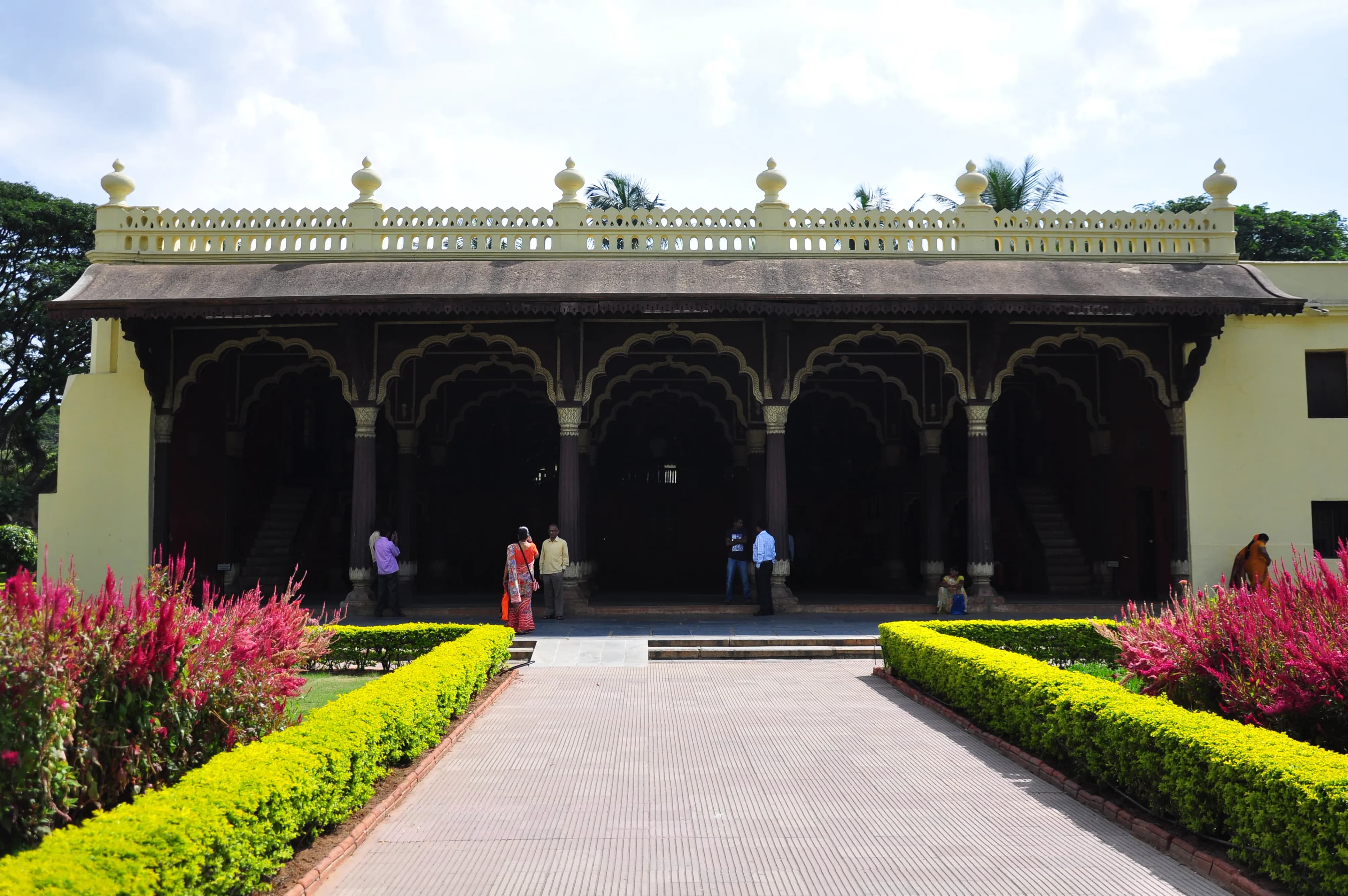
Tipu Sultan's Summer Palace Bengaluru
The scent of sandalwood hung faintly in the air, a subtle reminder of the palace's regal past, as I stepped into Tipu Sultan's Summer Palace in Bangalore. This two-storied Indo-Islamic structure, also known as the Dariya Daulat Bagh (Garden of the Sea of Wealth), stands as a testament to a turbulent yet fascinating period in South Indian history. Having spent years studying the grandeur of Dravidian temple architecture in my hometown of Chennai, I was eager to experience this distinct architectural style. The palace, constructed primarily of teakwood, rests atop a raised stone plinth. Unlike the towering gopurams and intricate stone carvings that characterize temples back home, the Summer Palace exudes a sense of airy lightness. The intricately carved pillars, delicate floral motifs, and vibrant paintwork create an atmosphere of refined elegance rather than imposing majesty. The four fluted pillars at each corner of the first floor, supporting the extended roof, reminded me of similar structures I'd observed in Chettinad mansions, albeit on a smaller scale. As I ascended the wooden staircase to the upper floor, the creaking sounds underfoot seemed to echo whispers of the past. The upper floor, an open-air durbar hall, offered panoramic views of the surrounding gardens. I could almost envision Tipu Sultan holding court here, surrounded by his advisors. The walls of the durbar hall are adorned with vibrant frescoes depicting scenes of battles, processions, and courtly life. These frescoes, though faded with time, offer a glimpse into the socio-political landscape of the late 18th century. The distinct European influence in some of the depictions, particularly in the portrayal of soldiers and weaponry, speaks to the complex interactions between the Mysore Kingdom and European powers. One aspect that particularly captivated me was the extensive use of floral motifs in the decoration. While floral patterns are common in South Indian art, the style here differed significantly from the bold lotus and creeper designs I was accustomed to seeing in temple architecture. The delicate floral patterns at the Summer Palace, often interspersed with geometric designs, seemed to draw inspiration from Persian and Islamic art, showcasing a beautiful fusion of styles. This syncretism extended to the architectural elements as well, with arches and domes coexisting harmoniously with traditional South Indian wooden construction techniques. Walking around the perimeter of the upper floor, I noticed the thin, almost translucent, sheets of mother-of-pearl inlaid into the wooden framework. This delicate ornamentation, catching the light and shimmering subtly, added a touch of opulence to the otherwise simple structure. It served as a reminder of the wealth and sophistication of Tipu Sultan's court. The surrounding gardens, though not as extensive as they once were, still provide a tranquil setting for the palace. The remnants of the original water channels and fountains hinted at the elaborate landscaping that must have existed during Tipu Sultan's time. I imagined the gardens filled with fragrant flowers and the sound of flowing water, creating a cool oasis in the Bangalore heat. My visit to Tipu Sultan's Summer Palace was more than just a sightseeing trip; it was a journey through time, a glimpse into a period of significant historical and cultural exchange. While the palace lacks the monumental scale and intricate stonework of the grand temples I'm familiar with, its delicate beauty, vibrant frescoes, and unique blend of architectural styles offer a compelling narrative of its own. It stands as a powerful reminder that architectural heritage isn't just about grand structures; it's about the stories they tell, the cultures they represent, and the connections they forge across time.
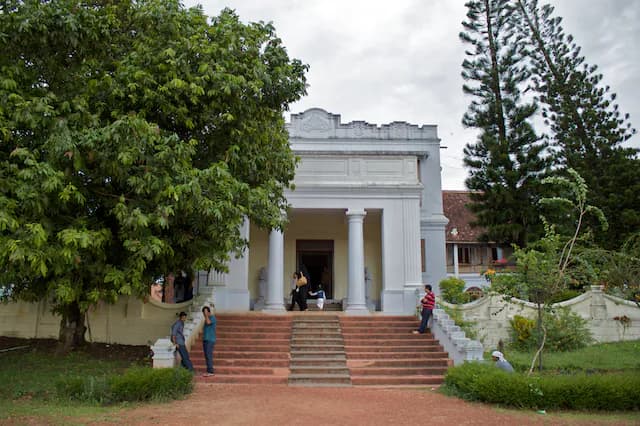
Hill Palace Tripunithura
The ochre walls of the Hill Palace, muted under the Kerala sun, seemed to exhale stories. As I stepped onto the grounds, the humid air, thick with the scent of frangipani, transported me far from the familiar plains of Uttar Pradesh. This wasn't the imposing grandeur of a Mughal fort, but a subtler, more intimate kind of royalty. The Hill Palace, once the administrative seat of the Kingdom of Kochi, whispered of a different era, a different rhythm of life. The complex, a sprawling network of 49 buildings, isn't a single monolithic structure. Instead, it's a collection of traditional Kerala architecture, interconnected courtyards, and sloping tiled roofs, all nestled within a generous expanse of greenery. The buildings, varying in size and purpose, seemed to have grown organically over time, reflecting the evolving needs of the royal family. I noticed the distinct lack of ostentatious ornamentation. The beauty lay in the simplicity, the earthy tones, and the harmony with the surrounding landscape. The sloping roofs, designed to combat the heavy monsoon rains, were a stark contrast to the flatter rooftops I was accustomed to back home. I began my exploration with the main palace building, now a museum. The wooden floors, polished smooth by generations of footsteps, creaked softly under my weight. The air inside was cool, a welcome respite from the midday heat. The museum houses an impressive collection of artifacts belonging to the Kochi royal family – ornate palanquins, gleaming weaponry, and intricate ivory carvings. One piece that particularly caught my eye was a traditional Kerala lamp, its intricate brasswork casting dancing shadows on the wall. It spoke volumes about the craftsmanship prevalent in this region, a testament to the artistic sensibilities of the people. Moving through the various sections, I was struck by the distinct Kerala aesthetic. The influence of traditional architectural styles like "nalukettu" – a structure with four blocks around a central courtyard – was evident. The use of local materials like laterite, wood, and terracotta tiles created a sense of rootedness, a connection to the land. Unlike the grand marble structures of the north, the Hill Palace felt more integrated with its environment, almost as if it had sprung from the earth itself. I spent a considerable amount of time in the section dedicated to archaeological finds. Ancient pottery shards, coins from bygone eras, and remnants of early settlements painted a vivid picture of the region's rich history. It was fascinating to see the confluence of different cultures – the influence of Arab traders, the legacy of the Portuguese and Dutch colonizers – all layered within the local narrative. Beyond the museum, the palace grounds offer a tranquil escape. I wandered through the deer park, observing the gentle creatures grazing peacefully. The medicinal plants garden, with its labelled specimens, provided a glimpse into the traditional healing practices of Kerala. The pre-historic park, with its life-sized models of dinosaurs, felt slightly incongruous but nevertheless added a touch of whimsy to the experience. As I sat on a stone bench, overlooking the lush greenery, I reflected on the contrasts between the north and south of India. The Hill Palace, with its understated elegance and intimate scale, offered a different perspective on royalty. It wasn't about imposing power, but about a harmonious coexistence with nature and a deep respect for tradition. This visit wasn't just a journey through a historical site; it was a journey into a different cultural landscape, a reminder of the incredible diversity that makes India so unique.
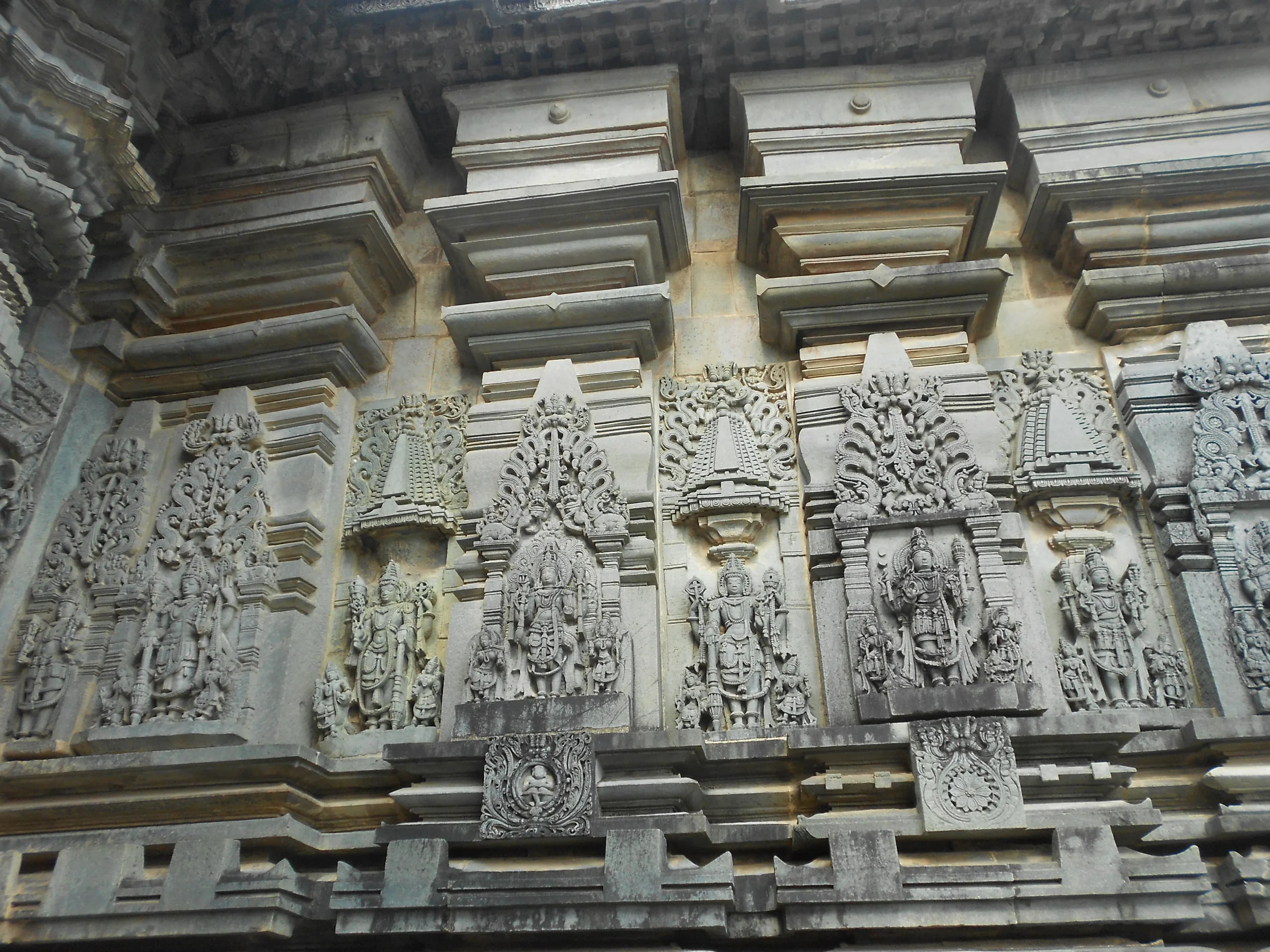
Chennakesava Temple Belur
Intricate carvings adorning the walls of the Chennakesava Temple in Belur, Karnataka, narrate the artistic zenith of the Hoysala Empire ([1][2]). Commissioned by Vishnuvardhana Hoysala in 103 CE (2nd Century), the temple is dedicated to Vishnu in his form as Chennakesava, meaning 'handsome Kesava' ([3]). The temple exemplifies Hoysala architecture, renowned for its detailed craftsmanship and unique style ([1]). This temple is a prime example of the Vesara style, seamlessly blending architectural elements from both North and South India ([4]). During the Hoysala period, temple architecture prioritized elaborate surface ornamentation, a departure from the towering structures of other dynasties ([5]). Soapstone, favored for its softness, facilitated the creation of intricate carvings that depict scenes from epics, mythology, and daily life ([3]). Granite forms the temple's foundation, providing stability and strength ([1]). The star-shaped platform (Jagati) elevates the structure, allowing devotees to circumambulate the deity ([3]). Within the Garbhagriha (Sanctum), the murti (idol) of Chennakesava resides, radiating divine energy and serving as the focal point for worship ([2]). Vastu Shastra principles, the ancient Indian science of architecture, guided the temple's layout, proportions, and orientation, ensuring harmony and balance ([4]). The absence of towering gopurams (spires) encourages visitors to appreciate the temple's horizontal expanse and intricate details ([5]). The outer walls are adorned with friezes of elephants, lions, horses, and celestial beings, showcasing the empire's wealth and cultural richness ([1][3]). Sophisticated sculpting techniques using soapstone made possible the elaborate detailing, though weathering has taken its toll on some elements ([3]). The Chennakesava Temple, now a UNESCO World Heritage Site, stands as a testament to the artistic and architectural achievements of the Hoysala period, inviting all to marvel at the artisans' skill and devotion ([1][2]). The temple reflects the Hoysalas' deep reverence for Vishnu and their commitment to preserving and promoting Hindu traditions ([5]).

Golconda Fort Hyderabad
The imposing granite ramparts of Golconda Fort, rising abruptly from the Deccan plateau, exude a palpable sense of history. Having documented hundreds of forts across India, I can confidently say that Golconda possesses a unique aura, a blend of military might and architectural finesse rarely encountered. My recent visit to this magnificent structure, a sprawling citadel encompassing palaces, mosques, and ingenious acoustic systems, left me awestruck. The sheer scale of Golconda is initially overwhelming. The outer fortifications stretch for nearly seven kilometers, punctuated by imposing bastions and multiple gateways. The climb to the Bala Hissar, the highest point within the fort complex, is a journey through layers of history. Each level, each gateway, whispers tales of past grandeur and strategic brilliance. The Fateh Darwaza, the main entrance, is particularly striking. Its massive studded wooden doors, reinforced with iron spikes to prevent elephant battering rams, speak volumes about the fort's defensive capabilities. Standing beneath its arch, I could almost hear the echoes of marching armies and the clang of swords. One of the most fascinating aspects of Golconda is its sophisticated acoustic system. A handclap at the entrance arch can be heard clearly at the Bala Hissar, almost a kilometer away. This ingenious communication system, a marvel of medieval engineering, allowed the rulers to quickly alert the entire fort of impending danger. I tested it myself, and the clarity of the sound transmission was truly remarkable. It's a testament to the architectural ingenuity of the Qutb Shahi dynasty. Beyond its military fortifications, Golconda reveals a softer side. The palaces within the complex, though now in ruins, offer glimpses into the opulent lifestyle of the erstwhile rulers. The intricate carvings on the remaining walls, the delicate jalis (lattice screens), and the remnants of elaborate water systems hint at a life of luxury and refinement. I spent hours exploring these ruins, my camera capturing the interplay of light and shadow on the weathered stone, trying to freeze these fragments of history in time. The mosques within the fort complex, particularly the Jama Masjid and the Taramati Mosque, showcase a blend of Persian and Deccani architectural styles. The soaring arches, the intricate stucco work, and the serene courtyards offer a peaceful respite from the imposing military structures surrounding them. I found myself drawn to the quiet corners of these mosques, imagining the prayers and rituals that once filled these spaces. The view from the Bala Hissar is breathtaking. The sprawling city of Hyderabad stretches out before you, a stark contrast to the ancient ruins beneath your feet. From this vantage point, the strategic importance of Golconda becomes crystal clear. The fort commands a panoramic view of the surrounding plains, allowing its defenders to monitor any approaching armies. As I stood there, absorbing the panoramic vista, I felt a profound sense of connection to the past. My visit to Golconda was more than just a documentation exercise; it was an immersive experience. It was a journey through time, a glimpse into a bygone era of kings and conquerors, of architectural marvels and ingenious engineering. Golconda is not just a fort; it's a living testament to India's rich and complex history, a place where the whispers of the past continue to resonate in the present. It's a site I would recommend to anyone seeking to understand the grandeur and ingenuity of India's architectural heritage.
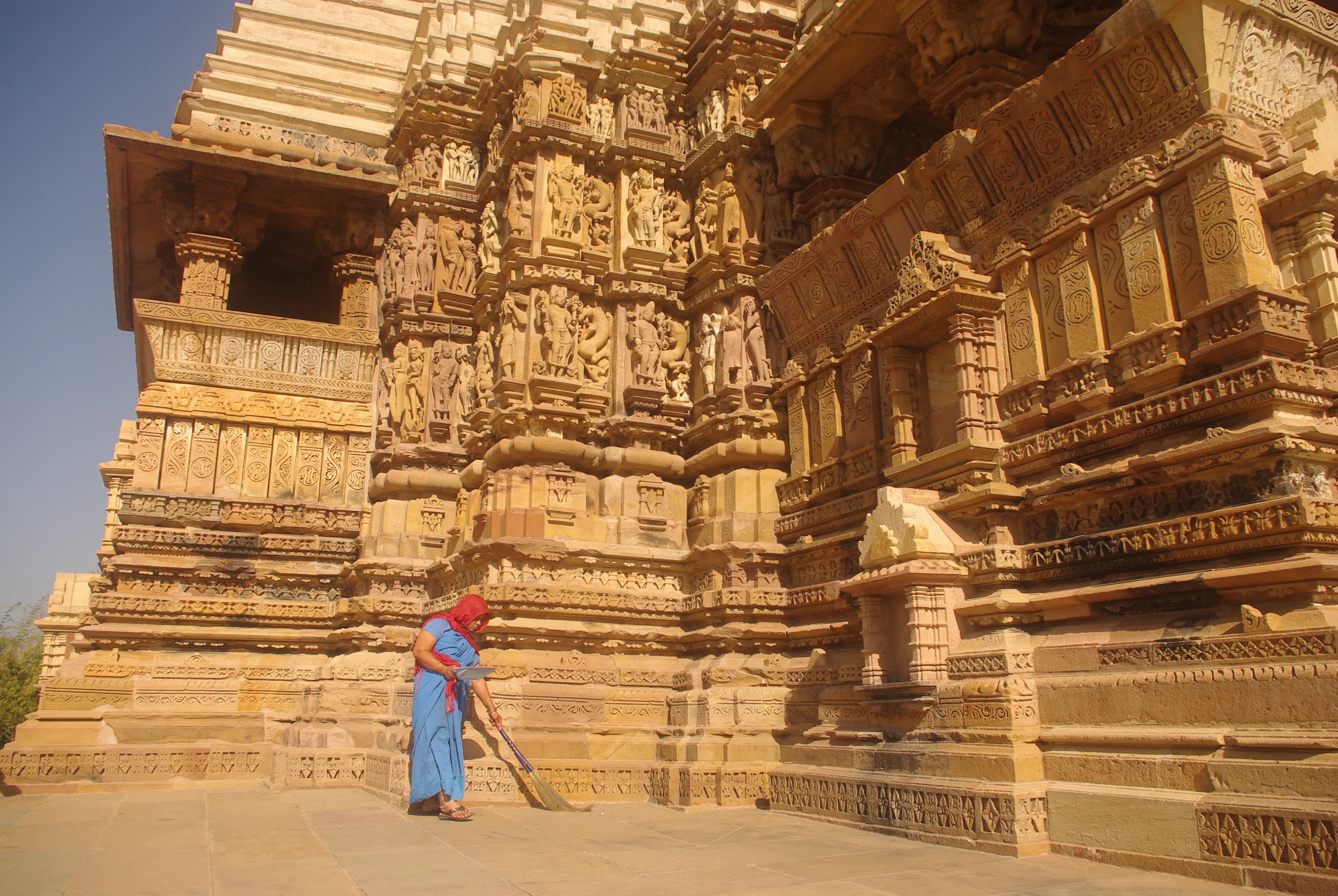
Kandariya Mahadeva Temple Khajuraho
The rising sun cast long shadows across the manicured lawns of the Western Group of temples at Khajuraho, and my gaze was immediately drawn to the magnificent Kandariya Mahadeva. Dominating the skyline, this temple, dedicated to Lord Shiva, is arguably the most iconic and elaborate of the Khajuraho group. The sheer scale of it took my breath away – a mountain of sculpted sandstone reaching for the heavens, a testament to the Chandela dynasty's architectural prowess and artistic vision. As I approached, the intricate carvings began to reveal themselves. The temple, built on a high platform, felt like a living, breathing entity. Every inch of the exterior, from the base to the towering shikhara, was covered in a profusion of sculptures. These weren't mere decorations; they narrated stories from Hindu mythology, depicted scenes of courtly life, and celebrated the sensuality that is so characteristic of Khajuraho's art. I noticed apsaras, celestial nymphs, frozen in graceful poses, their expressions ranging from serene contemplation to playful allure. Warriors, musicians, and animals – elephants, lions, and mythical creatures – all found their place within this intricate tapestry of stone. Climbing the steps to the main entrance, I felt a palpable shift in atmosphere. The air grew cooler, and a sense of reverence settled over me. The doorway itself was a masterpiece of intricate carving, layers of figures framing the entrance to the sanctum sanctorum. Stepping inside, I was struck by the relative simplicity of the inner chamber compared to the exuberant exterior. The play of light and shadow created a mystical ambiance, focusing attention on the garbhagriha, the innermost sanctum where the deity would have resided. Although the original lingam is no longer present, the space still held a palpable sense of sacredness. Spending time within the temple, I began to appreciate the architectural ingenuity of the Chandelas. The Kandariya Mahadeva is not a single structure but a complex arrangement of interconnected shrines and mandapas, each leading towards the central shikhara. This shikhara, a towering curvilinear spire, represents Mount Meru, the mythical abode of the gods. The smaller surrounding shikharas create a sense of rhythm and movement, giving the impression of a mountain range rising towards the sky. The erotic sculptures, for which Khajuraho is so famous, are undeniably a part of the temple's narrative. However, to reduce the temple to just these depictions is to miss the larger picture. They represent only a small fraction of the overall sculptural program and are integrated seamlessly within the broader themes of life, death, and spirituality. As someone who has grown up in Uttar Pradesh, surrounded by the echoes of ancient kingdoms and their artistic legacies, I found myself contemplating the multifaceted nature of these depictions. They are a reflection of a time when sensuality was not divorced from spirituality, a time when art embraced all aspects of human existence. Leaving the Kandariya Mahadeva, I carried with me a profound sense of awe and wonder. This temple is not just a collection of stones; it is a living testament to the artistic genius of a bygone era. It is a place where spirituality and sensuality intertwine, where stories are etched in stone, and where the echoes of history resonate through the centuries. It stands as a powerful reminder of the rich cultural heritage of India, a heritage that continues to inspire and captivate even today. As I walked away, I couldn't help but glance back, drawn once more to the majestic silhouette of the Kandariya Mahadeva against the clear blue sky, its intricate carvings shimmering in the sunlight.
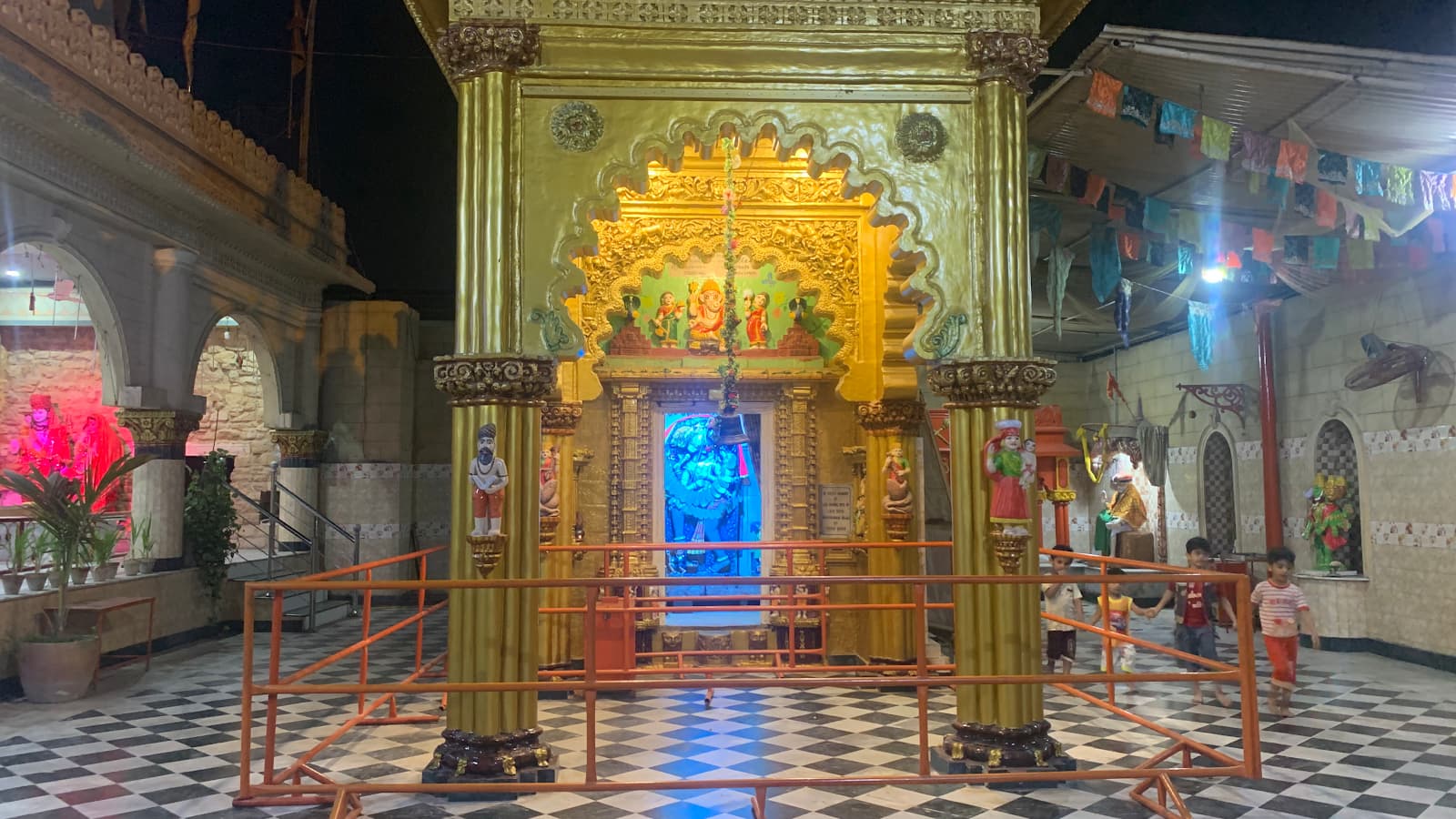
Panchmukhi Hanuman Temple Karachi Sindh
Panchmukhi Hanuman Temple, located in Karachi’s Soldier Bazaar area, represents one of the oldest continuously functioning Hindu temples in Pakistan, with archaeological evidence indicating worship at this site for over 1,500 years, dating to a period when the Sindh region formed an integral part of the greater Hindu rashtra extending across the Indian subcontinent. The temple, dedicated to Lord Hanuman in his Panchmukhi (five-faced) form, houses a unique naturally formed stone idol believed to be over 1,500 years old, making it one of the rarest and most significant Hanuman shrines in the world. The temple complex, originally spanning approximately 2,609 square feet but now reduced due to urban encroachment, features a main sanctum housing the Panchmukhi Hanuman murti, surrounded by subsidiary shrines and a courtyard that has served as a center of Hindu worship in Karachi for over a millennium. The temple’s architectural style reflects the evolution of Hindu temple design in the Sindh region, incorporating elements from ancient Indian, medieval, and colonial periods, with the current structure dating primarily to the 19th and 20th centuries but built upon foundations that may date to the 5th or 6th century CE. Archaeological excavations conducted in 2019 revealed artifacts including eight to nine images of Hanuman estimated to be at least 300 years old, along with evidence of multiple construction phases and ritual deposits indicating continuous worship over centuries. The temple is declared a national heritage site under the Sindh Cultural Heritage (Preservation) Act 1994, recognizing its significance as a symbol of Pakistan’s ancient Hindu heritage. The Panchmukhi Hanuman idol, believed to be naturally formed rather than man-made, is considered extremely rare and sacred, with devotees performing circumambulation (pradakshina) 11 or 21 times as part of their worship. The temple serves as a vital center for Karachi’s Hindu community, hosting major festivals including Hanuman Jayanti, Holi, and Diwali, with celebrations that have attracted thousands of devotees and demonstrated interfaith harmony. Today, Panchmukhi Hanuman Temple stands as a powerful testament to the continuity of Hindu worship in regions that were historically part of the greater Hindu rashtra, demonstrating that Hindu religious traditions have persisted in Pakistan despite political changes, serving as a bridge between the ancient Hindu heritage of the Indian subcontinent and contemporary Hindu communities in Pakistan. ([1][2])

Tarn Taran Sahib Tarn Taran
The midday sun beat down on the shimmering expanse of the sarovar, its waters reflecting the pristine white marble of the Darbar Sahib, the central structure of the Tarn Taran Sahib complex. This wasn't just another gurudwara; its sheer scale and unique architectural features set it apart from the hundreds of Sikh shrines I’ve documented across India. Located in the heart of Tarn Taran, Punjab, this place exuded a palpable sense of tranquility, a spiritual hum that resonated through the air and the very stones beneath my feet. The first thing that struck me was the sarovar itself, the largest of all the holy tanks in Sikhism. It’s said that a dip in its waters has healing properties, and observing the devotees taking a ritual bath, their faces etched with devotion, I could almost sense the weight of belief and tradition carried within this sacred space. The tank is surrounded by a marble walkway, offering panoramic views of the gurudwara and the bustling activity around it. I spent a good hour just absorbing the scene, the interplay of light and shadow on the water, the rhythmic chants emanating from the main hall, and the constant flow of pilgrims. The Darbar Sahib, rising majestically from the sarovar's edge, is a marvel of Sikh architecture. Unlike the more common gilded domes, Tarn Taran Sahib boasts a distinctive ribbed dome, plated with gold leaf that shimmered brilliantly under the Punjab sun. Intricate inlay work, a hallmark of Sikh architecture, adorned the marble facade, depicting floral patterns and verses from the Guru Granth Sahib. The level of detail was breathtaking; I found myself constantly drawn closer, my lens capturing the nuances of each carved motif, each inlaid gemstone. As I stepped inside the main hall, I was enveloped by a sense of reverence. The Guru Granth Sahib, the holy scripture of Sikhism, rested on a raised platform, draped in rich fabrics. The melodious kirtan, the Sikh devotional music, filled the air, creating an atmosphere of profound spirituality. The walls, adorned with frescoes depicting scenes from Sikh history and mythology, added another layer of richness to the space. I noticed that the frescoes here were particularly vibrant, their colours seemingly intensified by the soft light filtering through the intricately carved marble screens. One element that truly distinguished Tarn Taran Sahib was the integration of Islamic architectural influences. The minarets flanking the main structure, a feature rarely seen in Sikh architecture, spoke to a history of cultural exchange and coexistence. These minarets, while clearly distinct from the main gurudwara in style, seemed to harmonize with the overall design, creating a unique visual tapestry. This subtle blending of architectural styles offered a powerful testament to the syncretic nature of Indian heritage. Beyond the main complex, I explored the surrounding structures, each with its own story to tell. The Bunga Baba Deep Singh, a smaller shrine dedicated to a revered Sikh warrior, stood as a reminder of the sacrifices made to protect this sacred place. The langar hall, where free meals are served to all visitors regardless of their background, was a bustling hub of activity, embodying the Sikh principles of seva, or selfless service. My time at Tarn Taran Sahib was more than just a photographic documentation; it was an immersive experience. It was a journey into the heart of Sikh faith and a testament to the enduring power of architecture to reflect and shape cultural identity. As I packed my equipment, the setting sun casting long shadows across the sarovar, I carried with me not just images, but a deeper understanding of the rich tapestry of Indian heritage.
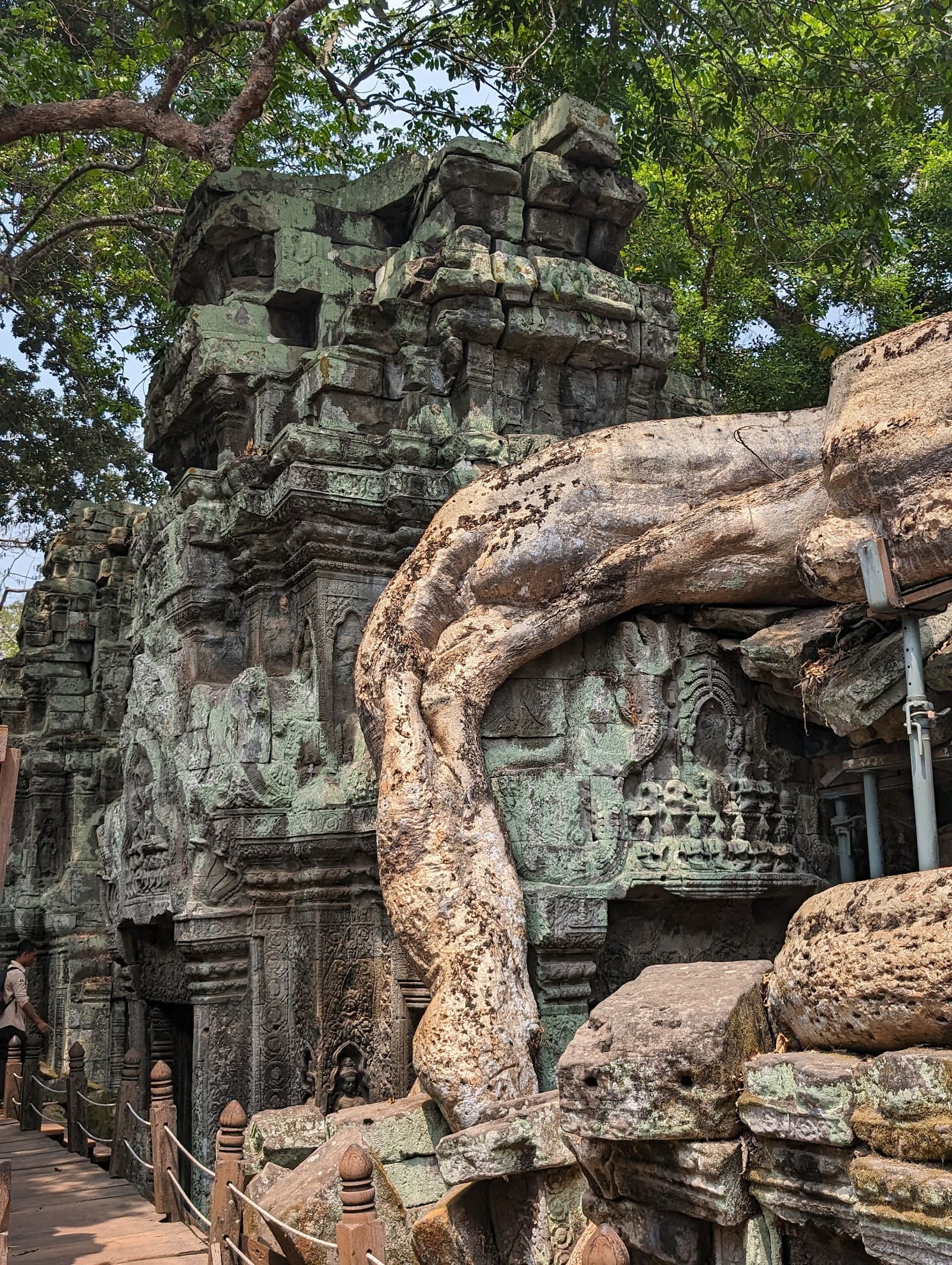
Ta Prohm Siem Reap Cambodia
Ta Prohm, dramatically enveloped by the Cambodian jungle with massive tree roots intertwining with ancient stone structures, represents one of the most atmospheric and visually striking temple complexes in Southeast Asia, constructed in the late 12th and early 13th centuries CE during the reign of King Jayavarman VII as a Mahayana Buddhist monastery and university that retained extensive Shaiva (Shiva-worshipping) iconography, creating a powerful testament to the sophisticated religious syncretism that characterized Khmer religious practices and the continued transmission of Indian Buddhist and Hindu traditions to Southeast Asia. The temple complex, originally covering over 60 hectares and serving as a major center of Buddhist learning that housed over 12,000 people including monks, students, and support staff, features extraordinary architectural elements that demonstrate the synthesis of Indian Buddhist monastery architecture with Khmer building techniques, while the temple's extensive decorative programs including numerous devatas, apsaras, and mythological scenes demonstrate the sophisticated understanding of both Indian Buddhist and Hindu iconography possessed by Khmer artists. The temple's most remarkable feature is its current state, intentionally left largely unrestored by conservation authorities to preserve the dramatic visual effect of massive silk-cotton and strangler fig trees growing through and over the stone structures, creating a powerful symbiosis between nature and architecture that has made it one of the most photographed and iconic temples in Cambodia, while this preservation approach demonstrates the sophisticated understanding of the site's aesthetic and historical significance. Archaeological evidence reveals that the temple served as both a major center of Mahayana Buddhist learning and a repository of Shaiva iconography, demonstrating the remarkable religious syncretism that characterized Khmer religious practices, while the discovery of numerous inscriptions provides crucial evidence of the site's role in the transmission of Indian Buddhist and Hindu texts and practices to Southeast Asia. The temple's architectural layout, with its central sanctuary surrounded by multiple enclosures, libraries, and numerous smaller structures, follows sophisticated Indian Buddhist monastery planning principles that were systematically transmitted from the great monastic centers of India, while the temple's extensive decorative programs including scenes from Hindu mythology demonstrate the ways in which Indian religious traditions were integrated into Khmer Buddhist practice. Today, Ta Prohm stands as part of the UNESCO World Heritage Site and represents one of the most visually striking temples in Southeast Asia, serving as a powerful testament to the transmission of Indian Buddhist and Hindu culture to Southeast Asia, while ongoing archaeological research and conservation efforts continue to protect and study this extraordinary cultural treasure that demonstrates the profound impact of Indian civilization on Southeast Asian religious and artistic traditions. ([1][2])
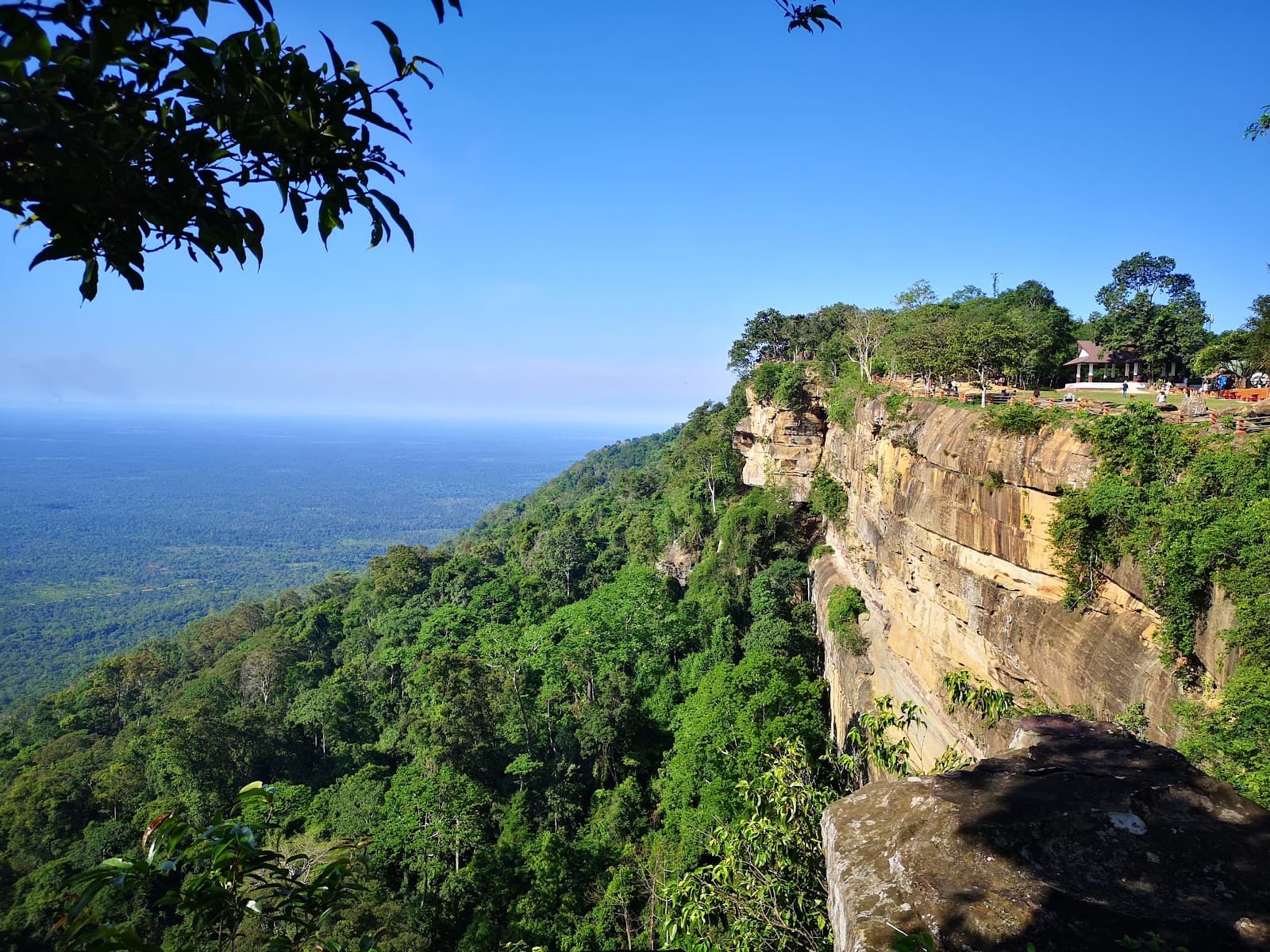
Khao Phra Viharn Sisaket
The Temple of Preah Vihear, known in Thailand as Khao Phra Viharn Sisaket, is an ancient Hindu temple dedicated to Lord Shiva, situated atop a 525-meter cliff in the Dângrêk Mountains [5]. This architectural complex, located in the Kantharalak District of Sisaket Province, Thailand, and bordering Cambodia, represents an outstanding masterpiece of Khmer architecture, deeply rooted in the continuous tradition of Indian civilization [1] . Its design is considered exceptionally 'pure' in both its overall plan and the intricate details of its decoration, reflecting the sophisticated indigenous architectural styles that flourished under the Khmer Empire, drawing heavily from Indian prototypes [1] [2]. The temple's construction primarily utilized red siliceous sandstone and laterite, employing traditional construction techniques that demonstrate advanced engineering for its period [4]. The site is characterized by a unique architectural layout, comprising a series of sanctuaries linked by a long processional axis, which is unusual among Khmer temples due to its orientation along a north-south axis rather than the typical east-west alignment [3] [4]. This distinctive arrangement is dictated by the dramatic topography of the mountain, with successive gopuras (entrance pavilions) and courtyards leading upwards to the main sanctuary, creating a powerful visual and spiritual ascent [1]. The decorative elements include elaborate carvings of devatas, apsaras, lintels, and pediments, which are integral to the Khmer aesthetic and reflect Hindu mythological narratives, a testament to the enduring cultural legacy transmitted from India [2]. The temple's structural integrity, despite its age and challenging location, highlights the advanced understanding of materials and construction techniques prevalent in Khmer culture [4]. Conservation efforts are ongoing to preserve its distinctive architectural features and ensure its long-term stability [4]. The site is maintained for visitor access, offering a tangible connection to India's millennia-spanning heritage and the continuous evolution of its cultural traditions across Southeast Asia. The operational readiness of the site supports its role as a significant cultural and historical landmark [1].
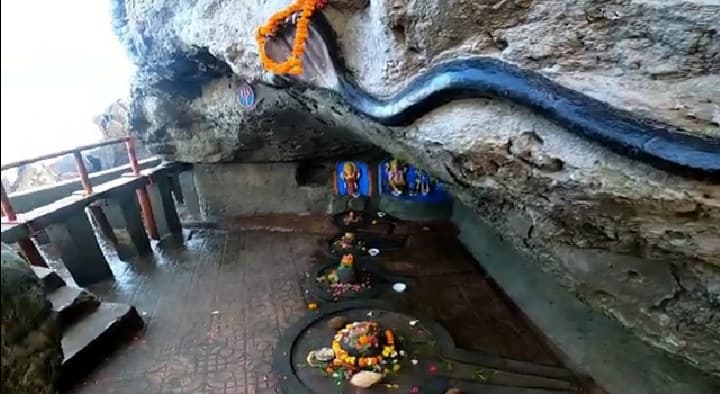
Gangeshwar Mahadev Temple Fudam Diu
The roar of the Arabian Sea was a constant, rhythmic backdrop to the serenity I found at the Gangeshwar Mahadev Temple. Tucked away near the fishing village of Fudam in Diu, this cluster of five ancient Shiva shrines isn't your typical grand temple complex. Carved directly into a cliff face overlooking the churning ocean, they feel intrinsically linked to the raw power of nature. Having explored countless temples across North India, from the towering peaks of the Himalayas to the plains of the Gangetic belt, I can confidently say this one holds a unique charm. The path down to the temples is a gentle descent, winding through weathered rocks smoothed by centuries of sea spray and wind. As I approached, the first thing that struck me was the seamless integration of the shrines with the natural landscape. It's as if the rock itself had yielded to the devotion of the artisans, revealing the deities within. Each of the five shrines is dedicated to Lord Shiva, represented by intricately carved Shiva lingams housed within these rock-cut chambers. Unlike the polished marble and ornate carvings I've seen in many North Indian temples, these lingams are more rugged, almost primal in their presentation. They are perpetually bathed in the cool, salty spray of the ocean waves that crash against the rocks just meters away, creating a truly mesmerizing spectacle. The architecture is simple yet striking. The shrines are not enclosed by elaborate structures, but rather open to the elements, protected only by the overhanging cliff face. This minimalist approach allows the natural beauty of the location to take center stage. The rock face itself forms the walls and ceiling of each shrine, and the constant interplay of light and shadow adds a dramatic dimension to the experience. I noticed intricate carvings adorning the entrances to some of the shrines, depicting various deities and mythological figures. While weathered by time and the elements, these carvings still bear testament to the skill and devotion of the artisans who created them centuries ago. The air at Gangeshwar Mahadev is thick with the scent of the sea and the murmur of prayers. Local fishermen, their faces etched with the wisdom of the ocean, often stop by to offer their respects before heading out to sea. This tangible connection between the temple and the local community is something I find deeply moving. It's a reminder that these sacred spaces are not just relics of the past, but living, breathing entities that continue to play a vital role in the lives of the people. I spent hours exploring the nooks and crannies of the temple complex, captivated by the interplay of nature and spirituality. The rhythmic crashing of the waves against the rocks, the salty breeze on my face, and the hushed reverence of the devotees created an atmosphere unlike any I've experienced before. I sat for a while, simply observing the waves and contemplating the enduring power of faith. One particular detail that caught my eye was the presence of small, naturally formed pools of seawater within the rock formations near the shrines. Locals believe that these pools hold sacred water and often use it for ritual cleansing. This intimate connection with the natural elements further reinforces the unique character of this temple. As the sun began to set, casting a warm golden glow over the Arabian Sea, I reluctantly made my way back up the path, leaving the roar of the ocean and the serenity of Gangeshwar Mahadev behind. The experience was more than just a visit to a temple; it was a profound encounter with the raw power of nature and the enduring spirit of devotion. It’s a testament to the fact that sometimes, the most powerful spiritual experiences are found not in grand structures, but in the quiet embrace of nature itself. This is a place I will undoubtedly revisit, drawn back by the unique blend of natural beauty and spiritual significance that sets it apart from any other temple I've encountered in my travels across North India.
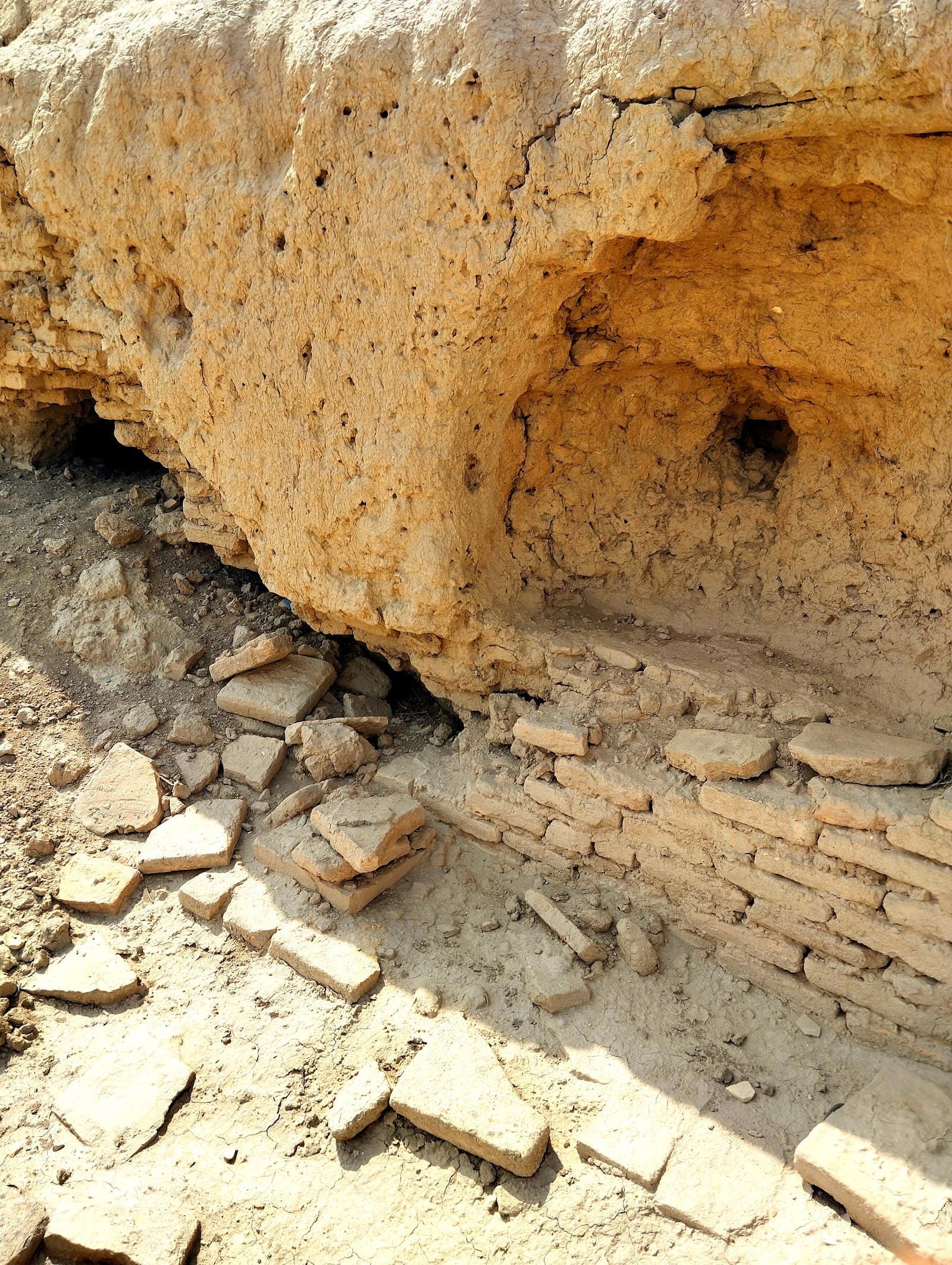
Abiverd Medieval Silk Road City Ahal Turkmenistan
Abiverd Medieval Silk Road City, located in the Ahal Region of Turkmenistan, stands as a profound testament to India's millennia-spanning cultural heritage, reflecting the enduring influence of ancient Indian architectural traditions along the historic Silk Road. This archaeological site, dating back to approximately the 3rd-7th centuries CE, embodies a layered history where indigenous Indian architectural styles, materials, and cultural practices converged with Central Asian forms, showcasing India's deep historical roots and continuous civilizational impact [5] [1]. The site's architectural vocabulary includes elements of the Maru-Gurjara, Nagara, and Vastu Shastra styles, which are integral to India's rich architectural continuum [1] [3] [4]. The Maru-Gurjara architecture, originating in western India, is characterized by its intricate carvings, delicate sculptures, and graceful jalis (lattice screens) [1]. This style often features elaborate entrance gates known as toranas, ornate pillars, and decorative 'flying' arch-like elements that, while non-structural, enhance aesthetic appeal [3]. Fortified structures, courtyards, gardens, and sophisticated water features are also hallmarks, designed for both defense and comfort in arid regions [1]. At Abiverd, these principles are evident in the remnants of its robust city walls, which were surrounded by a dry moat and featured rounded towers, suggesting a defensive architecture that may have incorporated such Indian design philosophies for both structural integrity and aesthetic embellishment [5]. The central tell, approximately 18 meters high and 213 meters in circumference, likely housed monumental structures whose design would have drawn upon these intricate decorative and structural elements [5]. The Nagara architecture, a prominent northern Indian temple style, is distinguished by its tall, curvilinear shikharas (spires) topped by a kalasha (finial), typically built on a high platform without elaborate boundary walls [3]. While Abiverd's primary monumental structures were likely mosques and civic buildings, the underlying principles of verticality, monumental scale, and the use of a central, elevated structure for prominence, as seen in Nagara temples, could have influenced the design of its significant edifices [3]. The site's overall layout, encompassing a rectangular area of 42 hectares, suggests an adherence to ancient Indian planning principles, particularly those of Vastu Shastra [5]. Vastu Shastra, an ancient Indian system, dictates principles of design, layout, measurements, ground preparation, space arrangement, and spatial geometry, aiming to integrate architecture with nature and align structures with cardinal directions and the five elements [4]. The strategic orientation of Abiverd's city gates and the internal organization of its citadel and rabat (trade and craft district) reflect a sophisticated urban planning informed by such ancient Indian spatial theories, ensuring optimal energy flow and functional harmony [2] [5]. Construction at Abiverd utilized both unbaked and baked brick, with the latter becoming more prevalent for monumental architecture from the 10th century CE onwards, allowing for vaulted ceilings and domed structures [5] [5]. The decorative brickwork, carved terracotta, and stucco, characteristic of the region, would have been applied with patterns and motifs that could reflect the intricate geometric and vegetal ornamentation seen in Indo-Islamic architecture, a style that itself is a synthesis of Indian and Islamic forms [3] [5]. Archaeological excavations, which began in the 20th century, have unearthed pottery shards, coins, and other artifacts, many of which are preserved in Turkmenistan's national museums, providing tangible links to its rich past [3] [5]. Abiverd is currently recognized as a historical and cultural monument, with ongoing archaeological research conducted by international expeditions from France and Russia [5]. The site is accessible to visitors, with continuous maintenance and preservation efforts ensuring its operational readiness as a significant heritage destination [5].
Quick Links
Plan Your Heritage Journey
Get personalized recommendations and detailed visitor guides